
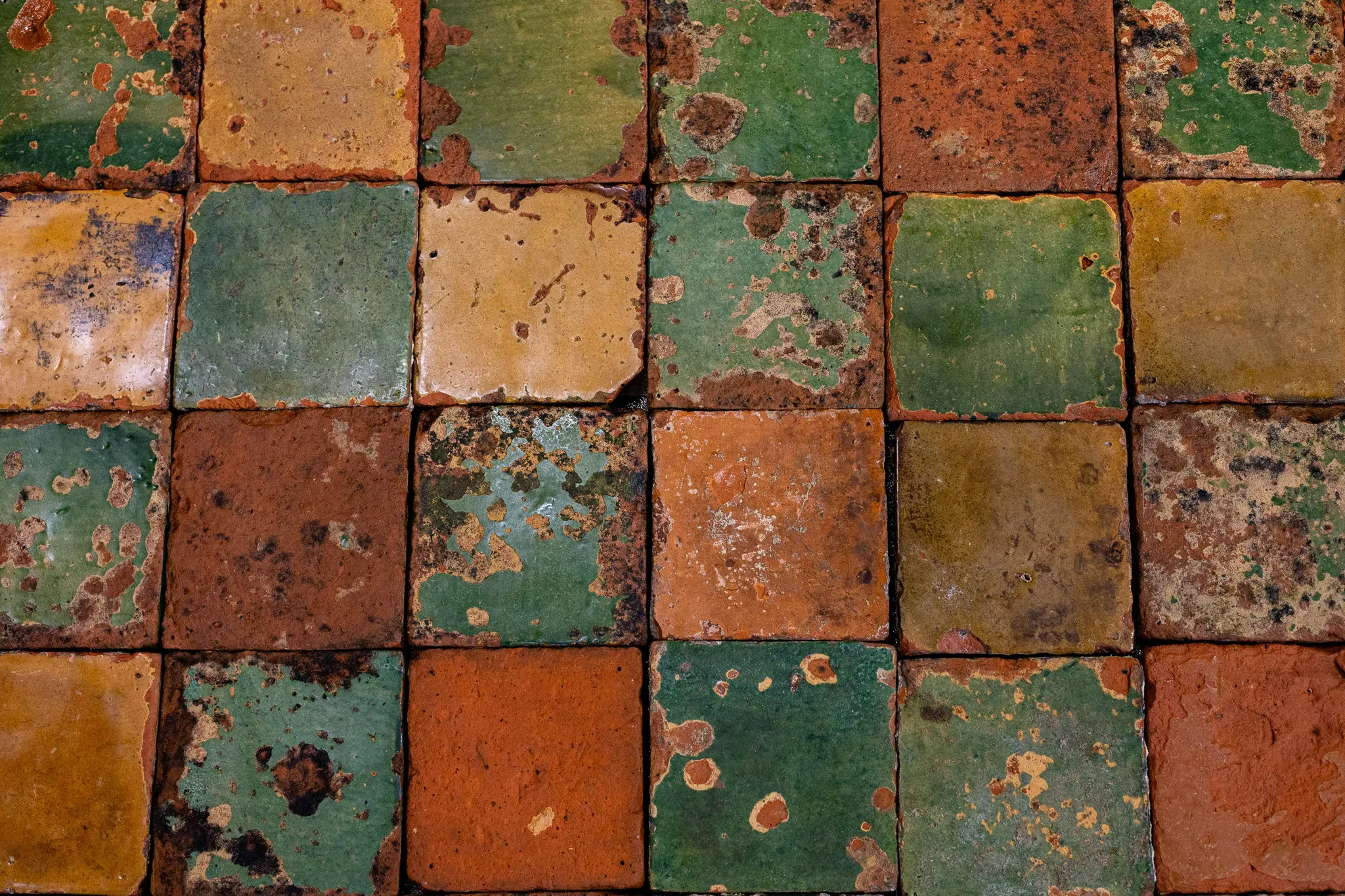
Cleaning and maintaining old floor tiles: a practical guide
Reclaimed floor tiles need care suited to their historical surfaces. Discover how to clean and protect terracotta, reduction-fired and glazed tiles safely.
Why do old floor tiles need different care?
Authentic reclaimed floor tiles have seen years, or even centuries, of use. Wear, colour differences and patina give these floors their character. Good maintenance is therefore not about making every tile look completely new, but keeping it clean and protected without unnecessarily damaging the historical surface.
The right treatment depends on the tile type. Unglazed terracotta, for example, is more porous than glazed estrikken (traditional Dutch terracotta floor tiles). Previously applied impregnating treatments, wax or other finishes can also affect maintenance.
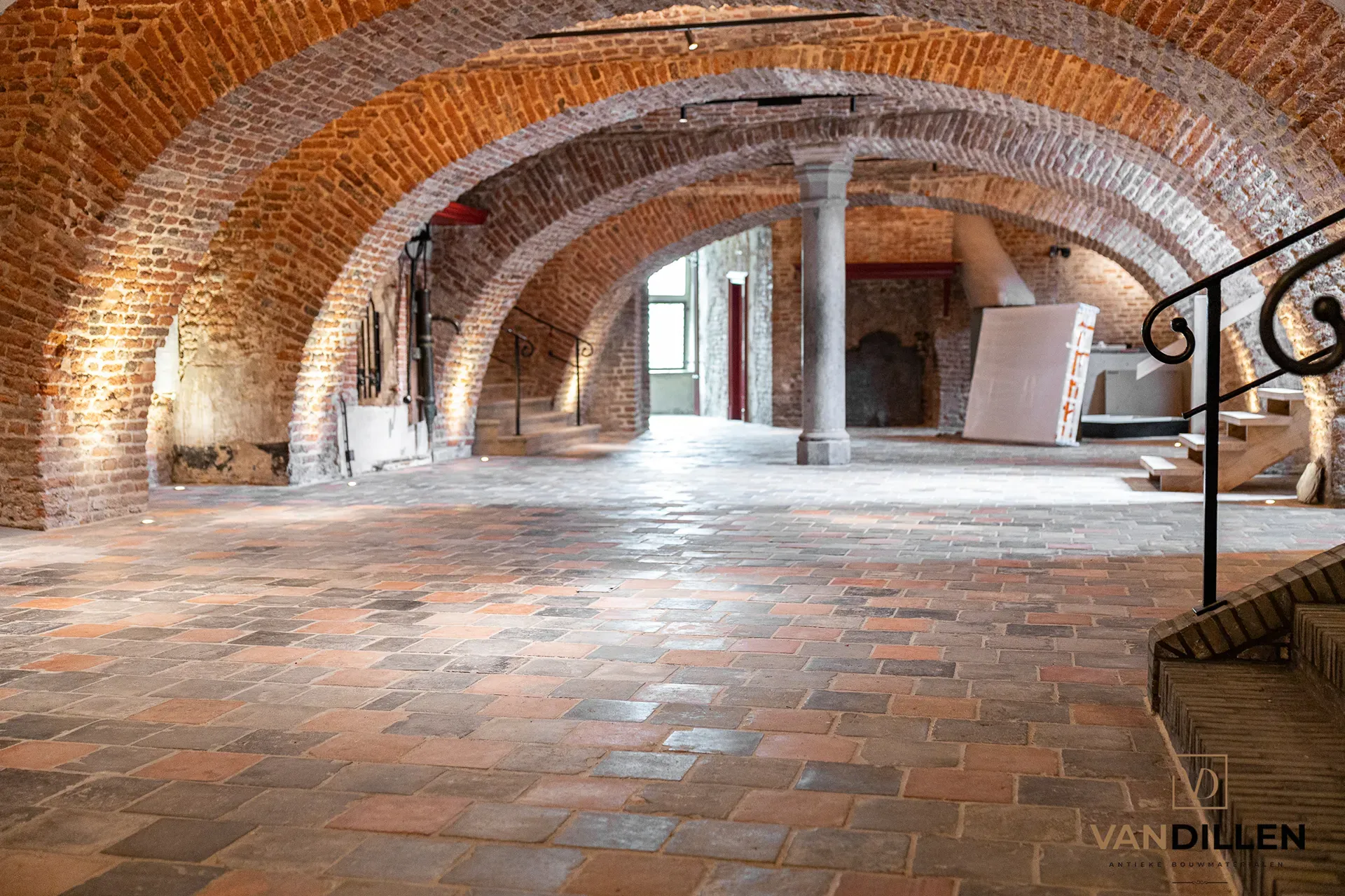
Everyday care for reclaimed floor tiles
Simple methods are usually best for everyday care. Remove sand and loose dirt regularly with a soft broom or vacuum cleaner. Sand beneath shoes acts as an abrasive on the surface.
Mop when needed with clean or lukewarm water, using only a cleaner suitable for the material and existing finish. More cleaning product is not automatically better: residues can leave a haze or a layer that attracts dirt.
Which cleaning products should you avoid?
Do not automatically use aggressive, strongly acidic or strongly alkaline cleaners on old floors. Porous terracotta, old joints and certain historical finishes can become discoloured or damaged.
Products intended for modern ceramic tiles are not automatically suitable for an old floor either. Always test a new product in an inconspicuous area or on a loose tile first.
An acidic product may seem a logical choice for limescale deposits, but acid can also damage joints and certain surfaces. Choose the treatment according to both the actual deposit and the tile.
Maintaining terracotta floor tiles
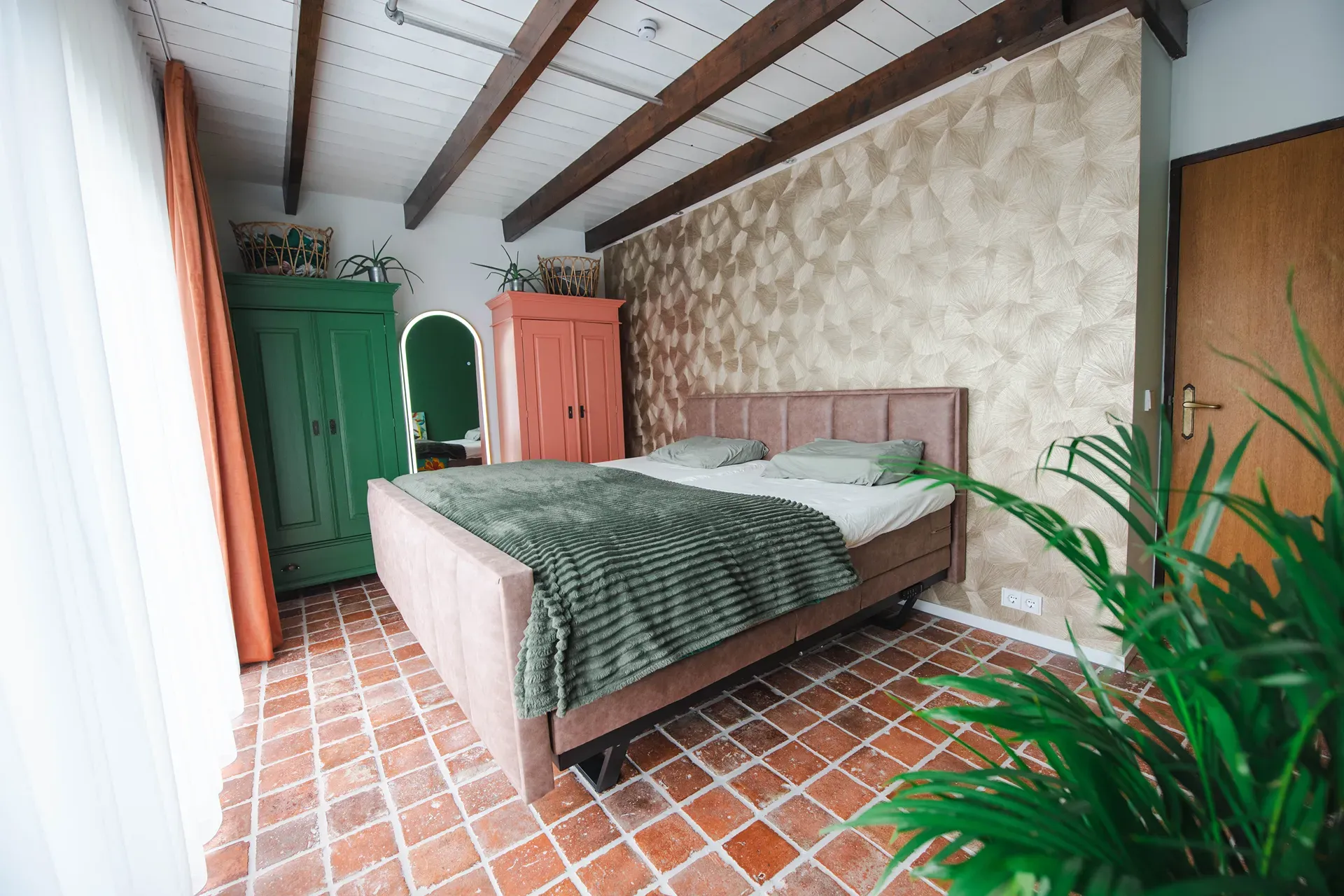
Terracotta tiles are unglazed fired-clay tiles with a warm red, orange or reddish-brown appearance. Their surface can be porous, making untreated tiles more likely to absorb moisture and dirt.
Regular dry cleaning and careful mopping prevent dirt from building up. Depending on the floor and desired appearance, a suitable protective or impregnating treatment may be useful.
Do not try to clean away every natural colour difference and sign of use. These nuances are precisely what make an authentic terracotta floor special.
Maintaining grey reduction-fired floor tiles
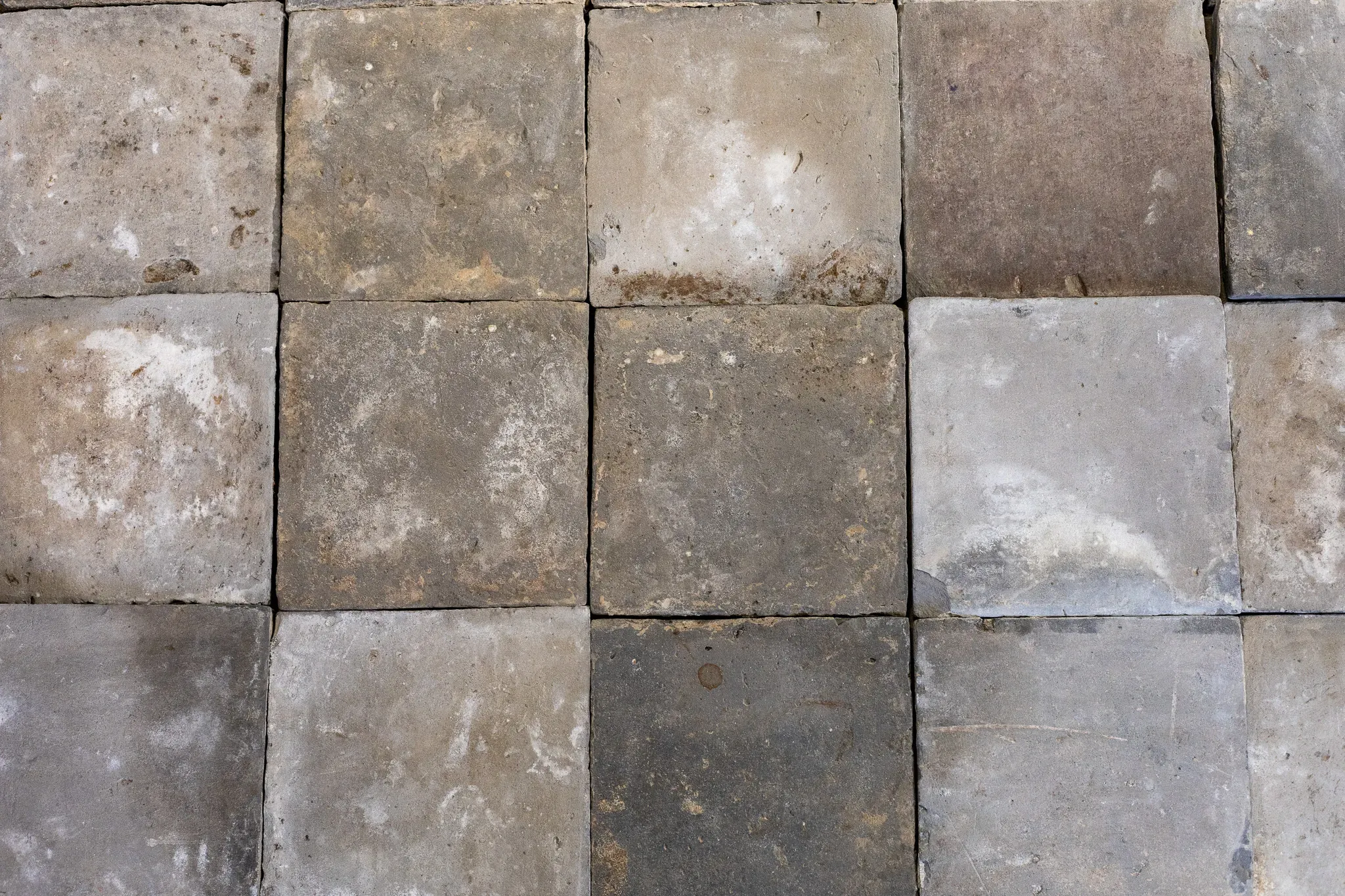
Grey reduction-fired tiles acquire their characteristic grey to charcoal colour during production. These old tiles can also have porous surfaces.
Do not automatically treat them like modern, fully closed-surface ceramic tiles. Begin with a mild cleaning method and increase its intensity only when necessary. Always test stronger products first.
Maintaining reclaimed French floor tiles
Reclaimed French floor tiles often have a strongly weathered surface with natural colour variation and signs of use. This patina is an important part of their appearance.
Be cautious about aggressive deep cleaning. A floor does not have to be completely uniform in colour to be clean. Over-intensive cleaning can reduce the very character people seek in an old French floor.
Maintaining glazed estrikken
The glaze on glazed estrikken makes the surface less porous than unglazed terracotta. Maintenance is therefore often easier.
Take care with old glaze, however. Fine crazing, wear and minor damage can be part of the historical surface. Do not use aggressive products or abrasive materials without testing first.
For more about the terminology, read our explanation of the difference between plavuizen and estrikken.
Removing stains from old floor tiles
On porous floors, deal with spills as promptly as possible. Blot the substance first instead of spreading it further across the surface.
The suitable next step depends on the stain and tile. Grease, rust, limescale and organic soiling do not automatically call for the same product. Start with the mildest suitable treatment and test it beforehand.
For valuable or heavily soiled historical floors, specialist cleaning may be wiser than experimenting with powerful household products.
Should you impregnate reclaimed floor tiles?
Not every old floor automatically needs impregnation. With porous unglazed tiles, however, an impregnating treatment can help reduce the absorption of moisture, dirt and stains.
Whether this is desirable depends on factors including tile type, location, use and existing treatment. A glazed tile, for instance, needs a different assessment from untreated terracotta.
Before treating your floor, read our detailed guide to impregnating old tiles.
How often should you maintain reclaimed floor tiles?
There is no fixed frequency. A heavily used kitchen floor needs different care from a floor in a quiet bedroom.
Look at the floor itself. Dust and sand can be removed regularly; mop when needed. Renew any protective treatment only when the system used and the floor’s condition call for it.
Reclaimed tiles and underfloor heating
Old floor tiles work very well with underfloor heating. Everyday maintenance changes very little, but avoid extreme or sudden temperature changes while a newly laid floor is still curing.
For more about floor construction and use, see our guide to reclaimed tiles with underfloor heating.
Maintenance starts with installation
A well-maintained floor begins with good installation. Mixing old tiles from different pallets, properly accommodating thickness differences and choosing suitable joints create a floor that is easier to maintain later.
For a new floor, also read our step-by-step guide to laying antique floor tiles.
Common mistakes when caring for old floor tiles
Cleaning too aggressively
Old floors do not have to look completely even and new. Excessive cleaning can unnecessarily damage patina, old finishes or the surface itself.
Using a product on the entire floor immediately
Test an unfamiliar cleaner or treatment on a loose tile or inconspicuous spot first. This shows how the colour, sheen and surface respond.
Using too much cleaning product
A higher dose does not necessarily make a floor cleaner. Product residues can form a film on which new dirt becomes more visible.
Treating all reclaimed tiles alike
Terracotta, reduction-fired tiles and glazed estrikken have different surfaces. Match the maintenance to the specific floor.
What does a well-maintained old floor look like?
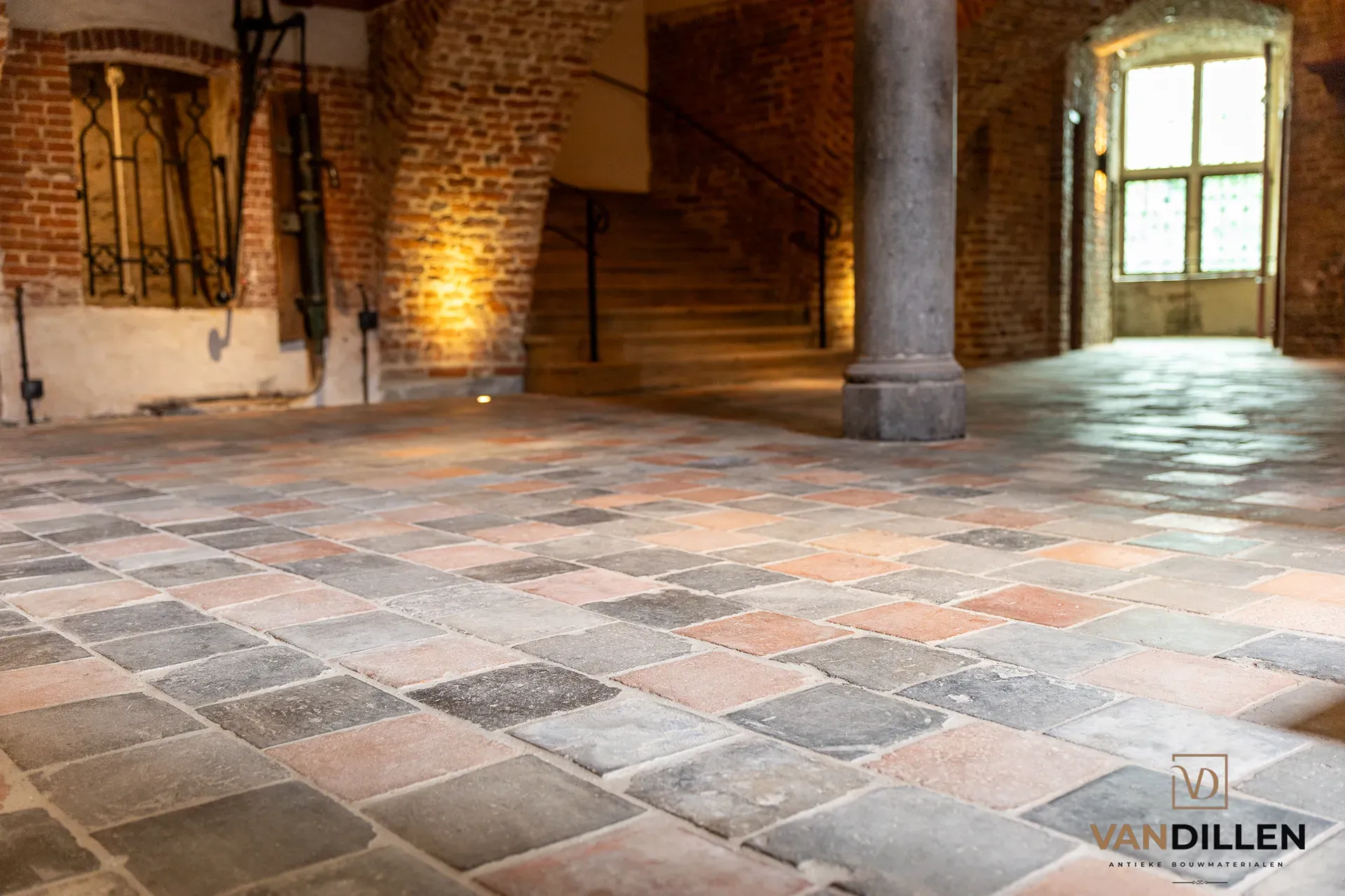
A well-maintained historical floor does not have to be perfectly uniform. Small colour differences, wear and patina can remain visible. These distinguish authentic old tiles from new tiles with an artificially aged appearance.
To see how reclaimed floors look in homes and other completed projects, browse our projects using reclaimed building materials.
Buying reclaimed floor tiles
Van Dillen Antieke Bouwmaterialen has a large, changing range of reclaimed floor tiles, including terracotta, grey reduction-fired tiles, French floor tiles and old estrikken.
Each batch has its own size, colour, wear and character. Browse our current reclaimed floor tiles or visit us in Bolsward to compare historical floors side by side.