
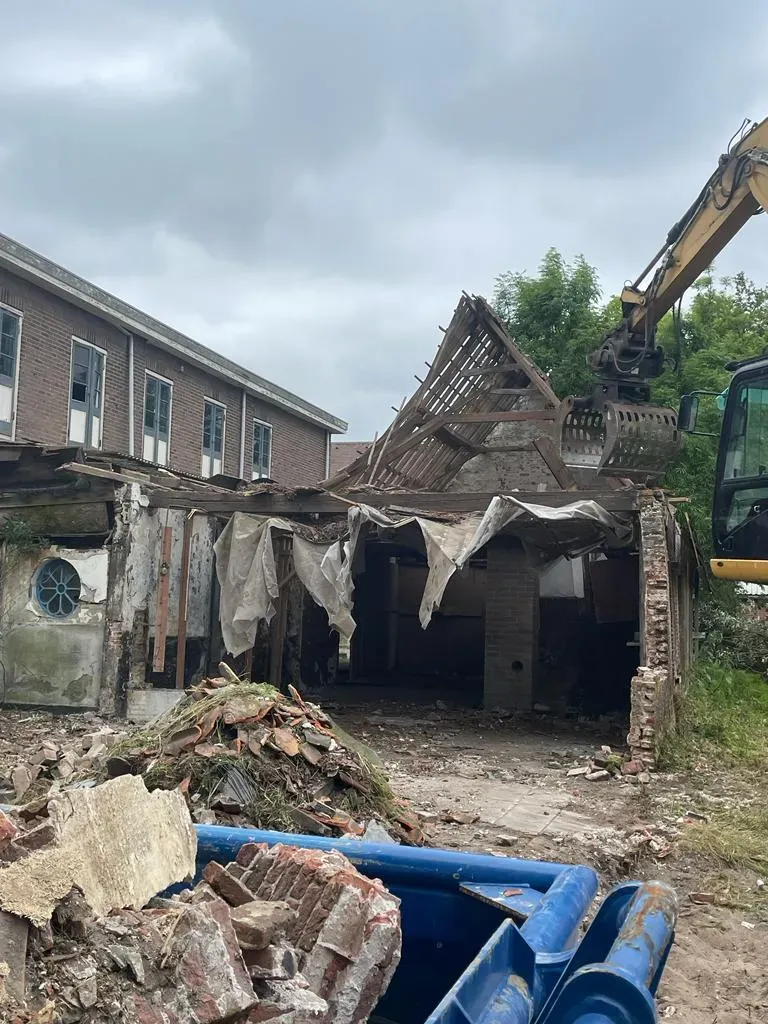
Removing a wall or facade: safe demolition and brick reuse
Removing a wall or facade needs careful preparation. Discover what to consider with load-bearing walls, safe demolition and reusing old bricks.
First establish whether the wall is load-bearing
Before removing a wall, establish whether it has a load-bearing role. A load-bearing wall can form part of the home’s structure, supporting a floor, roof or wall above.
If unsure, looking only at the wall’s thickness or material is not enough. Have a structural engineer or another qualified specialist assess it before demolition begins. A load-bearing wall may require temporary support and a new structural solution.
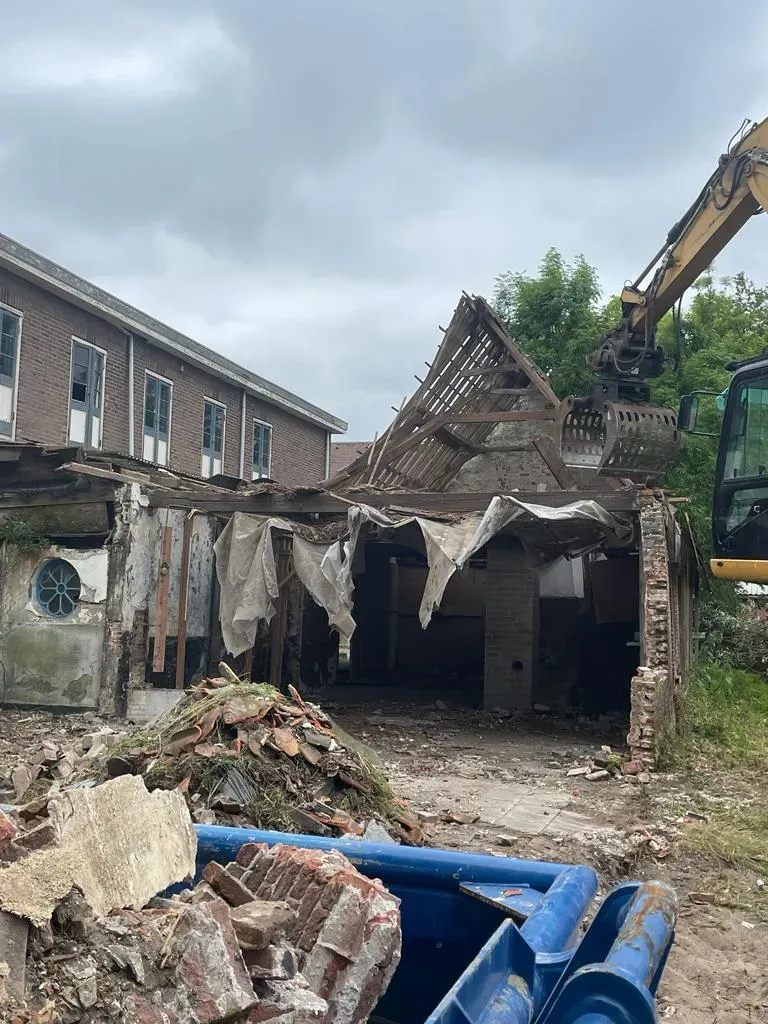
Do you need permission to remove a wall?
That depends on the situation. Structural changes, listed buildings and certain other works may be subject to additional rules, calculations or permissions. Check beforehand which requirements apply to the property and proposed work.
Removing a non-load-bearing internal partition is generally simpler, but it can still contain pipes, electrical wiring or other services.
Preparing to remove an internal wall
Before demolition, make the room safe and clear it as much as possible. Protect floors and components that must remain and isolate services where necessary for the work.
Check the routes of electricity, water, gas and other installations. Do not rely only on visible connection points: services can run through unexpected parts of a wall.
Also decide beforehand how the material will be removed and which components may be suitable for reuse.
How is a masonry wall removed?
Once it is established that the wall can safely be removed, a masonry wall is generally dismantled in a controlled way from top to bottom. This prevents large sections from coming away uncontrollably.
Work in manageable sections and keep the surrounding area clear of falling material. Suitable tools and methods depend on the wall type, mortar, access and whether the bricks need to be preserved.
If the bricks are to be reused, careful dismantling matters more than speed. The less damage during removal, the greater the usable proportion.
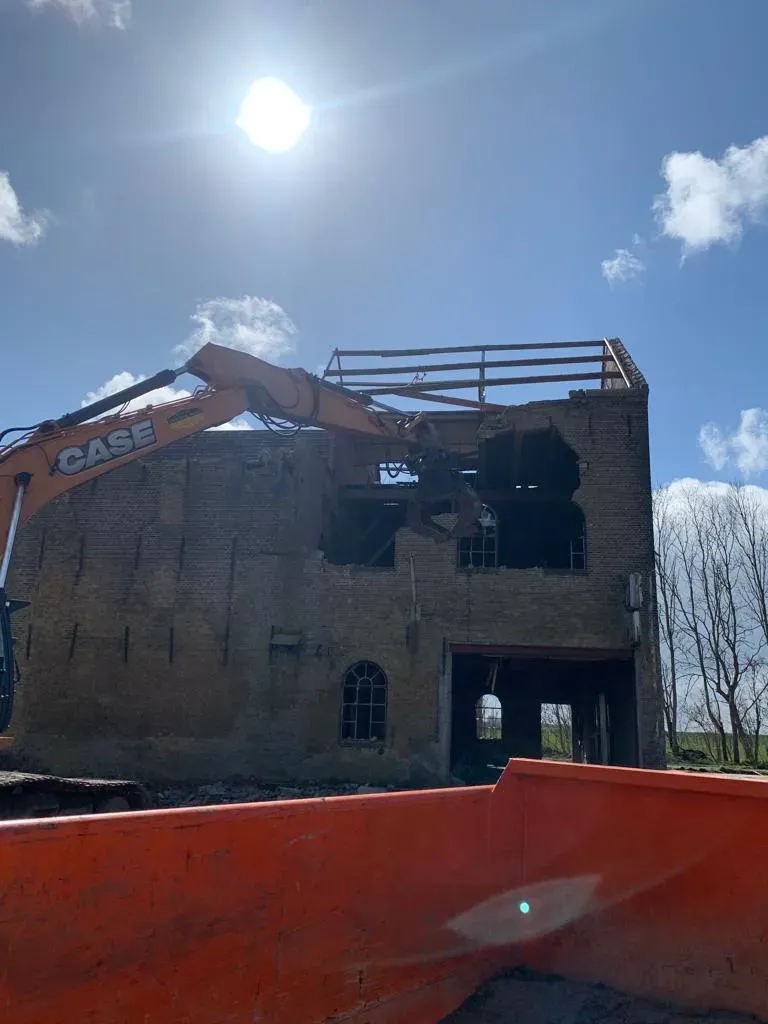
Removing a facade needs extra attention
An exterior facade involves more factors than a simple internal partition. These include the structure, cavity, insulation, frames, junctions, scaffolding and protection from the weather.
An outer leaf may also form part of a larger facade construction with wall ties and other connections. Establish beforehand how it can be dismantled safely and how the building will be protected during the work.
In renovation, it may be worthwhile preserving the existing facing bricks for later use in the same home, an extension or another project.
Reusing old bricks from a wall
Not every brick recovered from a wall is automatically reusable. Brick quality, damage, contamination and the mortar used all help determine how much material can be recovered.
Good reclaimed bricks can be sorted and cleaned of mortar after dismantling. Read about removing mortar from reclaimed bricks. Suitable bricks can then be used again in facades, garden walls, extensions or new builds.
Our projects show examples of reclaimed bricks reused in complete facades and other structures.
Why dismantle bricks carefully?
Mechanical or indiscriminate demolition can break or damage a large proportion of the material. If reuse is planned beforehand, the demolition method can be adapted accordingly.
This sometimes takes more care during dismantling, but produces a usable historical batch that might otherwise become mixed rubble. Distinctive handmade bricks, old Frisian yellow bricks and other characterful batches can be particularly worth preserving.
Read more about the benefits in our article on reused building materials.
Can bricks from a demolished facade be reused immediately?
Usually, they first need checking, sorting and cleaning. Mortar on the bedding faces can prevent proper laying, and damaged bricks are generally kept separately.
How easily old mortar comes off varies considerably by batch. Some historical mortars release relatively easily, while harder mortars can require much more work.
Sorting produces a batch whose dimensions, colour range and usable quantity can be assessed more reliably.
What happens to damaged bricks?
Damaged bricks are not always entirely worthless. Depending on the damage, parts may remain usable as headers, cut pieces or in applications where not every face is visible.
Enough sound material must remain for the intended use, however. Badly damaged or unsuitable bricks are not reused as complete facing bricks.
Replacing an old facade with other reclaimed bricks
Sometimes the original bricks cannot be preserved, or demolition yields too little usable material. Another historical batch may then be found that matches the building in colour, size, texture and age.
Van Dillen Antieke Bouwmaterialen has a large, changing selection of reclaimed masonry bricks from different regions and periods. This allows a suitable batch to be sought for restoration or an entirely new facade.
Common mistakes when removing a wall or facade
Starting without knowing whether the wall is load-bearing
This is the most important mistake to avoid. If in doubt, have the structural situation assessed first.
Overlooking pipes and electrical wiring
Even a non-load-bearing wall can contain services. Check before cutting, drilling or demolishing.
Demolishing too roughly when bricks must be retained
If reuse is the aim, adapt the dismantling method. A brick broken during demolition can no longer be recovered as a whole brick.
Thinking about reuse only after demolition
Decide beforehand which materials may be valuable or reusable. They can then be kept separately during the work instead of ending up mixed with other rubble.
From an old facade to a new project
Removing a facade does not automatically mean the end of its materials. Historical bricks can become part of another home or building after careful dismantling, selection and cleaning.
Reclaimed bricks are no longer used only in restoration. They are also incorporated into modern new builds to give a new facade character from the start. Read more about building with reclaimed masonry bricks.
For examples of the finished result, browse our completed projects using reclaimed materials.
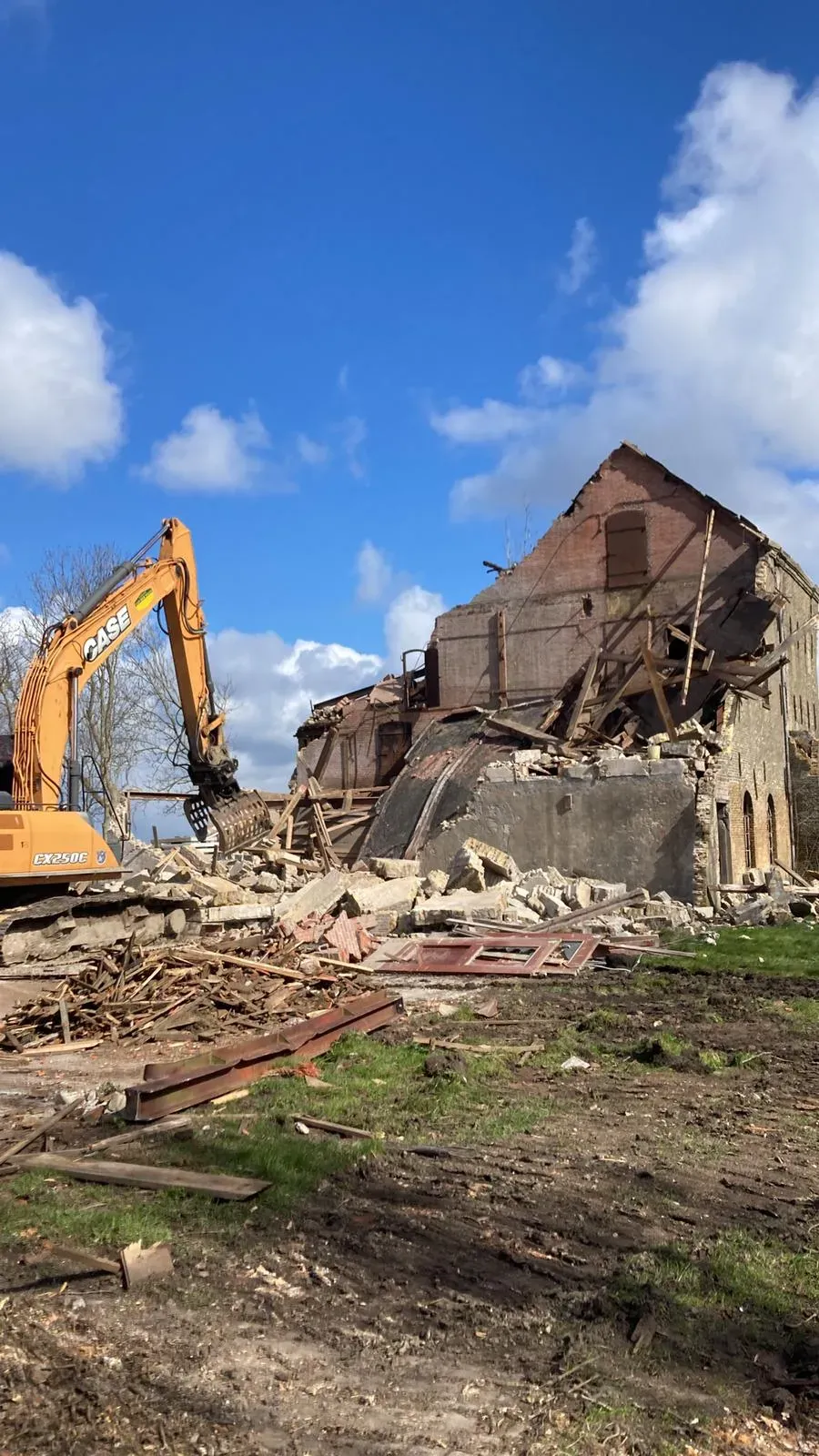
Offering demolition bricks or buying reclaimed bricks
Van Dillen Antieke Bouwmaterialen recovers authentic building materials and makes them available for reuse. If a demolition or renovation project will release an interesting batch of old masonry bricks, contact us to discuss whether it is suitable.
If you need bricks for a project, browse our current reclaimed masonry bricks or visit us in Bolsward to compare batches side by side.