
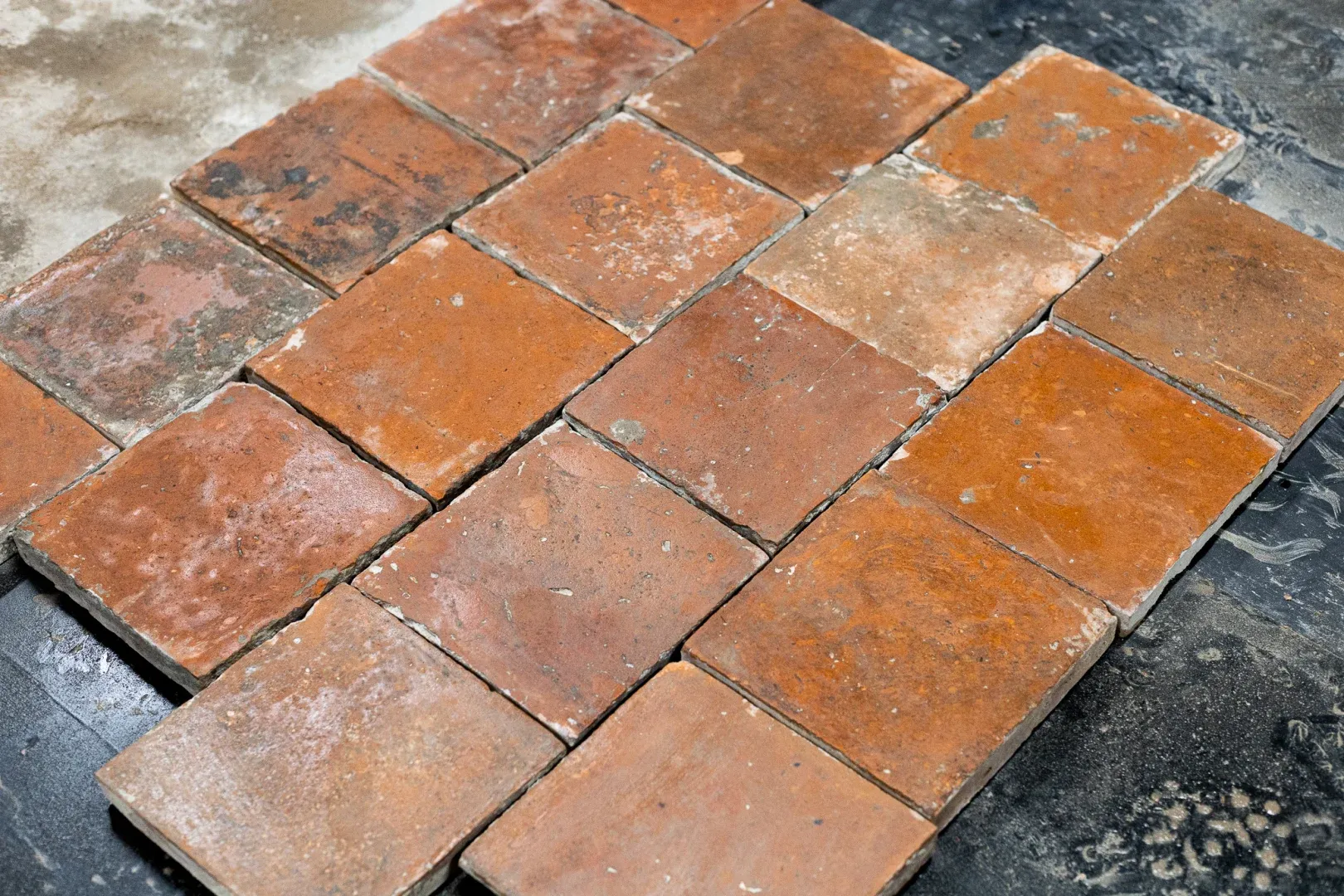
Removing old floor tiles: how to preserve the value of authentic materials
Removing old floor tiles is a job that can lead to surprising finds when done properly. Many old tiles released during renovation are authentic materials, sometimes centuries old. These materials can have considerable value today, as long as they are removed intact.
What do you need to remove old floor tiles?
Before you start removing old floor tiles, it is important to decide whether you want to keep the tiles or whether they may be demolished. That choice determines your approach and tools. For demolishing a floor you will not keep, brute force is enough: an electric breaker, chisel, hammer, and a sturdy working posture. Always wear safety glasses, work gloves, and a dust mask, because a lot of dust and rubble will be released. Rubble bags, a construction vacuum, and plastic sheeting to protect adjacent rooms are also essential.
If you want to remove the tiles intact because they may have value, a different method is needed. In that case, use finer tools: a narrower chisel, a joint scraper, possibly a flat trowel or pry bar. The process takes more patience, but it prevents authentic old plavuizen or old estrikken from breaking.
Removing old floor tiles step by step
Always start in a corner or at a damaged tile where the bond is already weaker. With glued floor tiles, place a chisel in the joint or under the tile edge. Work the chisel inward carefully with light hammer taps until the tile loosens. On larger surfaces, you can switch to a wider chisel or a spade pushed flat under the tiles. Tiles set in cement are much more difficult. An electric breaker is often needed. Use it with care: keep the chisel at a low angle to limit damage to the subfloor.
Work systematically, zone by zone, and check along the way whether anything special appears. Sometimes, beneath an ordinary layer of tiles, there is an older floor with more character. Old tilework can also hide underfloor heating. If you know heating lies under the floor, work extra carefully to avoid punctures. After lifting the tiles, adhesive residue often remains on the subfloor. Remove it with a floor scraper, masonry chisel, or angle grinder. A clean, flat substrate is essential if you want to lay a new floor.
What to watch for when removing old floor tiles
Not every old floor is worth saving, but some tiles certainly are. Floor tiles such as old French tiles, antique plavuizen, or handmade terracotta tiles have authentic characteristics that are no longer reproduced. These materials represent not only historical value, but also substantial market value. It is therefore worth removing tiles as intact as possible.
Pay attention to the thickness of the tiles during removal. Thin old tiles break quickly; thick pieces are stronger but heavier. Stack tiles carefully and place cardboard or foam between layers to prevent damage. If you are unsure whether your tiles are worth saving, take photos and contact a specialist such as Van Dillen Antique Building Materials. We are happy to assess whether your material is suitable for reuse.
Also watch the subfloor. If it is damaged during removal, it must be leveled before you can continue. A sound substrate is the basis for any new floor, whether it is tile, concrete, or wood.
We buy old floor tiles
At Van Dillen Antique Building Materials, we save authentic building materials from demolition. That includes old floor tiles. Do you have a farmhouse, townhouse, or commercial property with an old floor that you are replacing? Then we may be interested in your material, provided it is sufficiently authentic and of good quality. We assess material based on condition, dimensions, demolition work, and cleaning time. Read more about buying-in materials on our purchase page. We aim for fair prices and smooth handling.
Feel free to contact us if you want to remove an old tile floor and suspect the tiles have value. We are happy to advise you on the best approach and give an honest assessment. Sometimes that means careful dismantling and storage. Sometimes demolition is the better option. But it is always sensible to make that assessment before the breaker goes in.
Frequently asked questions about removing old floor tiles
How do I remove an old tile floor?
Start in a corner and tap a hammer and chisel under the edge of the tiles. Use an electric breaker if the floor may be broken, or work carefully with a hand chisel at a low angle if you want to reuse the antique tiles.
How difficult is it to remove old floor tiles?
That depends on how they were installed: glued tiles can usually be loosened fairly easily with a chisel or spade, while tiles set in cement are much more difficult and require a breaker. Removing old tiles intact is also time-consuming because they break easily.
How do I get rid of my old tiles?
Broken tiles can be disposed of as regular construction rubble, but authentic usable tiles can be sold to Van Dillen Antique Building Materials. We assess the quality and are happy to buy good batches for reuse.