
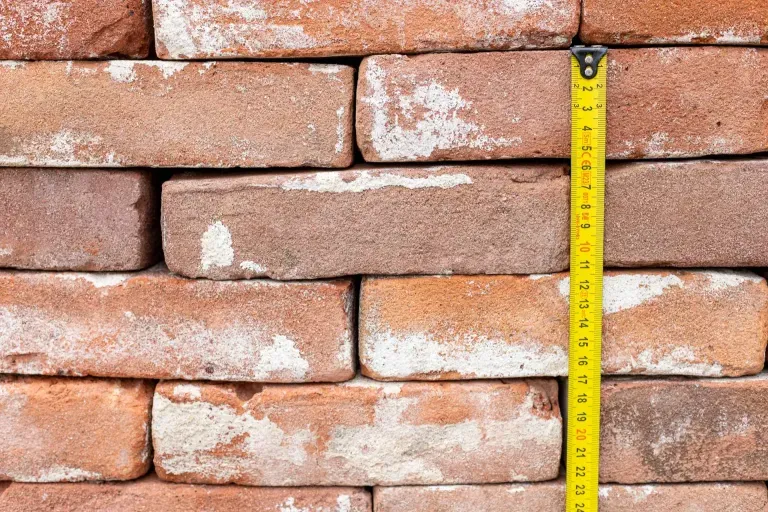
Brick dimensions: formats, joints and bricks per square metre
What are the dimensions of bricks? Explore common formats, the effect of mortar joints and how to calculate the number of bricks needed per square metre.
What are the dimensions of bricks?
Bricks come in many sizes. In the Netherlands, Waalformaat is a familiar size, with approximate guide dimensions of 210 x 100 x 50 mm. There is nevertheless no single standard size for every brick.
Reclaimed masonry bricks in particular include many historical formats. Dimensions can also vary slightly within one batch. For restoration, extensions or reuse, measure the actual bricks rather than relying solely on the format name.
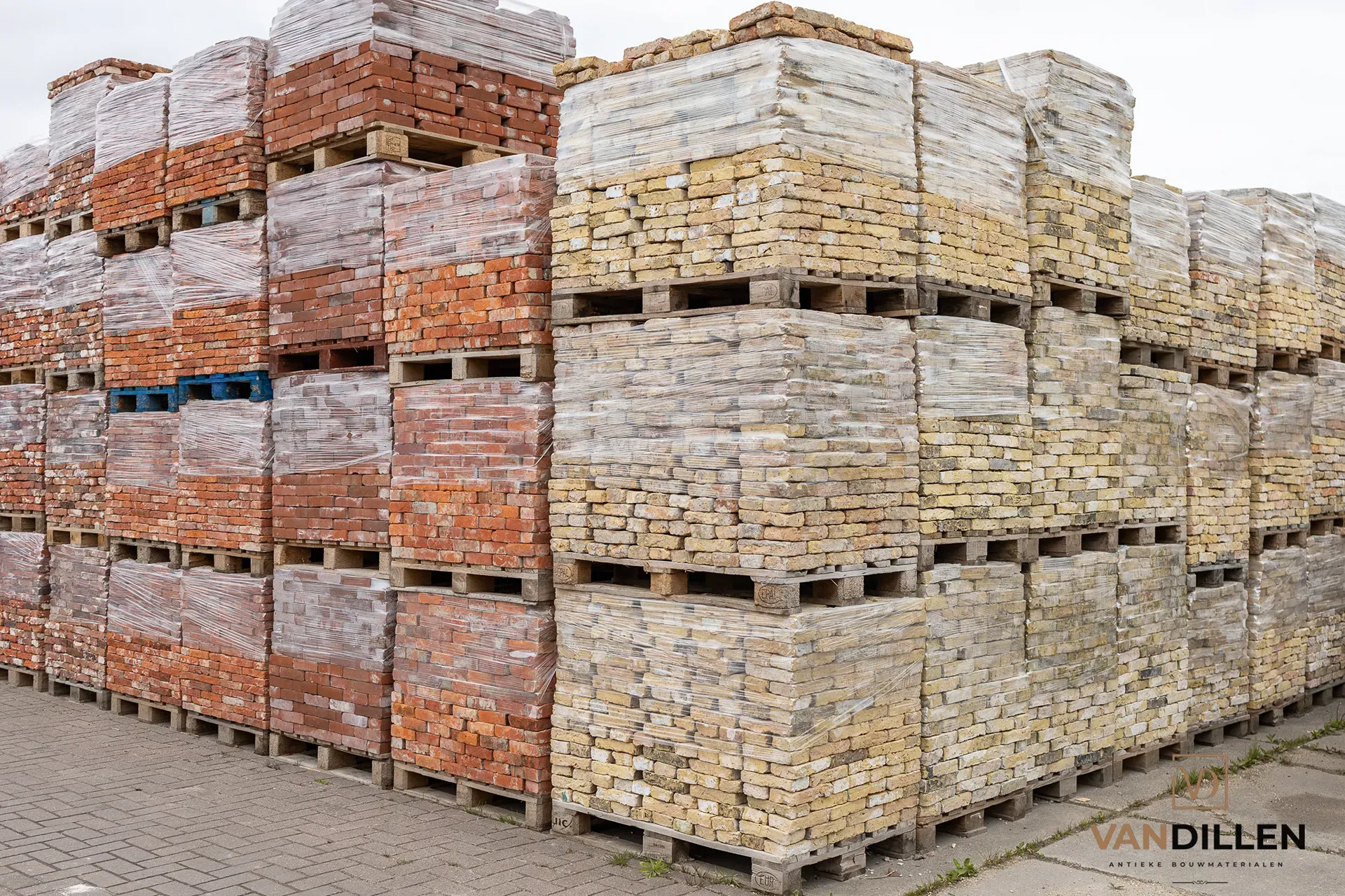
Brick length, width and height
Brick dimensions are generally written as length x width x height. Length together with the joint determines the facade’s horizontal rhythm, while height and the horizontal bed joint determine how many courses are needed.
Width matters for the construction of the masonry and for bricks laid with the header visible.
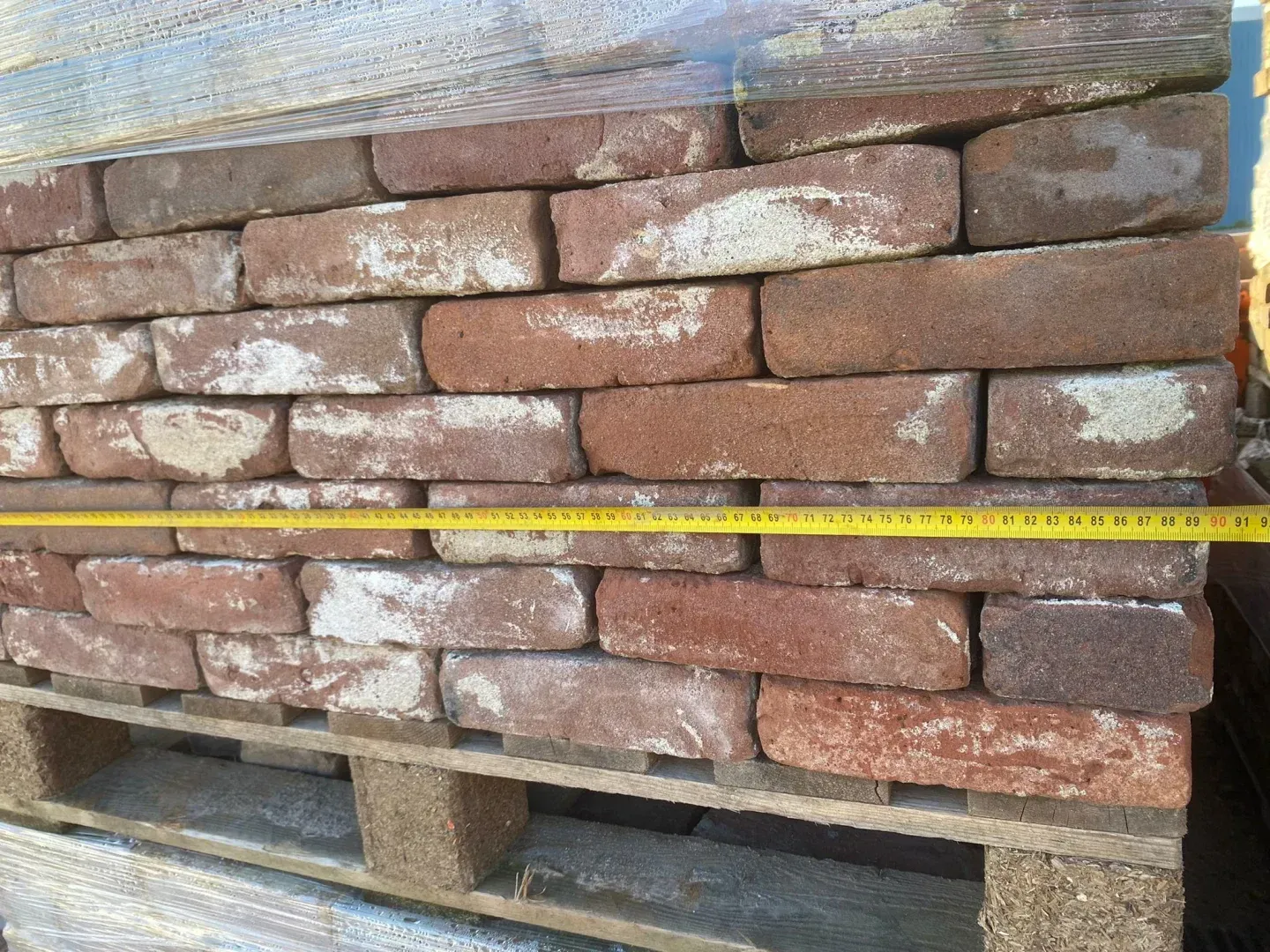
Common brick formats
Alongside Waalformaat, there are various other modern and historical formats. Names can also differ by region or period.
Waalformaat
Waalformaat is often described as approximately 210 x 100 x 50 mm. For its application and an approximate quantity per square metre, read what is Waalformaat?.
Dikformaat
Dikformaat is generally taller than Waalformaat. This changes the number of courses per metre of facade height and gives the masonry a different horizontal rhythm.
Historical formats
Old bricks can differ noticeably from modern standard formats. Regional production methods, local clay, moulds and manufacturing period all play a role. This makes reclaimed batches interesting when new masonry needs to match an existing historical facade.
Well-known historical brick sizes
Various historical format names occur among reclaimed bricks. The dimensions below are guides: batches can differ because of origin, period, production method and shrinkage. For restoration especially, measure both the existing facade and the batch on offer.
IJsselformaat
Approximately 160 x 78 x 41 mm. A small historical format commonly found among old IJssel bricks.
Drielingformaat
Approximately 180 x 90 x 45 mm as a general historical guide. Regional varieties include Frisian and Rhine drielingen, so actual dimensions can differ.
Vechtformaat
Approximately 210 x 100 x 40 mm. This format has roughly the length and width of Waalformaat but is noticeably lower.
Rijnformaat
Approximately 180 x 87 x 41 mm as a commonly used size designation. Historical Rhine bricks and drielingen include variations on this measurement.
Hilversumsformaat
Approximately 225 x 105 x 42 mm as a familiar guide. Other dimensions also occur under this name in sources and actual batches.
Kloostermoppen
These are large historical bricks. Common guide dimensions are approximately 280 x 105 x 80 mm and 320 x 130 x 80 mm. Older examples can vary considerably.
These names illustrate why a single table of ‘the standard brick size’ is too simplistic for historical materials. A format name is a useful starting point, but the actual batch dimensions remain decisive.
Why do old bricks vary in size?
Historical bricks were not always made with the dimensional consistency expected of modern industrial products. Older production methods in particular can produce small differences in length, width and height.
Use, mortar residues, wear and sorting can also affect measurements. This variation is normal in many reclaimed batches and contributes to the lively character of historical masonry.
How high is a brick including the mortar joint?
The course height consists of the brick height plus the horizontal bed joint. A brick approximately 50 mm high with a joint of about 10 mm, for example, creates a course height of roughly 60 mm.
This is only a calculation example. Old bricks and traditional facades may have different brick heights and joint widths. When matching existing work, measure several courses together to establish a reliable average course height.
How many bricks fit in one square metre?
The quantity depends on the visible face dimensions and the joints. Smaller bricks require more pieces; wider joints reduce the number per square metre.
For a rough calculation in half-brick-thick facing masonry, use the brick length plus the vertical joint and the height plus the horizontal joint. Divide one square metre by the area of that combined module. With reclaimed bricks, a calculation using the actual batch remains the most reliable.
A Waalformaat calculation example
Take a brick with a visible face of 210 x 50 mm and 10 mm joints. The combined module is approximately 220 x 60 mm. In theory, this gives around 76 bricks per square metre.
In practice, the quantity can differ because of actual brick dimensions, joint width, bond, cutting and detailing. Use the calculation as a starting point, not an exact ordering guarantee.
How do you measure reclaimed bricks accurately?
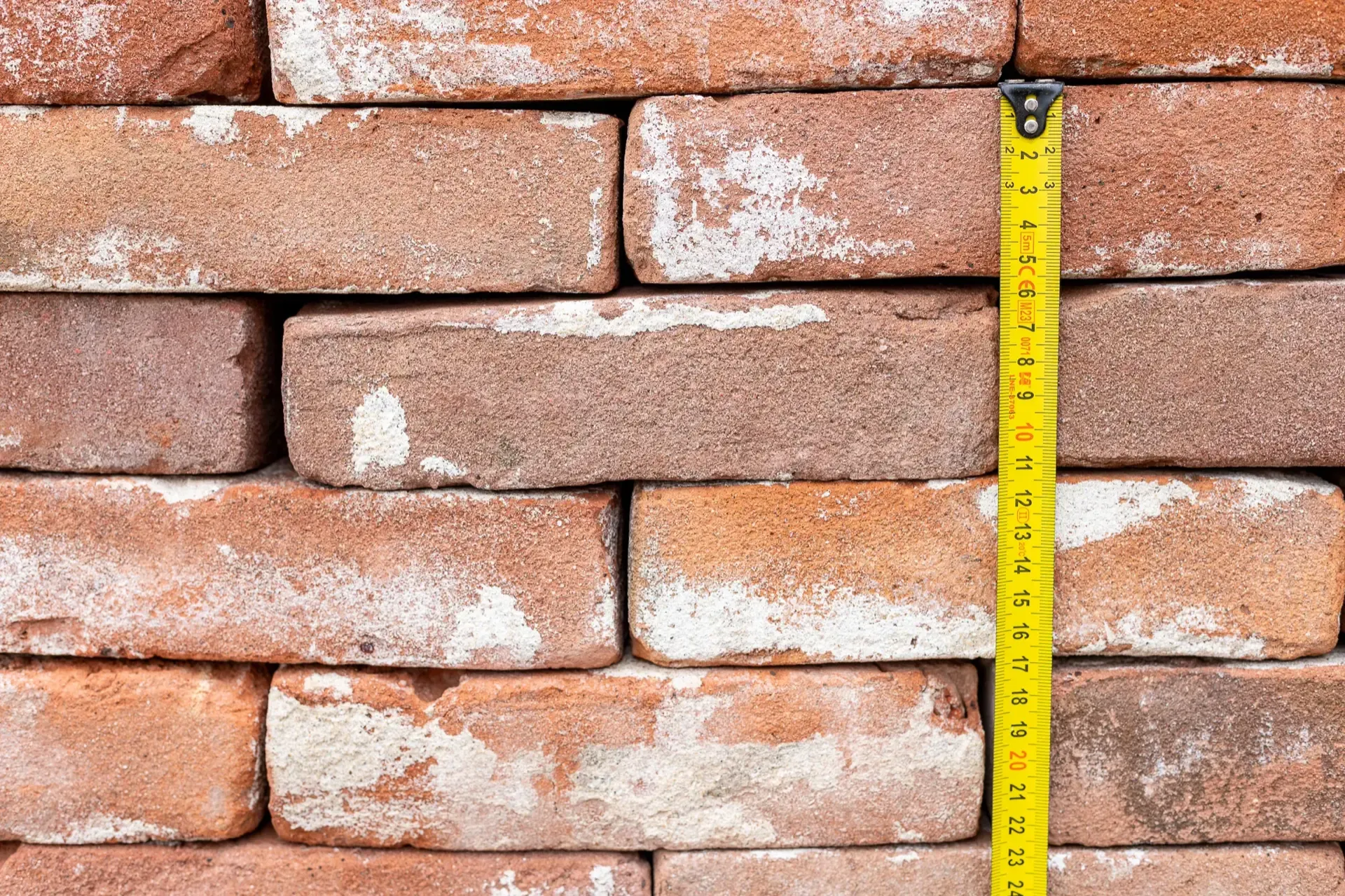
Never measure just one brick. Take several from different parts of the batch and record length, width and height. If there is clear variation, work with both an average and a range.
To match existing masonry, also measure several bricks and several courses in the existing facade. This accounts for both brick dimensions and the existing joints.
Dimensions and brick bond
Brick dimensions influence how a bond works out. Length, width and their relationship matter particularly in patterns where headers and stretchers are both visible.
Sound visible faces also matter with reclaimed bricks. In certain applications, usable headers from reclaimed bricks can help make efficient use of the material.
Which brick size suits your project?
For restoration, matching the existing brickwork is often the main consideration. Look beyond dimensions to colour, texture, age and production method.
A new build offers more freedom. A lower, longer or taller format can strongly change the facade’s appearance. Also read our explanation of different brick types.
Selecting reclaimed bricks by size
If you need a specific size for restoration, an extension or a new build, browse our current reclaimed masonry bricks and compare the listed batch dimensions with your existing facade or design.
Our projects show how different formats shape the finished facade. For practical laying guidance, read building with reclaimed bricks.
Frequently asked questions about brick dimensions
What is the standard size of a brick?
There is no single size for all bricks. Waalformaat is very familiar in the Netherlands and is often described as around 210 x 100 x 50 mm, but many other modern and historical formats exist.
How many bricks are needed for one square metre?
That depends on brick length and height and joint width. For Waalformaat with approximately 10 mm joints, a theoretical calculation gives around 75 to 76 bricks per square metre, but the actual batch and laying method determine the result.
Are all reclaimed bricks the same size?
No. Dimensions can vary between batches and within one batch. Measure several examples when an exact match matters.
How much joint width should I add to the brick dimensions?
That depends on the intended masonry. Approximately 10 mm is a commonly used calculation value, but historical facades and specific designs may use another joint width.