
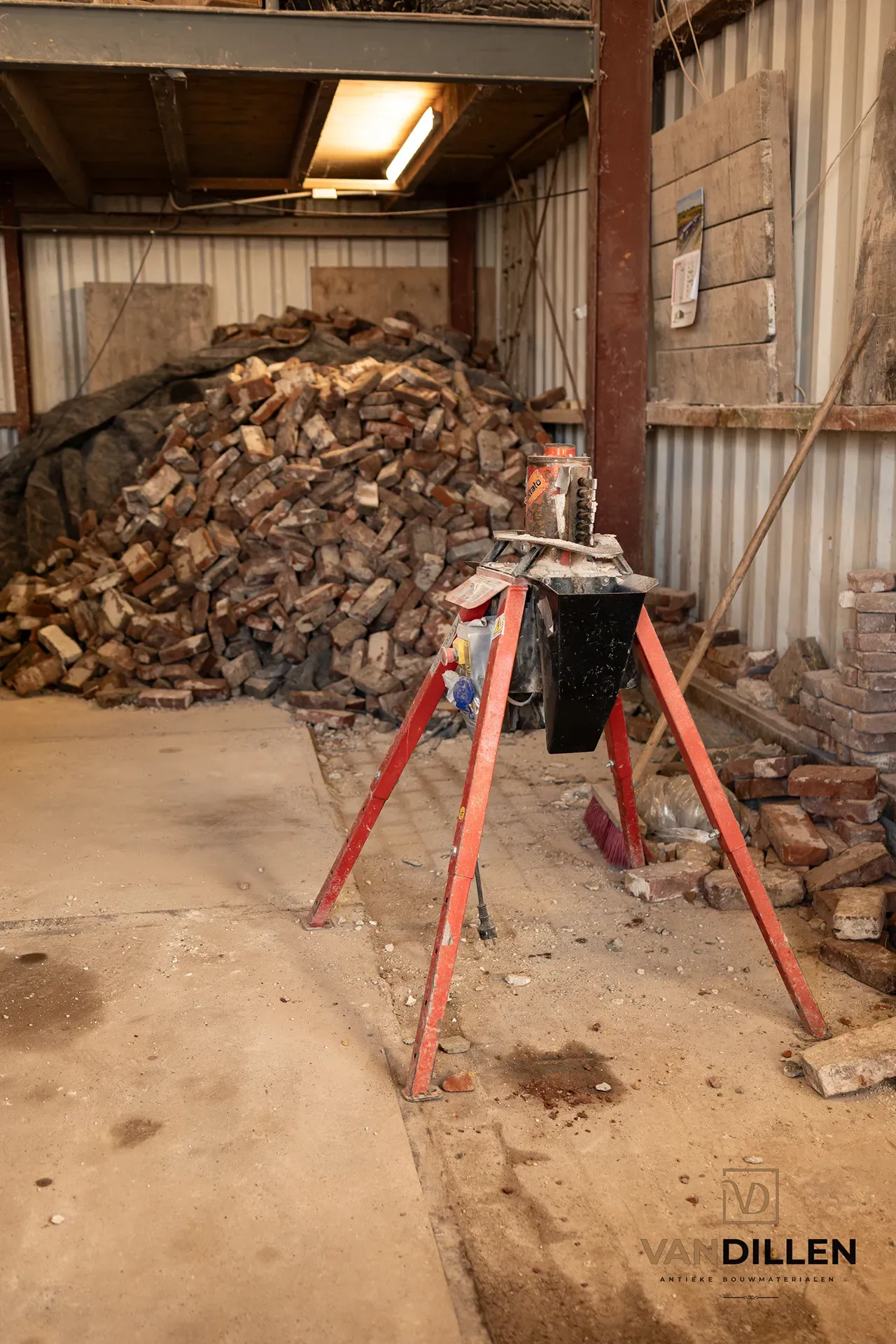
Removing mortar from reclaimed bricks: do it yourself or use a specialist?
Removing old mortar makes reclaimed bricks suitable for reuse. Discover how brick cleaning works, which tools are used and when professional mortar removal is the better option.
What is mortar removal from reclaimed bricks?
This is the removal of old mortar and cement residues from used bricks so they can be laid again. It sounds simple, but cleaning a complete batch is heavy, labour-intensive work requiring attention to each brick. With reclaimed masonry bricks, it is often an important step between dismantling a facade and laying the bricks again.
The aim is not to make an old brick look new. Patina, colour variations and signs of use give reclaimed bricks their character. Mortar removal mainly clears residues that would interfere with laying.
Why is old mortar removed?
Bricks from demolition and renovation projects usually retain original mortar on their bedding and end faces. Where a brick is suitable for reuse, these residues are removed sufficiently to make it usable again.
The bricks can then be selected for quality, size and colour, creating a batch for a facade, extension, garden wall or restoration. Our projects show examples of reused historical materials.
Can mortar be removed from every old brick?
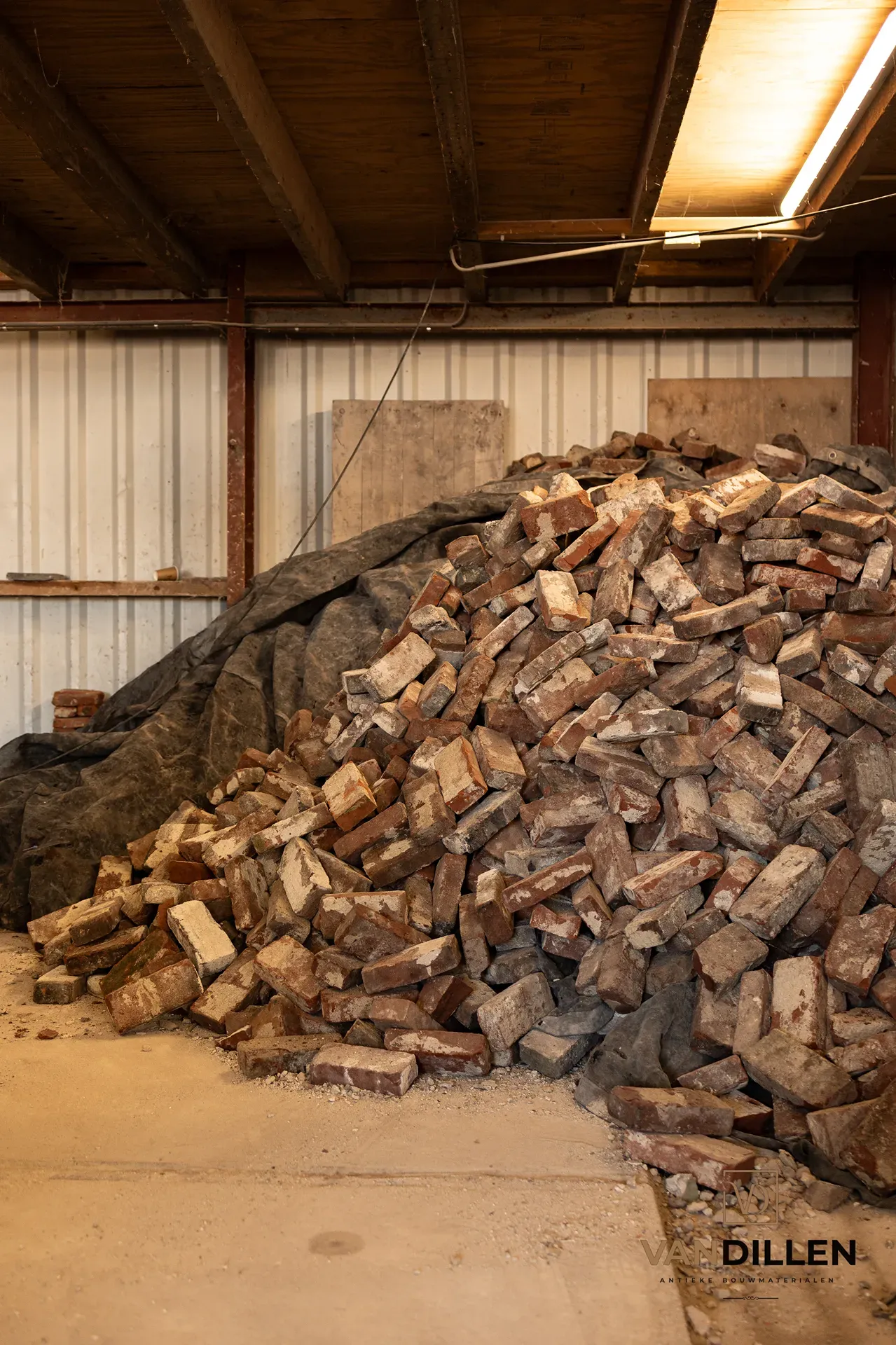
No. Ease of cleaning depends strongly on both the brick and the mortar used. Soft or damaged bricks can break during cleaning. Very hard cement-rich mortar may adhere so strongly that removing it becomes much more difficult or uneconomic.
A fixed construction date is therefore not a reliable dividing line. An earlier version of this page, for example, stated that bricks from after 1935 could almost never be cleaned of mortar. In practice, each batch needs assessment for brick quality, mortar, adhesion and desired final quality. Trying a few bricks often gives a useful indication quickly.
How is mortar removed from bricks?
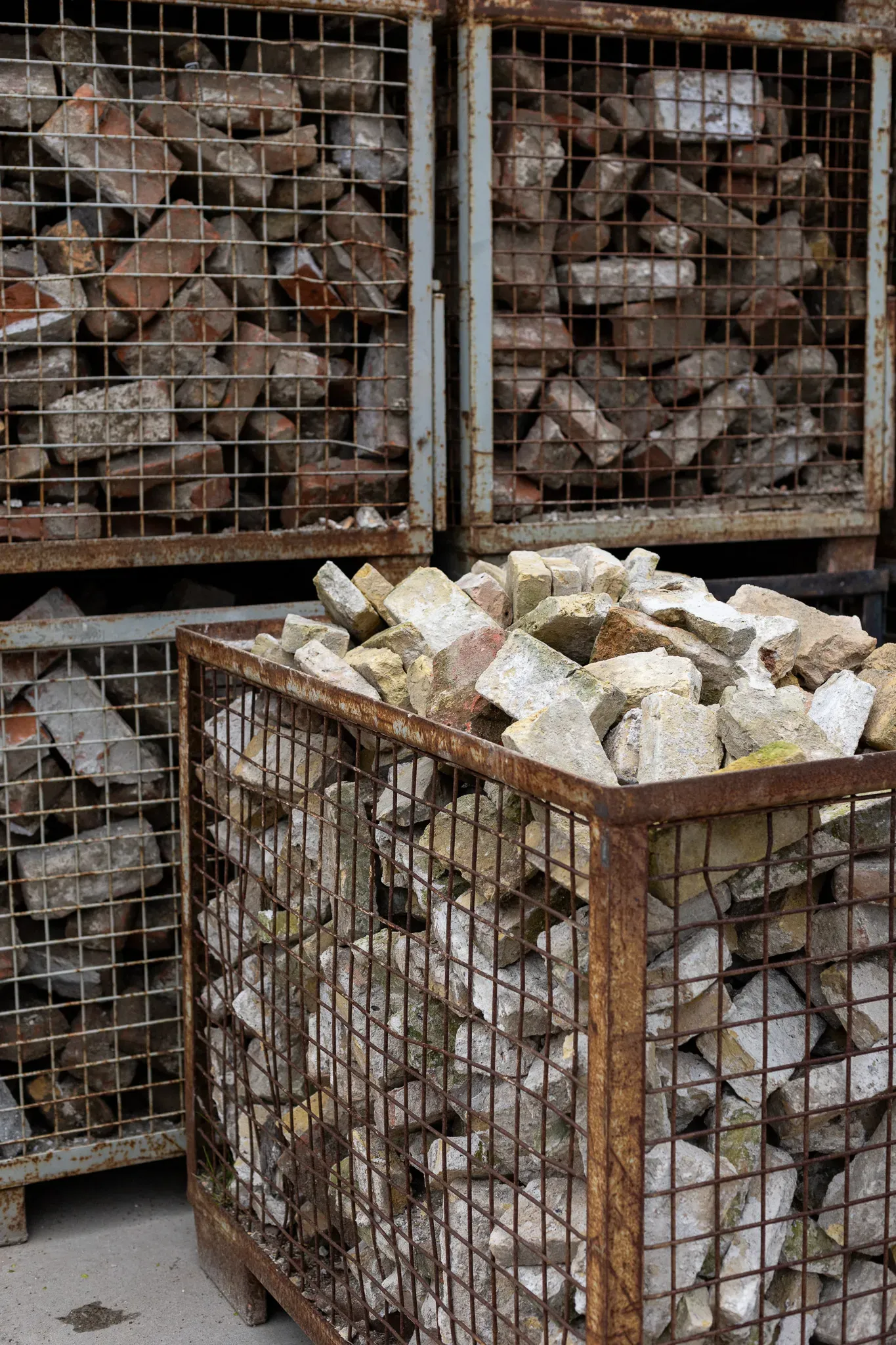
Small quantities can be cleaned by hand. For larger batches, specialised electric or pneumatic tools can speed up the work. The suitable method depends on mortar hardness and the vulnerability of the brick.
Step-by-step mortar removal
- Check that the brick is intact and hard enough for reuse. Separate clearly damaged examples.
- Remove large, loose mortar residues carefully. Work from the mortar towards the brick and avoid heavy direct blows to vulnerable edges.
- Clear the bedding and end faces sufficiently for relaying. The brick does not need to be cosmetically spotless.
- Check again for cracks, splintering and remaining residues that could hinder laying.
- Sort the cleaned bricks by usability, size and colour where necessary. Read more about historical measurements in brick dimensions.
Which tools are used?
Manual cleaning usually uses an appropriate hammer and chisel. Electric or pneumatic chipping hammers may be used for larger quantities. Tools must suit the brick and mortar: overly aggressive work increases splintering and breakage.
Wear suitable personal protection, including eye protection, gloves and protection against dust and noise. Experience and control are particularly important with powered tools.
How clean do reclaimed bricks need to be?
A reused brick does not have to be completely bare or uniform. Light historical traces can contribute to the batch’s character. What matters more is sufficiently removing obstructive mortar from the faces needed for laying again.
The extent of cleaning therefore depends on the material and application. An authentic old brick can still look old after mortar removal.
Remove mortar yourself or have it done professionally?
Cleaning a few dozen bricks yourself may be manageable. With hundreds or thousands, however, it quickly becomes heavy, dusty and extremely time-consuming. Every brick needs individual treatment, and mortar differs considerably by batch. Working too hard, too quickly or at the wrong angle can damage edges, break off headers and create unnecessary losses.
Professional cleaning is therefore often the more practical choice for large batches. Suitable tools and experience allow more efficient work while preserving as many usable bricks as possible. Van Dillen Antieke Bouwmaterialen processes and cleans large reclaimed batches and can assess brick quality, mortar, quantity and desired final quality beforehand. To discuss technical possibilities or the cost of cleaning your batch, contact us.
What happens after mortar removal?
Usable bricks are generally sorted further by size, colour, quality and the desired facade appearance. Natural variation is normal in old batches. Good distribution during laying spreads it attractively across the wall.
If you intend to reuse the bricks, read our guide to laying reclaimed bricks. Reusing existing bricks also extends the material’s lifespan. Read more about the sustainability of reused building materials.
Can old floor tiles also be cleaned of mortar?
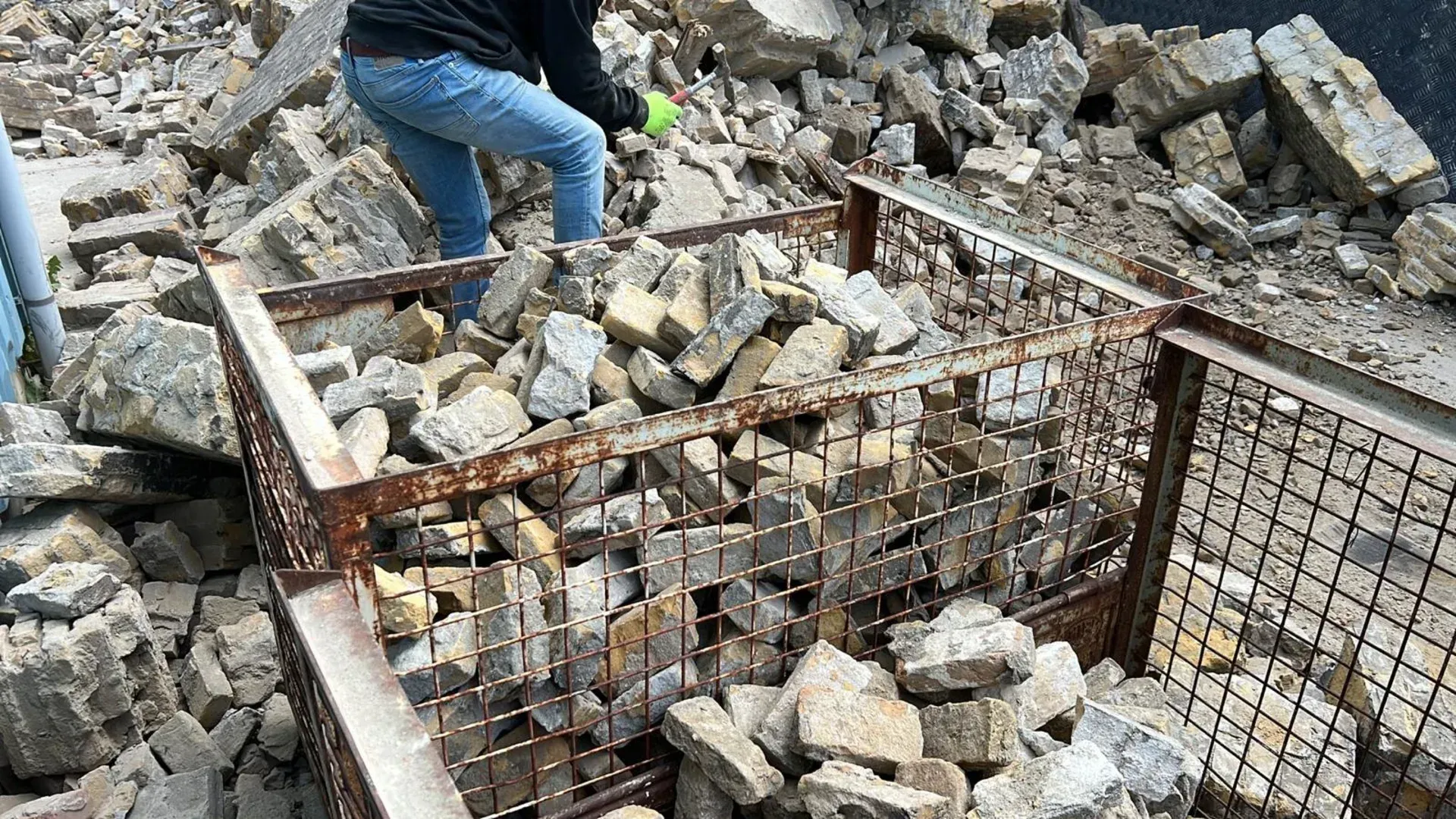
Yes. Reclaimed floor tiles may retain mortar or cement underneath after removal. Tiles generally require a different, more cautious approach than masonry bricks because damage and breakage directly affect reusability.
With old Dutch terracotta floor tiles (estrikken), for example, the historical surface also needs protection. Removing them intact first and cleaning them carefully afterwards is often wiser than trying to remove every residue during demolition. Also read our explanation of removing old floor tiles.
How is mortar removed from floor tiles?
Most of the work is usually on the underside and sometimes the edges. First remove large, loose lime, mortar or cement residues carefully. Further cleaning can then make the tile sufficiently flat and usable for relaying. It does not need to look completely new.
Care is particularly important with old floor tiles and estrikken. Their relatively large surface area can make them more prone to breaking than bricks. Historical glaze also needs protection on glazed estrikken. Hard cement residues can make the work substantially harder and require extra control.
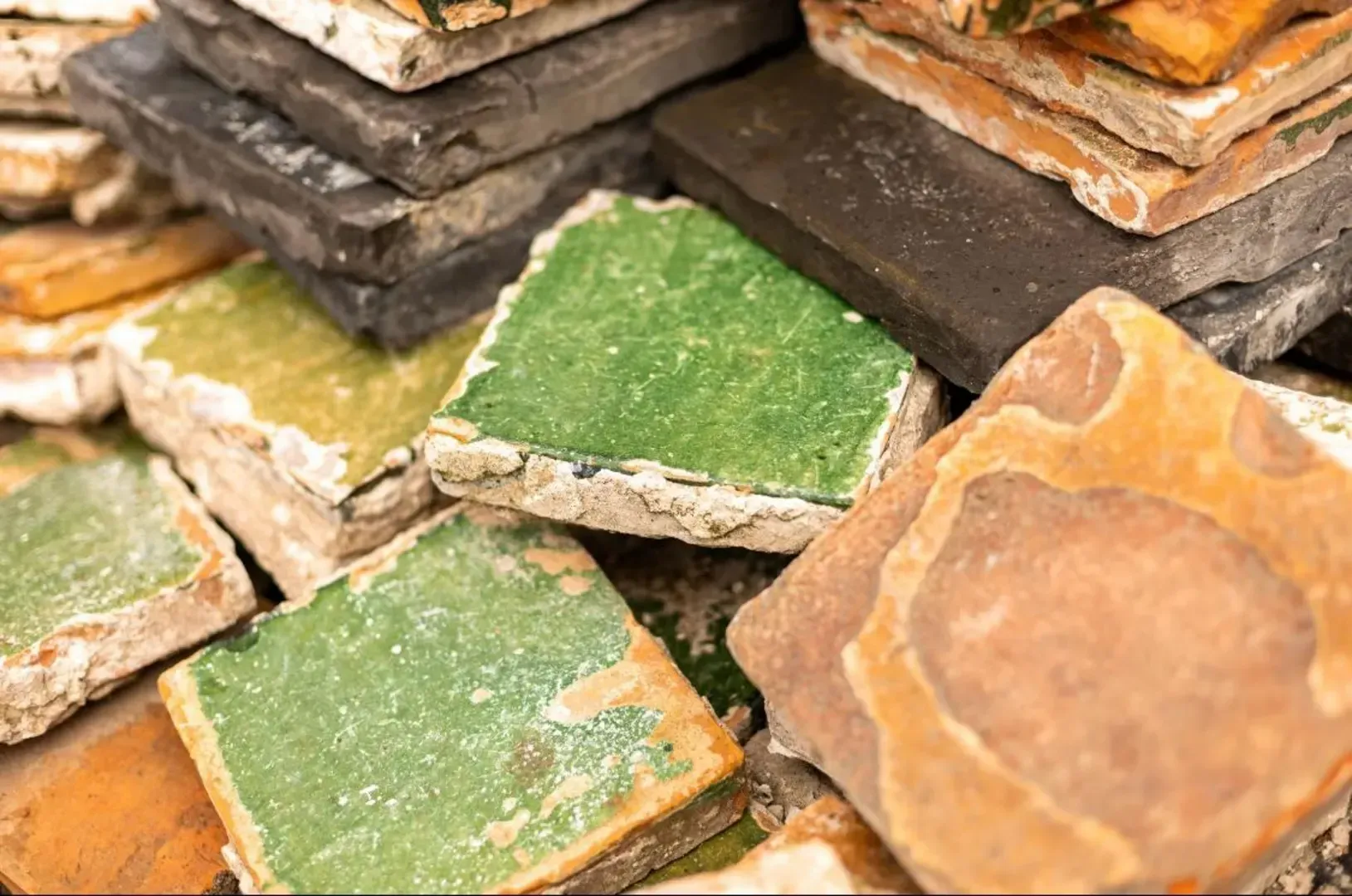
Having old floor tiles cleaned of mortar
Van Dillen Antieke Bouwmaterialen can also remove mortar from old floor tiles. In practice, this is less common than cleaning masonry bricks, but a suitable batch may need old mortar or cement removed for reuse. The work depends on tile size and thickness, mortar hardness and adhesion, and the condition of the batch.
Because every old floor differs, we assess each batch individually. To find out whether your old floor tiles or estrikken are suitable for cleaning or reuse, contact us without obligation. Also read how to remove old floor tiles carefully when preserving them for reuse.
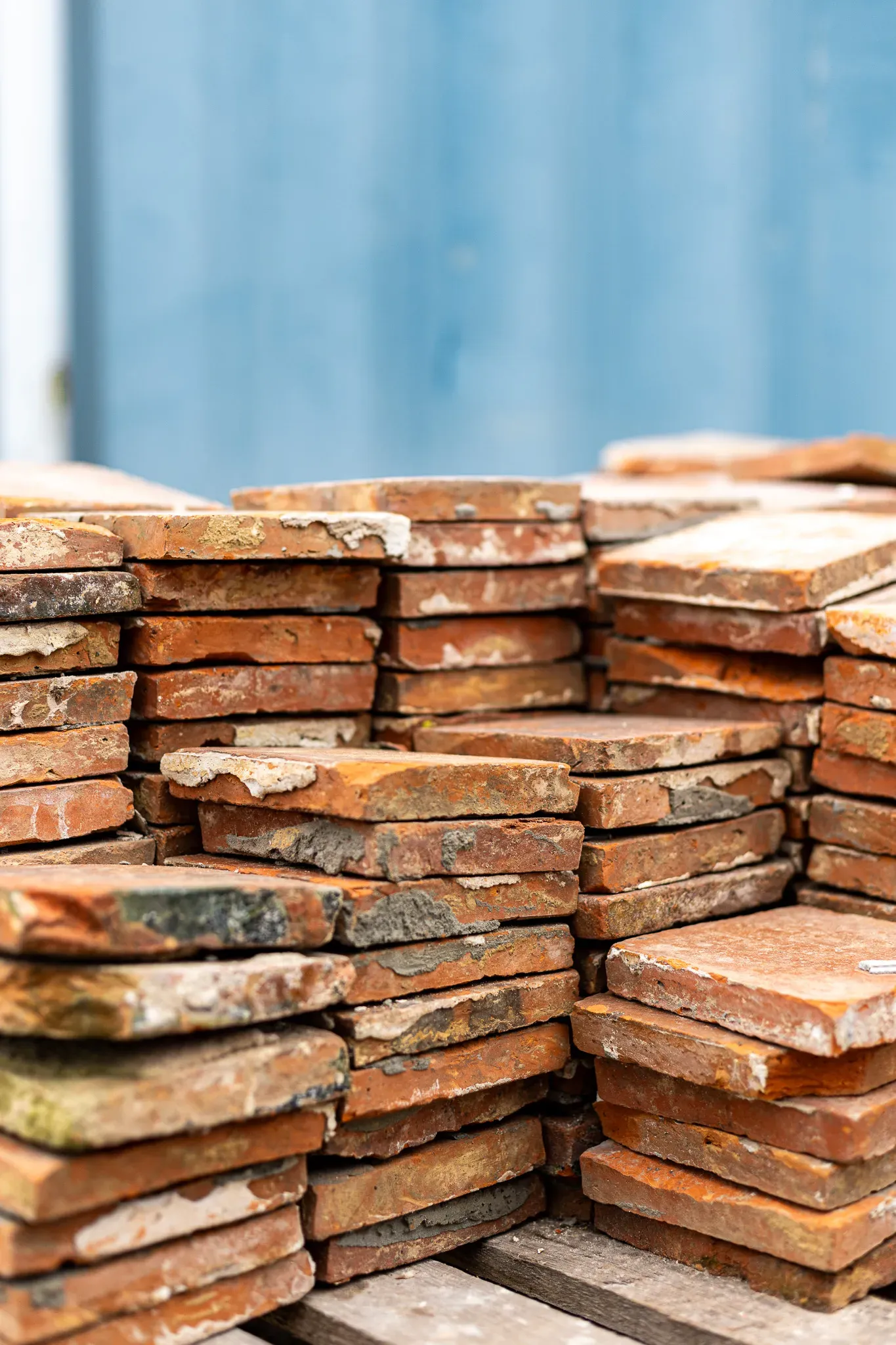
Frequently asked questions about removing old mortar
What does professional mortar removal cost?
That depends on the number and size of bricks, the hardness and amount of mortar, desired final quality and losses. The batch therefore needs assessment before a suitable rate can be established.
Can cement be removed from old bricks?
Often it can, but hard cement-rich mortar can be much harder to remove than softer historical mortar. Whether cleaning without unnecessary damage is possible must be assessed for each batch.
Must reclaimed bricks be completely clean for reuse?
No. The faces needed for relaying must be sufficiently free of obstructive residues. Light historical traces or patina do not have to disappear and are often part of the authentic appearance.
Can I remove the mortar myself?
With a limited quantity and suitable mortar, yes. Remember that it is labour-intensive and incorrect cleaning can damage bricks. With hundreds or thousands, the time required rises quickly. Professional cleaning is therefore often more practical and efficient for larger batches or strongly bonded mortar.