Cleaning old bricks: air gumming or sandblasting?
Old bricks often have a beautiful, lived-in appearance, but after years of dirt, deposits, paint, or cement residue, cleaning may be necessary. The two most common techniques are air gumming and sandblasting. Both remove dirt, but the approach, intensity, and costs differ considerably.
Cleaning old bricks: which technique works best?
Old bricks can be cleaned in two ways: gently with air gumming, or more intensively with sandblasting. The right method depends on the condition of the masonry, the type of dirt, and the finish you want. A gentle approach cleans the surface without damaging it, while a more intensive method removes stubborn dirt but carries more risk. Below we compare the options clearly.
Air gumming: the gentle and safe method
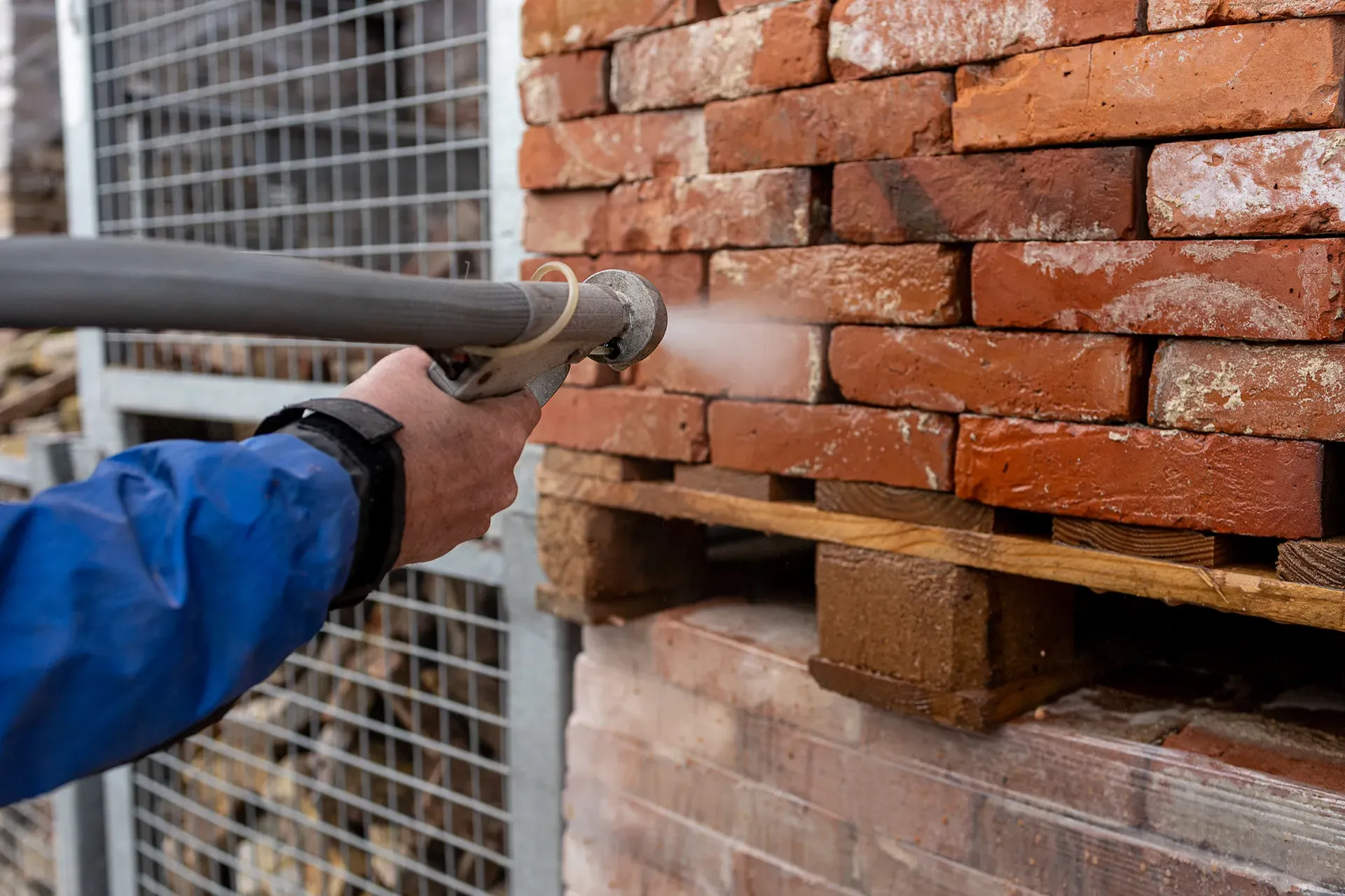
Air gumming a facade is a mild cleaning technique in which a fine blasting medium is applied under low pressure. The grains “polish” the surface without making the brick rough.
When do you choose air gumming?
Air gumming is ideal when:
- you want to clean old bricks without damaging them
- a brick wall needs subtle cleaning
- there is light to moderate soiling
- you want to remove cement haze, paint, green deposits, or soot
- the masonry is porous, historic, or vulnerable
The benefits of air gumming
- Very suitable for old and soft bricks
- Low risk of damage or a roughened surface
- Subtle final result that preserves the original color
- Perfect for restoration projects
The disadvantages of air gumming
- Less suitable for extremely thick or long-standing paint layers
- Large facades take more time
Sandblasting a facade: powerful but riskier
Facade sandblasting uses higher pressure and a coarser blasting medium. This removes dirt faster and more intensively. It is very effective, but it must be applied carefully.
When do you choose sandblasting?
Sandblasting is suitable when:
- the brick wall is extremely dirty
- thick layers of paint, cement, or soot are present
- the masonry is hard-fired
- restoration subtlety is less important
- you want to roughen the facade in preparation for painting
The benefits of sandblasting
- Very powerful and removes almost any layer
- Faster result with heavy soiling
- Ideal for industrial or more modern facades
The disadvantages of sandblasting
- Higher risk of damaging soft or antique bricks
- The surface can become rougher or more porous
- Not suitable for historic facades
- After-treatment is sometimes required, such as impregnation
Air gumming versus sandblasting: the best choice per situation
Situation | Best technique |
Old, porous, or historic bricks | Air gumming |
Listed buildings and historic facades | Air gumming |
Brick wall with light to moderate deposits | Air gumming |
Very heavy soiling or thick paint layers | Sandblasting |
Industrial buildings or hard, modern bricks | Sandblasting |
When color preservation matters | Air gumming |
When speed matters | Sandblasting |
In short: air gumming is safe and subtle; sandblasting is powerful and intensive.
Which is cheaper: air gumming or sandblasting?
It depends on how you approach the work. In both cases, it is more expensive if you hire a professional. If you prefer to do it yourself, you must account for the cost of equipment.
An important nuance:
- If sandblasting causes damage, expensive repairs and impregnation treatments can follow.
- Air gumming usually requires less after-treatment and often gives a better result.
Conclusion: which method should you choose?
Cleaning old bricks requires a technique that suits the condition of your facade and the result you want. Air gumming is by far the best choice for historic, porous, or characterful bricks. It is gentle, precise, and preserves the original appearance of the wall. For very heavy soiling, sandblasting is more effective, but it is also riskier and potentially more expensive in the long term.
In summary:
- Choose air gumming for safety, color preservation, and restoration.
- Choose sandblasting for heavy soiling on hard brick.
By choosing the right technique, you prevent damage and keep your facade beautiful and authentic for years to come.