
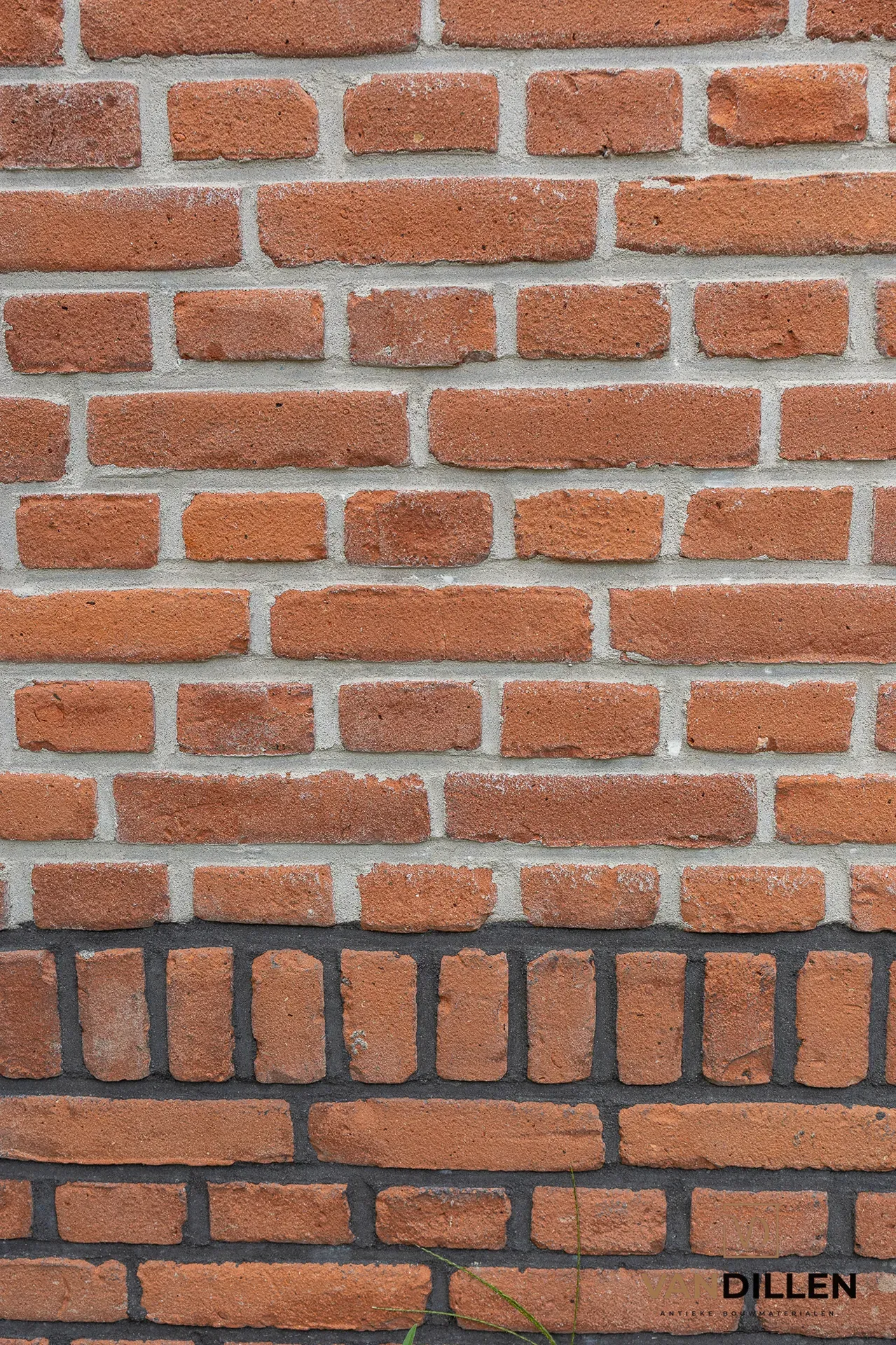
Headers in brickwork: what are they and how can they save money?
Usable brick headers can save on materials in certain brick bonds. Discover what headers are, where to use them and how the header gauge is determined.
What are headers in brickwork?
A header is the short face of a brick. The long face is called the stretcher. Traditional patterns such as English cross bond and English bond alternate headers and stretchers to create their characteristic appearance. You can read more in our guide to types of brick bond.
With reclaimed masonry bricks, the availability of usable headers is also important. A brick may have broken on one side during recovery and no longer be usable as a whole brick, while still having a sound header.
Where a batch is suitable, we sort these usable headers separately. This allows more of the original material to be reused.
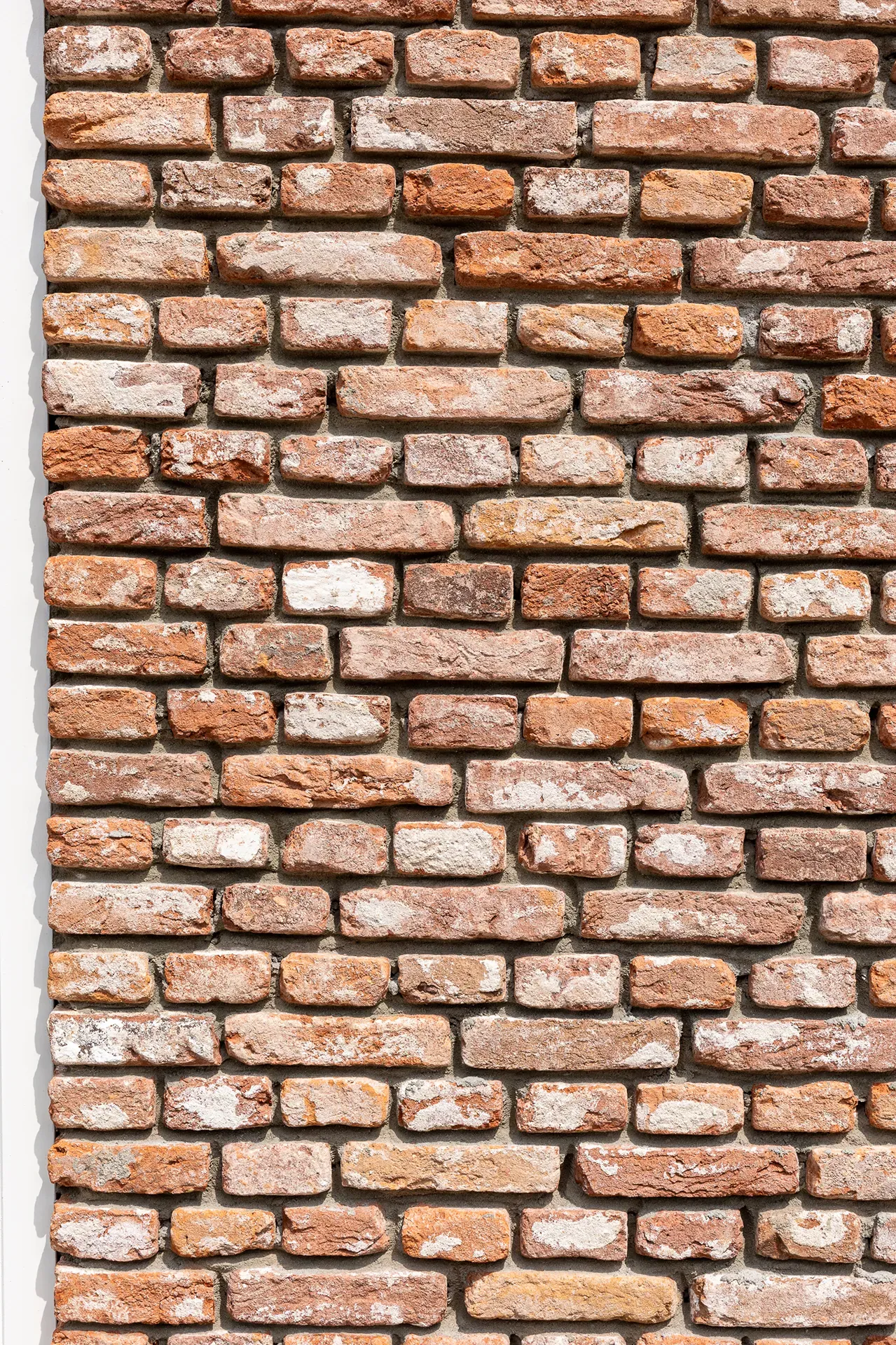
How can good headers save money?
Not every position in a wall requires a complete brick. Where only the short face is visible, a sound recovered piece with a good header may be usable instead of a whole brick.
These pieces can be priced lower than complete bricks. A batch with enough usable headers can therefore be an interesting option for part of the required material. The saving depends on the batch, the quantity, the sorting and the intended application.
This is particularly worth considering for a bond that needs many headers. Calculate the proportions of complete bricks and headers beforehand, so you do not unnecessarily buy whole bricks for every position.
Which bonds use headers?
English cross bond
English cross bond alternates stretcher courses and header courses. Many headers are visible in the finished wall, so their availability can affect the choice of bricks.
English bond
English bond also alternates courses of headers and stretchers. A substantial number of usable headers is needed for this pattern.
Header bond
In header bond, only the short faces of the bricks are visible. Almost the entire visible facade consists of headers.
Random bond
Headers can form part of the irregular pattern in random bond. The quantity required depends on the design and how the bricklayer sets out the work.
See our guide to brick bonds for more about these patterns.
Why are usable headers not always available with reclaimed bricks?
Recovering old bricks involves demolition, careful salvage, mortar removal, checking and sorting. Not every recovered brick remains whole, and not every broken piece is sound enough to use.
Sometimes a brick has one good face or header, while the rest is unsuitable for use as a complete brick. Keeping that usable part allows it to be reused instead of discarded.
We deliberately save headers where the quality and the batch make this worthwhile. It is a way to retain more of the original building material. Read more about cleaning mortar from reclaimed bricks.
Are good headers the same as half bricks?
Not necessarily. A usable header is a piece of brick whose short face is suitable for the intended masonry. The length of material behind that face can vary depending on the original brick and what happened during recovery.
The bricklayer needs enough material behind the visible face to lay it properly. Discuss the sorting and the intended application before ordering, so it is clear whether the pieces are suitable.
Do headers need to be completely free of mortar?
That varies by batch. Some headers are fully cleaned and ready for use. Others may still have small areas of mortar that need attention during laying.
Ask about the condition and sorting when ordering. This helps you and your bricklayer understand what work, if any, remains to be done.
What is the header gauge?
The header gauge, known in Dutch as koppenmaat, is the width of a brick plus the vertical mortar joint. It is used when setting out masonry so that the vertical joints line up correctly.
Historical bricks can vary in width. It is therefore important to measure several representative bricks rather than basing the gauge on just one. Our explanation of brick dimensions provides more background.
How do you calculate the header gauge?
Measure several bricks together with the intended joints and work out an average. The bricklayer can then mark the measurements on a setting-out rod to maintain a consistent layout.
This is especially useful with reclaimed bricks, which may be less uniform than modern products. The precise method depends on the bricks, the joints and the project.
How many headers do you need?
There is no fixed percentage that applies to every project. The quantity depends on the bond, the size of the facade, window and door openings, corners and the way the brickwork is set out.
Calculate the proportions for the actual project and discuss whether a combination of whole bricks and headers from the available batch will work. This helps you order material that matches the intended construction.
Read more about building with reclaimed masonry bricks.
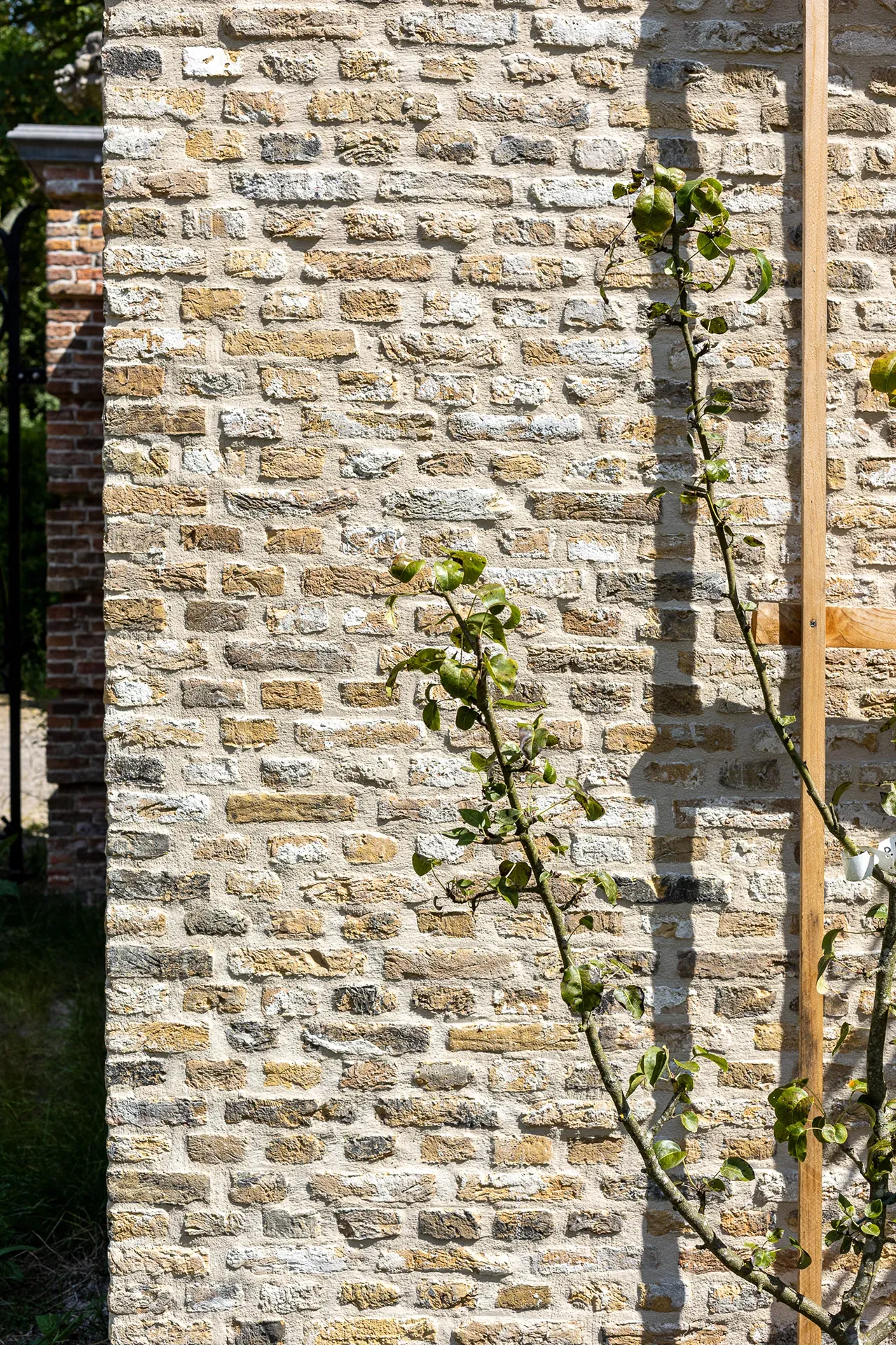
Buying good brick headers
At Van Dillen Antieke Bouwmaterialen, we save and sort usable headers when the recovered material is suitable. This supports traditional reuse and can produce a considerable saving on materials, depending on the batch and the application.
Not every batch has enough usable headers, and available quantities change. Where relevant, we indicate that good headers are available.
Browse our reclaimed masonry bricks or contact us if you need bricks for a particular bond. We can discuss the available batch and the combination of whole bricks and headers needed for your project.