
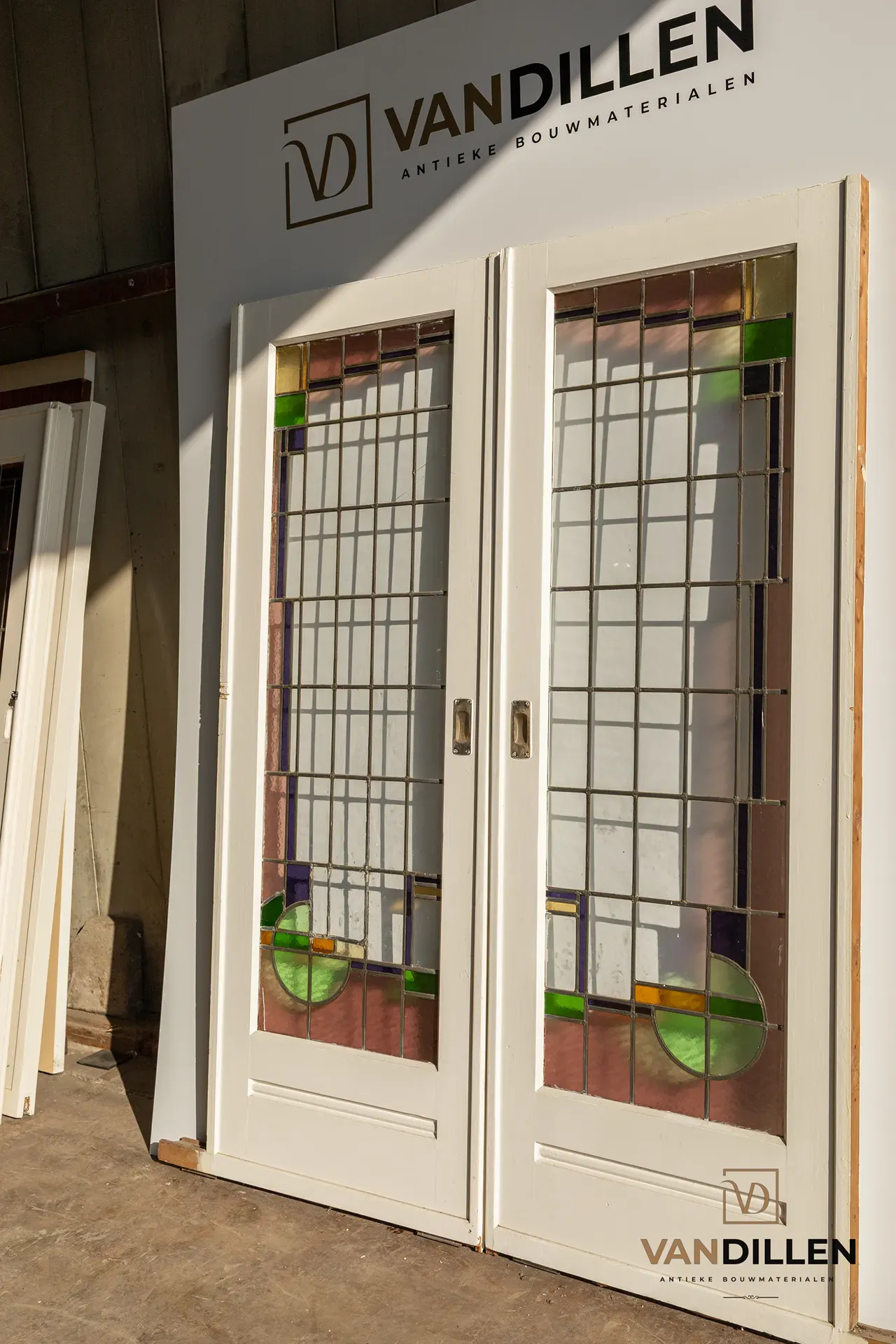
Modern sliding doors or antique dividing doors: which should you choose?
Modern sliding doors or antique period dividing doors? Compare appearance, dimensions, installation, price and possibilities to find what suits your interior.
What is the difference between modern sliding doors and antique dividing doors?
At first glance, modern sliding doors and antique period dividing doors serve the same purpose: separating spaces without the swing space needed by a hinged door. Their appearance and construction can nevertheless differ considerably.
A modern sliding door is usually designed as a clean-lined, functional interior feature. Antique dividing doors, known in Dutch as ensuite deuren, are historical doors originally belonging to a connected-room layout. They often feature more elaborate panels, stained glass, bevelled glass or other original details.
The best solution therefore depends not only on available space but especially on the desired appearance and how the doors are incorporated into the interior.
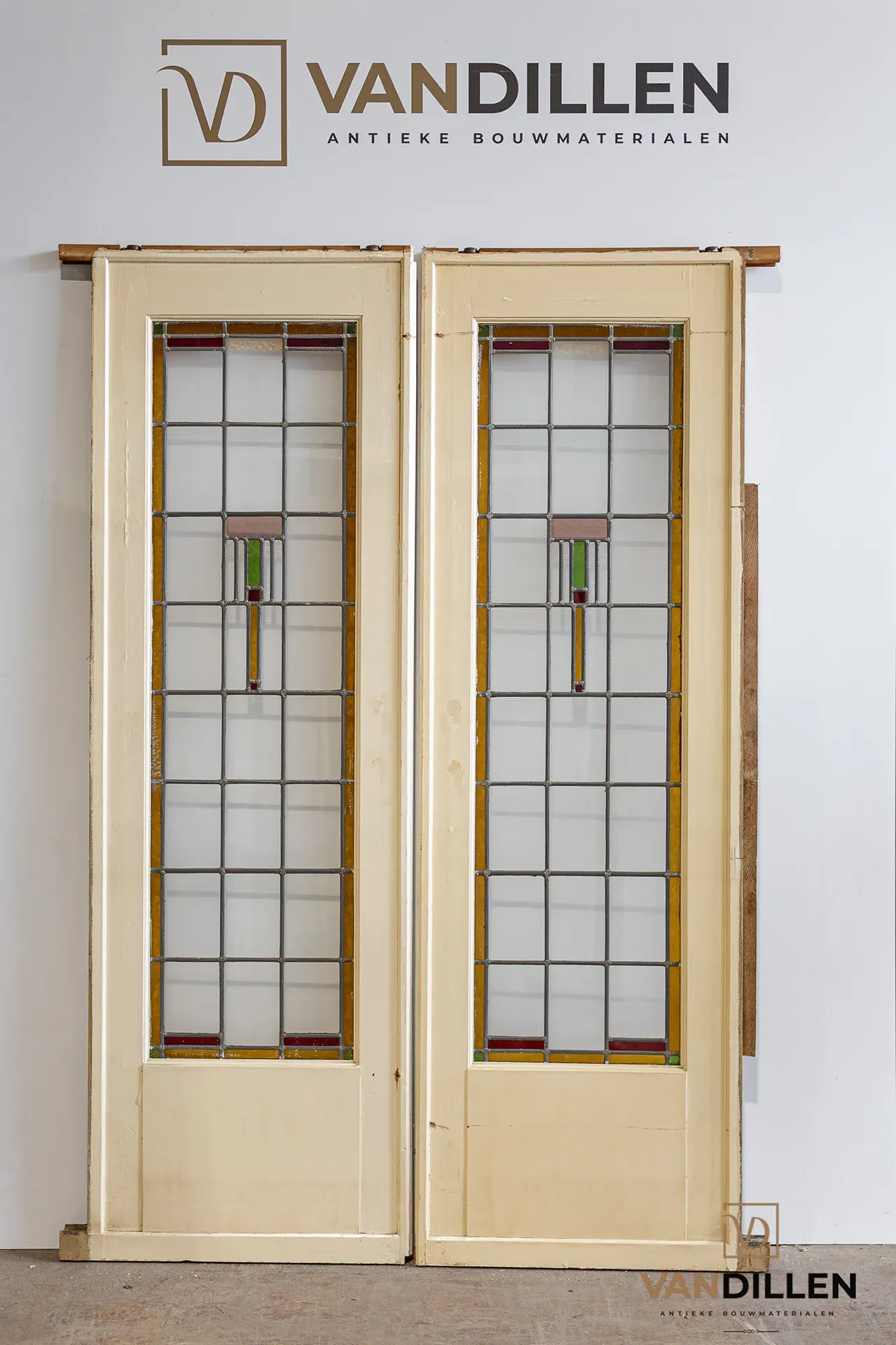
What are antique period dividing doors?
Period dividing doors, or ensuite doors, are generally double sliding doors used to separate two adjoining rooms. In many historical homes, the doors slid into or alongside fitted cupboards when opened.
These connected-room arrangements were especially common in homes from the late nineteenth and early twentieth centuries. The exact design differs considerably by property and period.
For more about the original construction and different designs, read our explanation of what ensuite doors are.
The appearance of modern sliding doors
Modern sliding doors come in many styles, including flush doors, glazed steel doors, timber panels and minimalist doors on exposed tracks.
Their advantage is freedom in dimensions and design. A new door can be tailored precisely to the opening and a modern interior. Someone seeking a clean, uniform result may deliberately choose this option.
A newly manufactured door naturally lacks the signs of use, aged timber texture and original details characteristic of a historical door.
The appearance of reclaimed dividing doors
No two old sets are entirely alike. Proportions, mouldings, panels, wood species, glass and fittings can differ. This variation makes them appealing to people seeking more character in an interior.
Old doors do not have to be confined to traditional interiors. An antique set can provide a striking contrast in a modern home or against smooth plastered walls.
Our projects show how reclaimed materials and historical features are used in different interior styles.
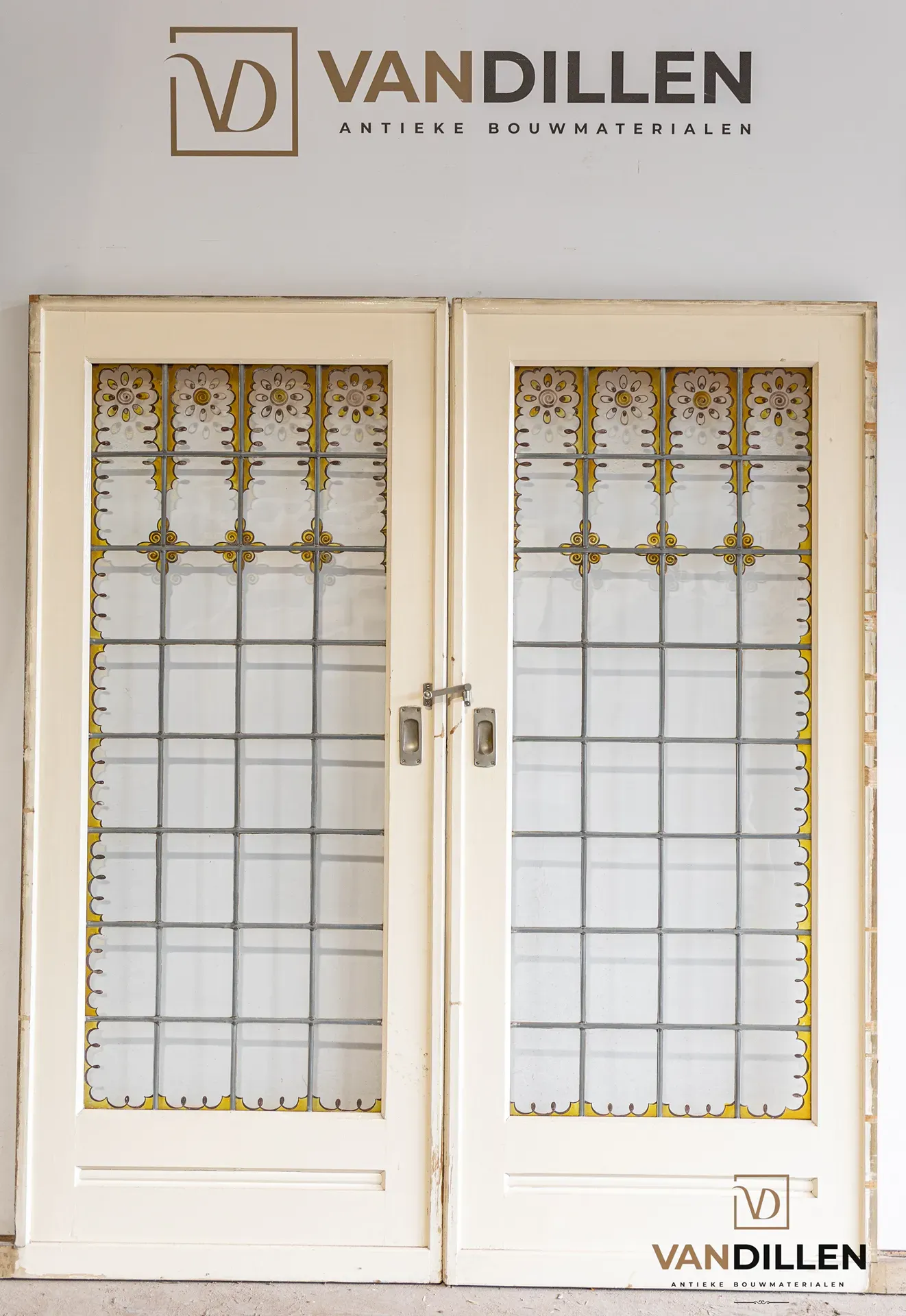
Stained glass, bevelled glass or solid panels
An important difference between sets is what fills the doors. Some have colourful stained glass, others clear or bevelled glass, while others consist mainly of timber panels.
Glass affects not only appearance but also how much light passes between rooms when the doors are closed. Solid doors create a stronger visual separation.
The choice is therefore both aesthetic and practical.
Dimensions: made to measure or adapting an existing set?
A modern sliding door can be made directly for a specific opening. With antique dividing doors, the process is different: you choose an existing historical set whose dimensions suit the space as closely as possible.
This does not mean the old set must match the existing opening exactly. Depending on the situation, the frame, cupboards and surrounding construction can be adapted. Preferably, preserve the doors’ original proportions as much as possible.
Our comparison of reclaimed dividing doors and bespoke doors explores this choice further.
An exposed track or doors within the wall?
Modern sliding doors frequently use a visible track above the door. This is relatively straightforward, and the track can form part of the design.
A traditional connected-room arrangement is constructed differently. The doors generally slide into or behind the surrounding structure, largely disappearing from view when open.
What is possible depends on the space, wall construction, door dimensions and selected system.
Can antique dividing doors be installed in a new build?
Yes. An old set does not have to return to the property it originally came from. Historical doors can work very well in a new-build home or completely renovated interior.
In fact, if the opening and surrounding construction have yet to be built, the design can be based on the chosen doors’ dimensions from the start. That can make installation easier.
Installing period dividing doors
Installation requires accurate measurement. Door width and height matter, but so do sliding clearance, track construction and any cupboards or joinery around the opening.
Buying an old set before building the surrounding structure allows the opening to be designed around it. With an existing connected-room layout, the task is instead to find doors that suit the available dimensions.
See our complete step-by-step installation guide for more about preparation, measurements and fitting.
Maintenance and restoration
New doors usually need little repair before installation. Restoration may be part of the process with old doors, including attention to minor damage, fittings, glass or old paint layers.
The work required varies considerably by set. Some doors can be reused almost immediately; others are deliberately restored before returning to an interior.
The advantage is that original details can be retained instead of recreating the entire appearance from scratch.
Price differences between modern and antique
There is no fixed winner on price. A simple modern sliding door may be relatively affordable, while bespoke work in high-quality materials can cost considerably more. For antique dividing doors, factors include size, design, glass, completeness, rarity and condition.
Do not compare only the purchase price of two door leaves. A complete connected-room arrangement may also involve tracks, cupboards, mouldings, installation, adjustments and restoration within the total budget.
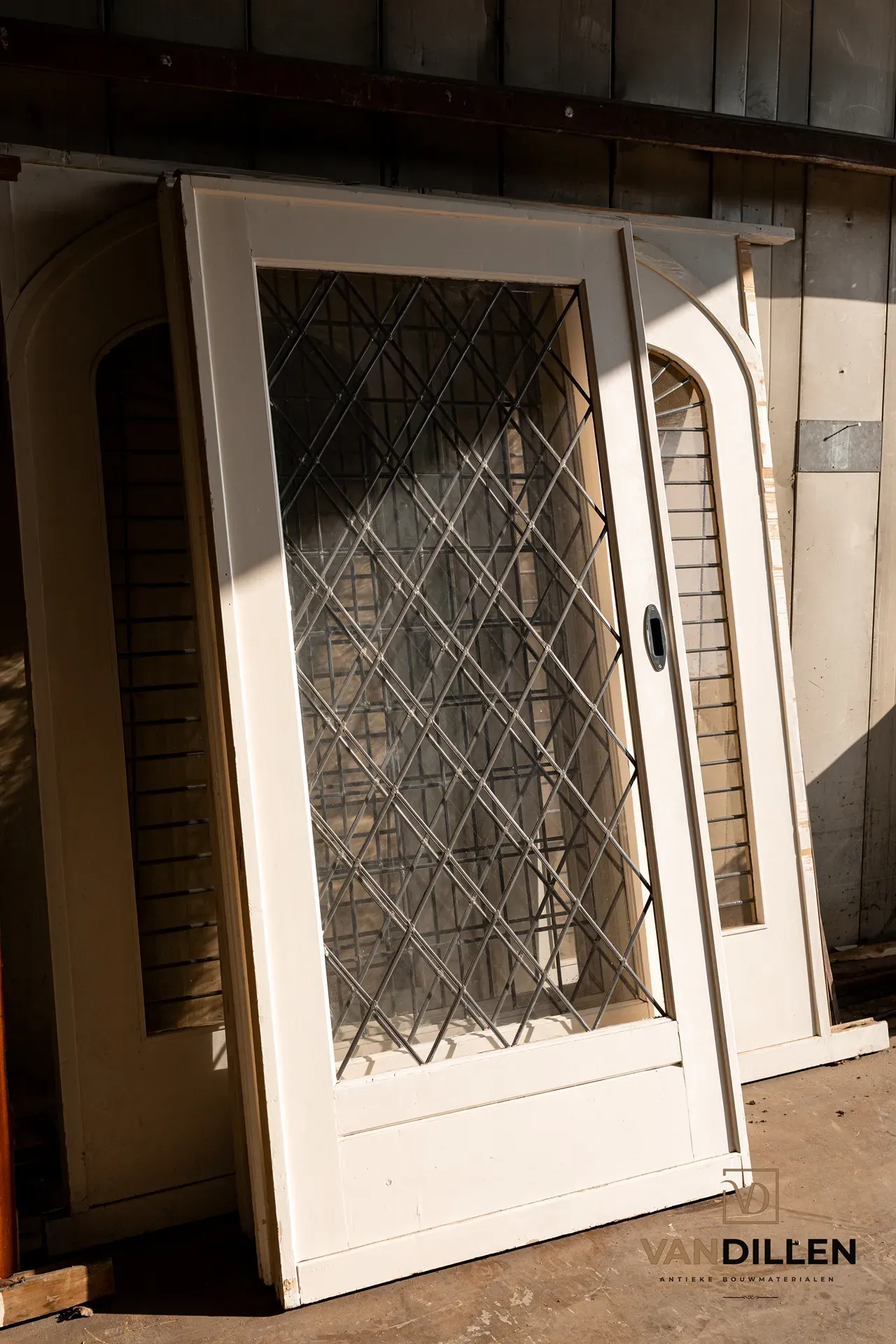
When should you choose modern sliding doors?
Modern sliding doors make particular sense when you want a completely clean-lined design, need very specific dimensions or deliberately prefer modern materials and detailing.
New bespoke work also has advantages when quick repeatability matters: several doors can be produced in exactly the same style and size.
When should you choose antique dividing doors?
Antique dividing doors are interesting when character, authenticity and historical detail matter. They naturally suit a 1930s home, townhouse or farmhouse, but can equally become the distinctive feature in a modern interior.
Because every old set differs, the available set partly determines the final design. For many people, that is the appeal: the interior is built around an existing historical feature rather than the other way round.
Modern sliding door or antique dividing door?
Both solutions can work very well functionally. The key difference is what you want the doors to contribute to the interior. A modern sliding door can blend quietly into a clean-lined design, while an old set can become a defining feature of the room.
If the latter appeals to you, browse our current reclaimed and antique dividing doors. Comparing sets side by side gives a much clearer picture of differences in size, glass, panels and appearance.