
Reclaimed dividing doors or new made-to-measure doors?
Reclaimed dividing doors or new bespoke doors? Compare appearance, dimensions, price, installation and possibilities to find the right option for your home.
Reclaimed dividing doors or new made-to-measure doors?
If you want to install internal dividing doors, you can choose authentic second-hand doors or newly made bespoke doors. Both can be attractive, but they differ considerably in appearance, dimensions, availability and how the complete arrangement is put together.
With period dividing doors, you choose original doors and often historical features such as stained glass, panels, fittings or adjoining cupboards. With new bespoke work, the doors and surrounds are made specifically for the available opening and your requirements.
What are reclaimed dividing doors?
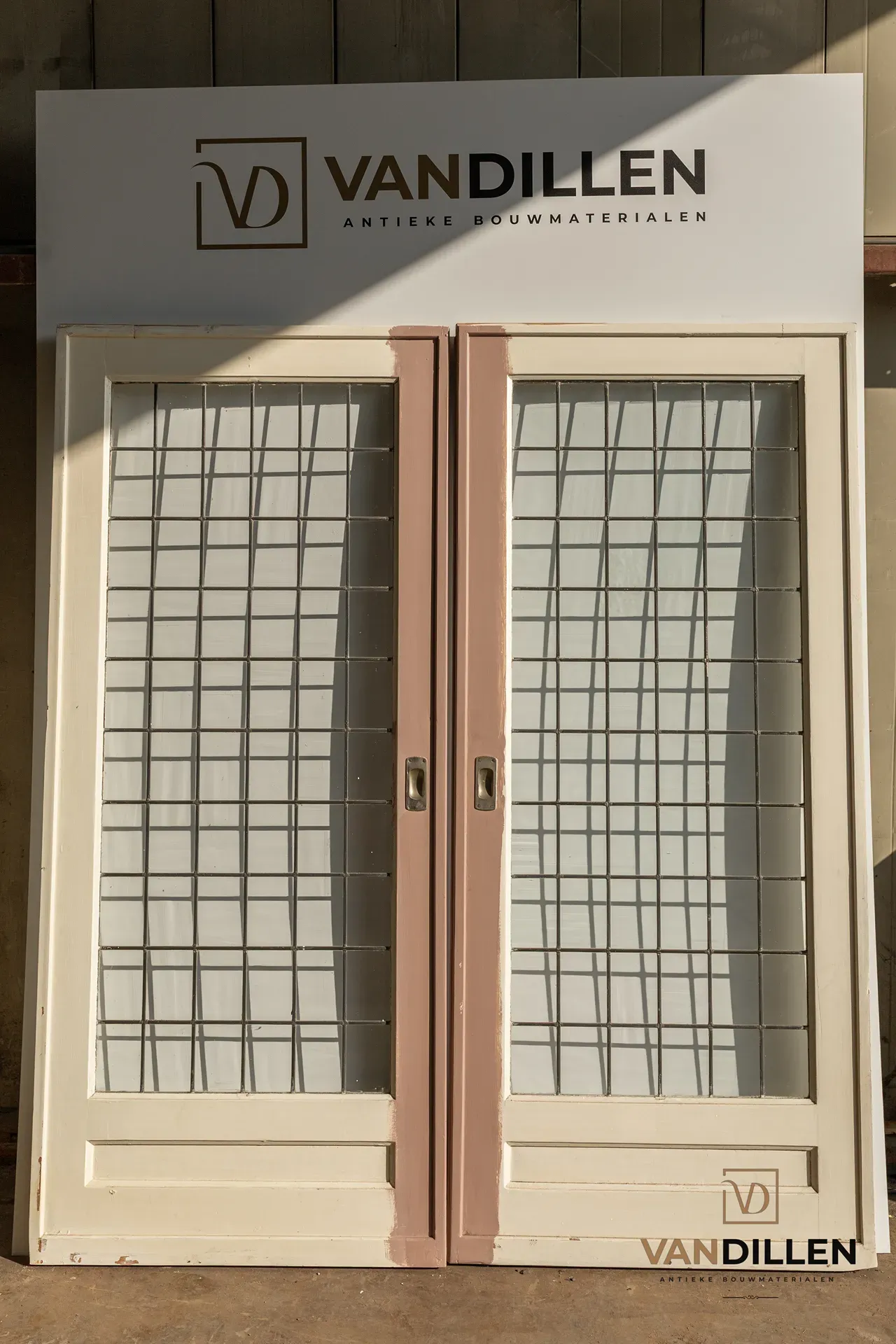
Reclaimed dividing doors are old doors recovered from an existing home or other building. Many come from homes built in the late nineteenth and early twentieth centuries, but age and design vary by set. In the Netherlands, these room-dividing arrangements are traditionally called kamer en suite.
A complete set may include two sliding doors, stained glass, a track or hanging system, surrounds and possibly adjoining cupboards. Not every set offered for sale is complete, however. Always check which components are actually included with the doors.
To understand how such a system is put together, read what period dividing doors are or browse our complete guide to period dividing doors.
What are bespoke dividing doors?
New bespoke dividing doors are made specifically for the room. Dimensions, panel layout, colour, glazing and finish can therefore be planned to suit the interior.
This is particularly practical for unusual openings or when a very specific design is desired. On the other hand, a newly made door does not have the same historical origins, signs of use and natural ageing as an authentic old set.
Appearance: authentically old or new bespoke work?
For many people, this is the most important difference. With original period dividing doors, slight wear, old timber, historical mouldings and sometimes old glass are part of the character. Every set is therefore different.
New bespoke work can reproduce a historical style convincingly and offers considerable design freedom. If you mainly want a particular classic appearance, it can be an excellent solution. If you specifically want original historical materials, second-hand or antique doors are the natural choice.
Dimensions and measuring
With bespoke work, the door is made to fit the opening. Reclaimed doors work the other way around: first you find a suitable set, then consider how to fit it into the available space.
This does not mean an old set has to measure exactly the same as the opening. Timber surrounds, finishing work, adjustments to cupboards and a suitable track arrangement can often offer considerable flexibility. Careful measuring before purchase remains important.
Our guide to installing period dividing doors explains which dimensions and components to check in advance.
Which is cheaper: second-hand or bespoke?
There is no fixed winner. The price of old dividing doors depends on factors including size, age, design, stained glass, completeness, condition and rarity. For bespoke doors, material choice, dimensions, detailing, glass, fittings and labour are major factors.
A second-hand set can be financially attractive, but restoration or alterations may add costs. A new bespoke solution can become more expensive as the design grows more complex and labour-intensive. Always compare the complete finished result rather than only the purchase price of the doors.
Stained glass in period dividing doors
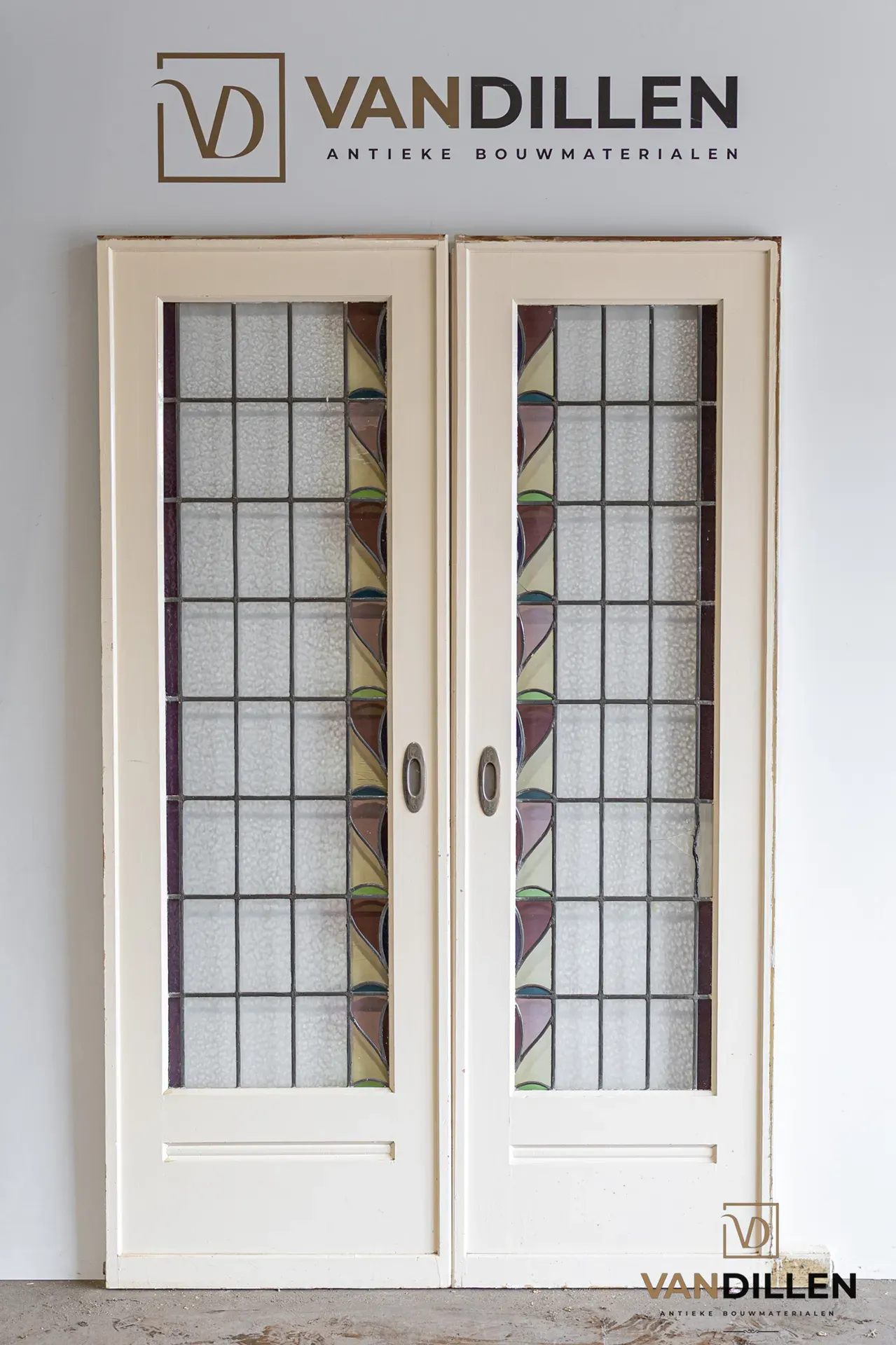
Many old dividing doors contain stained glass. In original sets, the glass’s colour, texture and small irregularities can be an important part of their appearance.
New bespoke doors can also incorporate stained glass, either newly made or sometimes reused. The distinction is therefore not simply whether stained glass is present, but primarily the origins and construction of the whole feature.
What about the condition of second-hand doors?
With old doors, expect signs of use. Check whether the doors are straight, the joints are sound, the glass and fittings are in good condition, and which components are missing.
An old paint layer or superficial wear need not be a problem if restoration is part of the plan. Serious distortion, timber damage or missing essential parts, however, can mean extra work and cost.
Installation and alterations
A bespoke set is generally designed around the final opening. With an existing old set, installation must accommodate both the home and the available doors.
This often requires more preparation, but also offers the opportunity to bring a unique historical feature back into a home. If unsure, have the chosen set assessed before purchase to establish whether it can practically be installed in your situation.
If you are still choosing between a modern sliding system and historical dividing doors, see our comparison of modern sliding doors and antique dividing doors.
When should you choose reclaimed dividing doors?
Reclaimed dividing doors are especially interesting when authenticity, old timber, historical glass and a unique appearance matter. They naturally suit 1930s and other historical homes, but can also provide contrast in a modern interior.
Because every old set is different, look beyond appearance to dimensions and completeness. Browse our current period dividing doors to compare different designs.
When is new bespoke work a logical choice?
New bespoke work is appealing when the opening has very specific dimensions, you want complete freedom in design and finish, or a fully uniform new result is required.
It is not a question of right or wrong. If maximum design freedom and predictable dimensions matter most, bespoke doors may be the better fit. If you want the character and origins of genuinely old doors, an original set will usually be more appealing.
Inspiration with period dividing doors
Assessing a set in isolation can be difficult. A finished interior shows more clearly how much the doors, surrounds and any adjoining cupboards affect the room. Browse our projects for examples of reused historical building materials.
Do you have an opening and wonder which old set might suit its size and design? Contact us, ideally with approximate measurements and a few photographs of the room.
Frequently asked questions
Can reclaimed dividing doors be adapted to fit?
Some adjustment is often possible through surrounds, finishing work, the track arrangement or adjoining cupboards. What is possible depends on the doors’ dimensions and construction, and the available space.
Are period dividing-door sets always complete?
No. A set may consist of just the doors, or include doors, stained glass, fittings, track components, surrounds and cupboards. Check exactly which parts are present before buying.
Are second-hand dividing doors cheaper than bespoke doors?
Not always. This depends on the old set and the bespoke design required. Restoration, alterations and installation can add costs to old doors, while complex new bespoke work can also be expensive.
Do old dividing doors suit a modern home?
Yes. Old doors can create a characterful contrast in a modern interior. Whether the dimensions, design and finish suit the space matters more than the architectural style alone.