
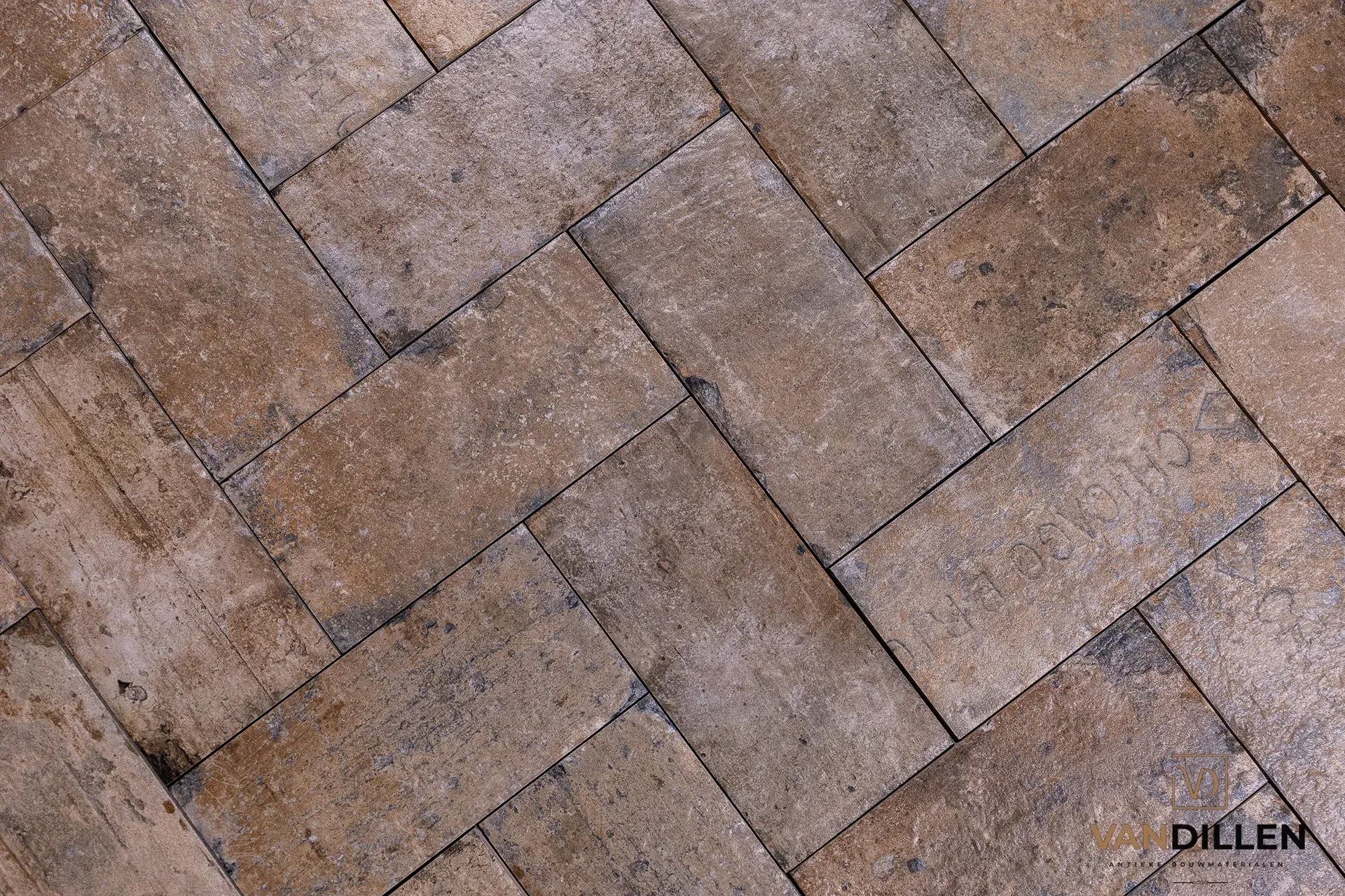
Aged-effect tiles or antique tiles: what is the difference?
Choosing between aged-effect tiles and genuine antique tiles? Discover the differences in appearance, dimensions, patina, laying requirements and origins.
Aged-effect tiles or genuine antique tiles?
When looking for a floor with character, you will soon encounter two options: new tiles deliberately given an aged appearance, or genuine antique floor tiles previously laid in a building. Both can look attractive in photographs, but there are clear differences in material, dimensions, patina and laying requirements.
The best choice depends on what matters to you. A new aged-effect tile generally offers more uniformity. An authentic old tile offers natural variation and signs of use that developed over time.
What are aged-effect tiles?
Aged-effect tiles are newly produced tiles whose colour, surface, edges or decoration have been designed to make them look older. Depending on the product, the manufacturer may use colour variation, printing, relief, tumbled edges or other finishes.
The advantage is predictability. Size and thickness are usually more consistent than in a historical batch, and you can often order a particular range or colour. This can be useful when a regular laying pattern or straightforward installation matters.
What are antique floor tiles?
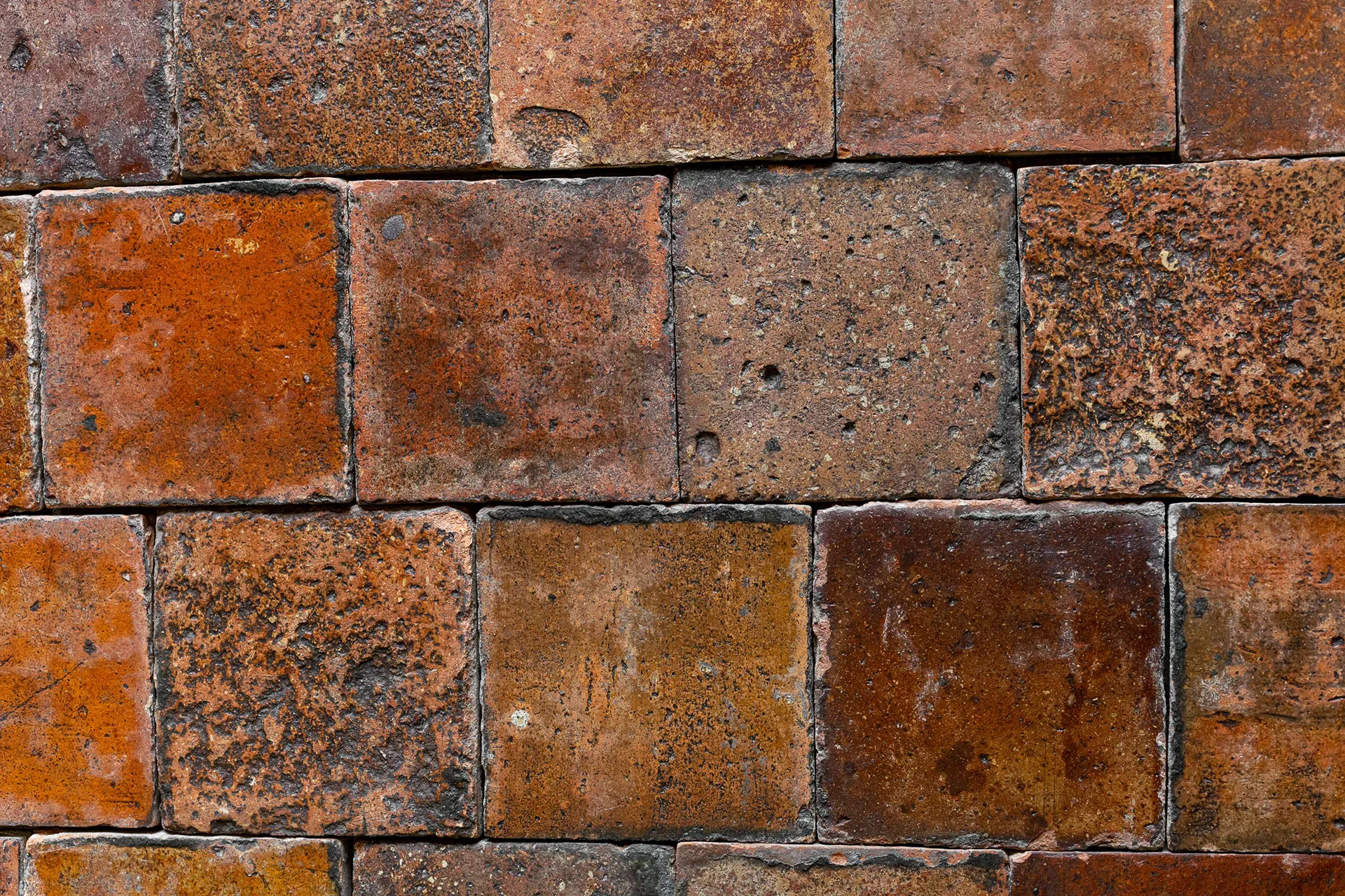
Antique floor tiles are genuinely old tiles recovered from existing buildings and reused. They include old floor tiles, traditional Dutch terracotta floor tiles (estrikken) and old French floor tiles.
Their appearance was not created only during the original production process. Years of use, wear and ageing have also affected the surface. A single batch can therefore contain variations in colour, size, thickness, sheen and patina.
Not every antique tile was made entirely by hand. Production methods vary by period, origin and tile type. It is therefore better to assess an old floor by its actual characteristics than by age alone.
How can you tell the difference?
Sometimes the difference is immediately visible, but modern reproductions can be convincing. One feature is therefore rarely enough: look for a combination of properties.
Natural variation
Old tiles often have an irregular distribution of colour and surface differences. A batch may contain light and dark shades without an exactly repeating pattern. With new tiles, variation is designed and controlled during production.
Edges, size and thickness
Historical tiles may differ slightly in size, squareness and thickness. New tiles are usually more dimensionally consistent. This also varies by type and production method: an old tile need not be extremely irregular, and a new tile can have deliberately uneven edges.
Patina and signs of use
Wear, small defects and changes in the surface of authentic tiles can be the result of years of use. That natural patina is difficult to reproduce exactly. At the same time, not every defect is desirable: the technical condition of the batch remains important when buying.
What are the advantages of genuine antique tiles?
The main reason for choosing old tiles is their authentic appearance. No two floors are completely identical, because differences in colour and wear are part of the material. This works in country and historical interiors, as well as modern spaces where an old floor creates contrast.
Reuse also supports circular building: an existing material gets a new application instead of being immediately replaced by newly produced material. Read more about the sustainability of reused building materials.
Our projects page shows how reclaimed floor tiles look when reused in different interiors.
What are the advantages of new aged-effect tiles?
New tiles also offer clear benefits. They are generally more consistent in size, often easier to lay, and a chosen design can be ordered more readily in a predetermined quantity. Their appearance is usually more predictable too.
If you mainly want a vintage atmosphere with little variation in size, thickness or surface, choosing a new reproduction tile can therefore make sense.
Which floor is easier to lay?
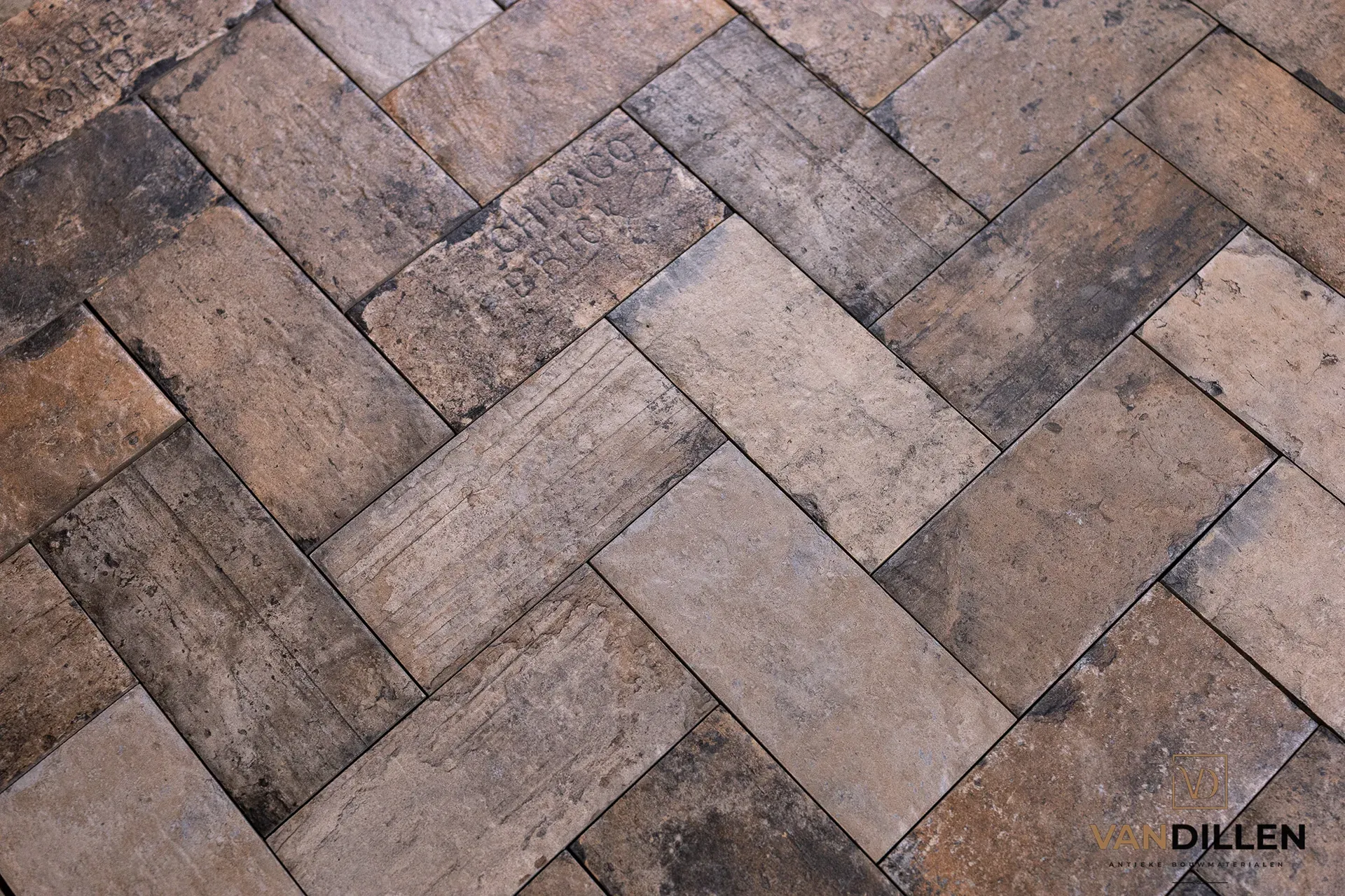
The more consistent dimensions of new tiles generally make them easier to lay in a clean, regular pattern. Old tiles require more attention to differences in size, thickness and colour.
That is not a disadvantage if you want an authentic finish, but it is worth allowing for beforehand. Our guide to laying antique floor tiles explains how to accommodate these differences.
What about maintenance?
Maintenance depends mainly on the material and finish, not simply on whether a tile is old or new. A porous terracotta tile, for example, requires different treatment from a glazed tile.
Do not use the same aggressive cleaning method on every old floor. Find more practical information in maintaining reclaimed floor tiles.
Plavuizen or estrikken?
Different names are used for antique floor tiles. In particular, the Dutch terms plavuizen and estrikken are often confused. There are historical differences, but the terms overlap in practice.
To understand how we distinguish these types, read about the difference between plavuizen and estrikken.
An aged effect or genuinely old: which should you choose?
If you mainly want a uniform floor that evokes the past, a new aged-effect tile can be a practical choice. If you want genuinely historical material, natural variation and patina created through use, antique tiles are a better fit.
Browse our current reclaimed floor tiles to compare different types, sizes and colours. Because these are old batches, the range changes continually.
Frequently asked questions
Are aged-effect tiles the same as antique tiles?
No. Aged-effect tiles are newly produced and designed to look older. Antique tiles are genuinely historical materials that have been used before.
Are all antique floor tiles handmade?
No. The production method depends on age, origin and tile type. Old tiles may have been made by hand or using historical mechanical production methods.
Are antique tiles harder to lay?
They usually need more attention because size and thickness can vary within a batch. With good preparation and the right laying method, these differences can be accommodated successfully.
Can antique tiles suit a modern interior?
Yes. The contrast between an old floor and clean-lined modern elements can be particularly effective. Choosing old tiles is not limited to listed buildings or country interiors.