
Plavuizen and estrikken: what is the difference between these Dutch floor tiles?
Plavuizen and estrikken, two Dutch names for old floor tiles, are closely related and their names overlap. Discover the historical distinction and which reclaimed floor tiles suit your interior.
What is the difference between plavuizen and estrikken?
The Dutch terms plavuizen and estrikken have long been used alongside one another and interchangeably. There is therefore no completely clear dividing line that places every historical floor tile indisputably in one group or the other.
In practice, we use plavuizen as a broad name for reclaimed fired-clay floor tiles. These include unglazed terracotta tiles, grey reduction-fired tiles and various glazed versions.
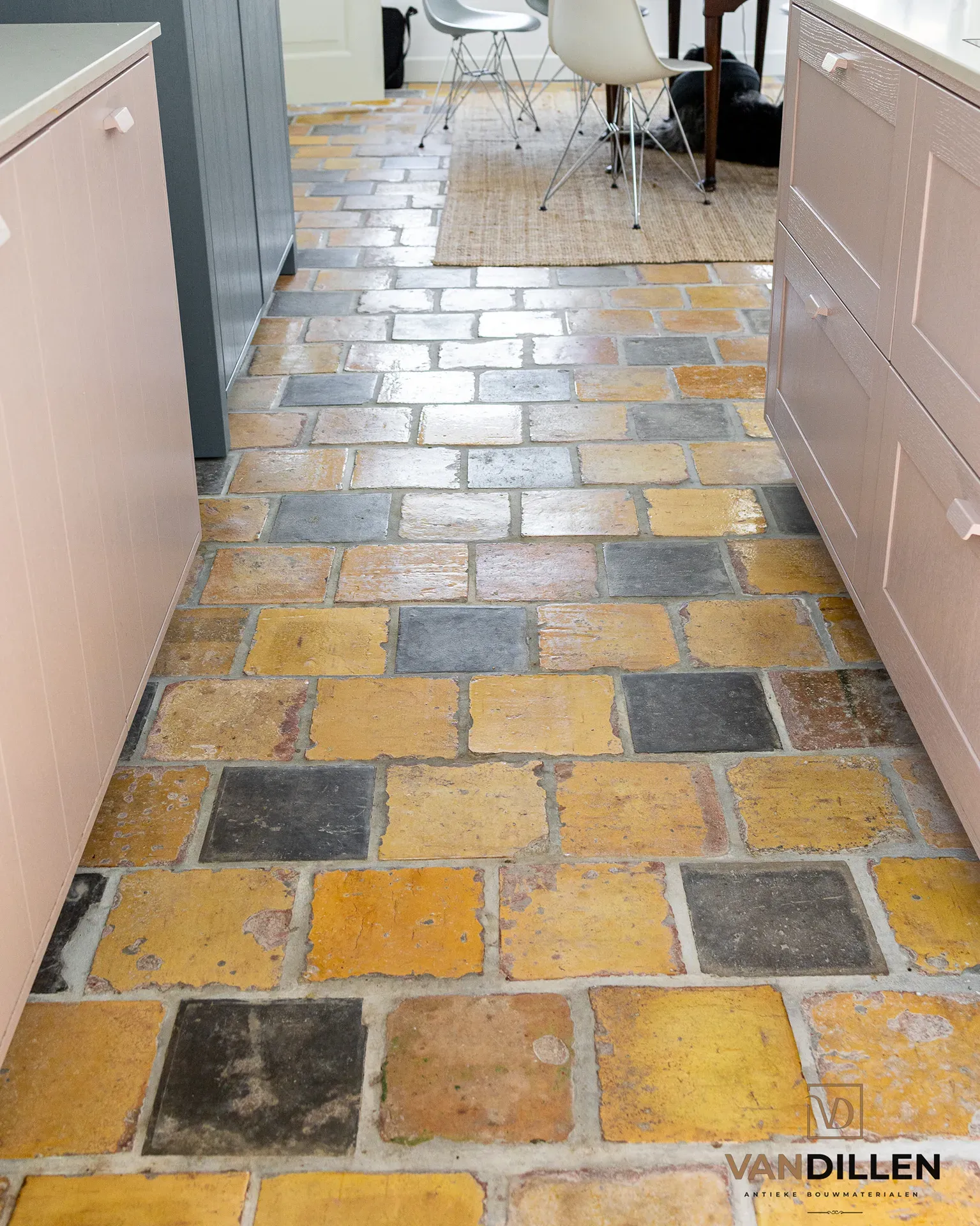
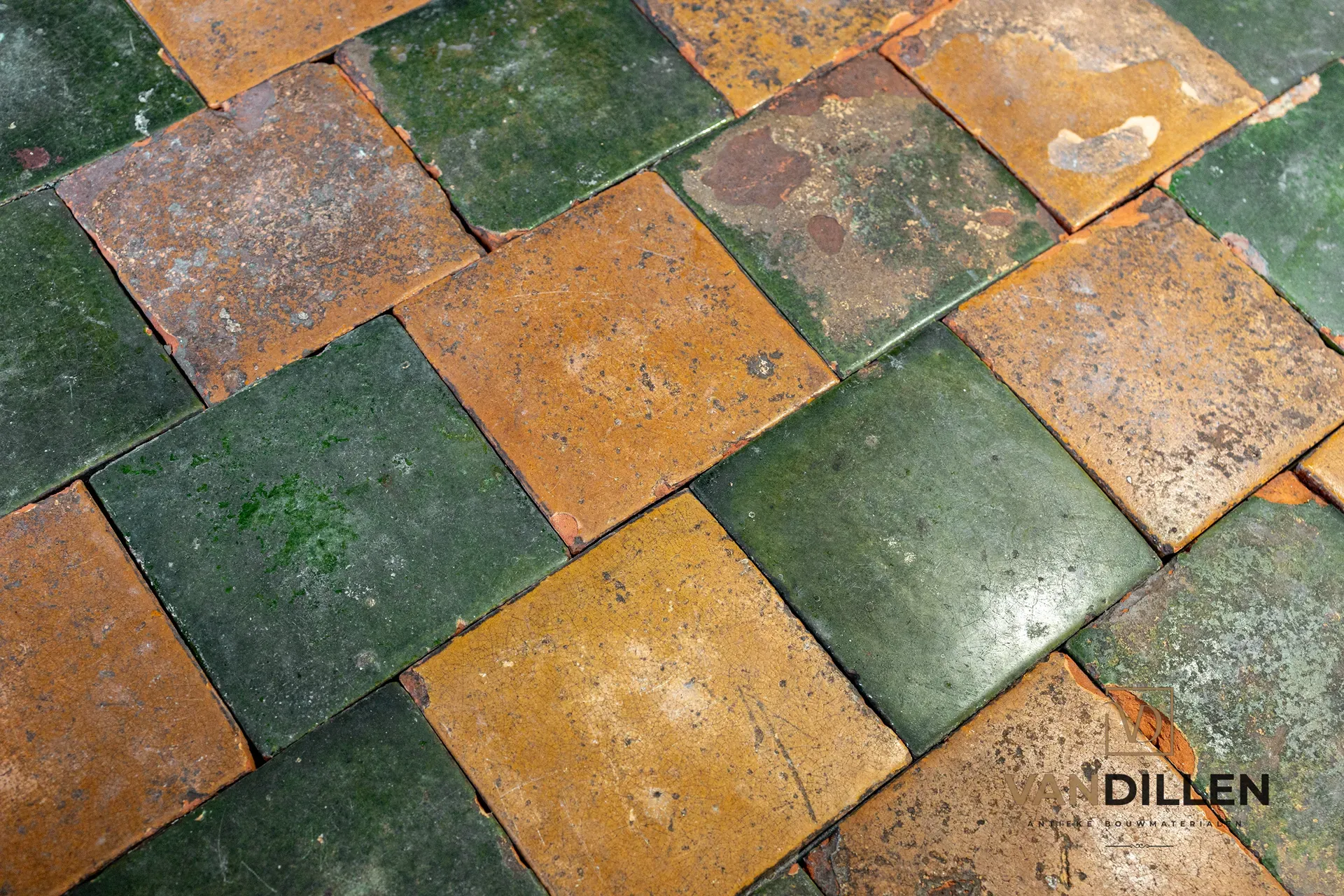
Estrikken is a historical Dutch name for square floor tiles widely used in farmhouses, homes and other old buildings. Today, the term is mainly associated with familiar old glazed examples in green, yellow and brown, although historically it had a wider meaning.
A glazed estrik is, in effect, a glazed terracotta floor tile. The distinction is not between two completely different materials, but mainly one of historical terminology, finish and use.
What are old plavuizen?
Old plavuizen are, put simply, old floor tiles: ceramic floor tiles made from fired clay. They were used for centuries in farmhouses, homes, churches and other historical buildings.
Differences in clay, firing temperature and conditions in the kiln produced a range of colours and textures. Years of use also left their marks. Authentic tiles therefore often have natural wear, patina and small variations from one tile to another.
There are several important varieties within this broad family of tiles.
Terracotta floor tiles
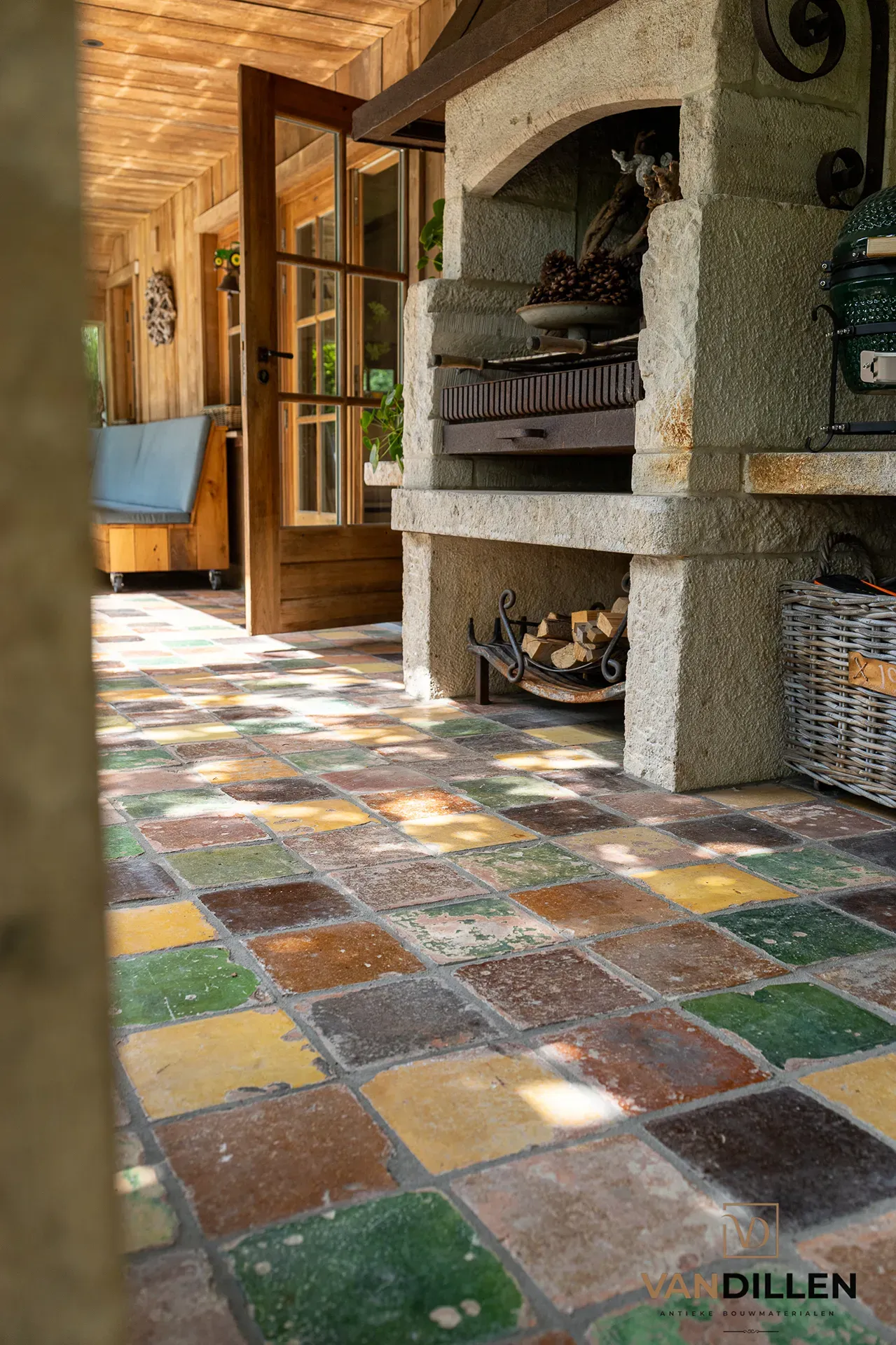
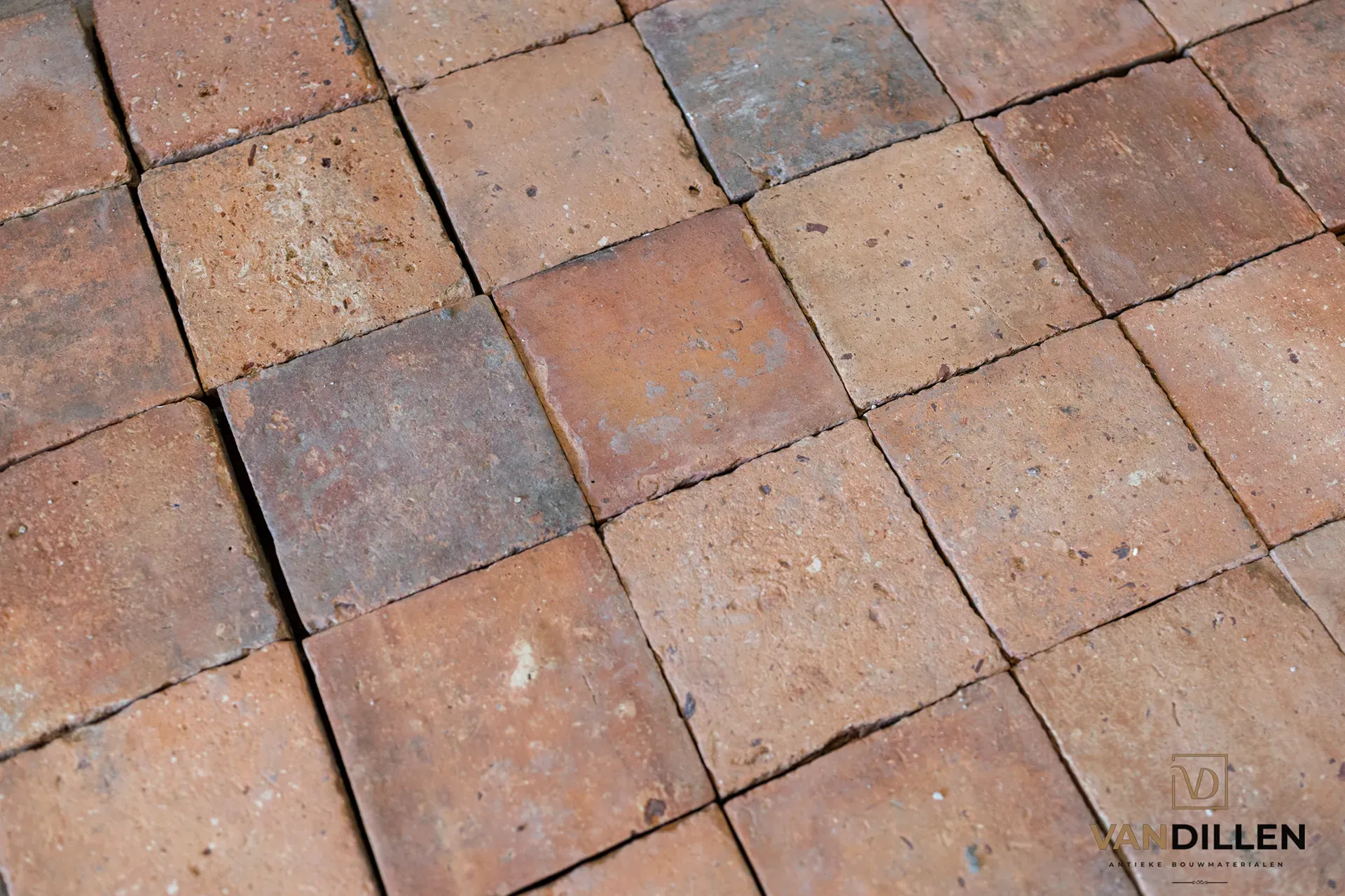
Terracotta floor tiles have the natural warmth of fired clay, with red, orange, brown and salmon tones. Their precise colour is determined by the clay and the firing process.
Grey reduction-fired floor tiles
For grey reduction-fired tiles, the supply of oxygen was restricted during firing. This produced grey and blue-grey shades, sometimes almost charcoal. Each batch has its own variations resulting from the original firing process.
Glazed floor tiles
Floor tiles can also have a layer of glaze. This creates a smoother surface and allows colours such as green, yellow and brown. It is particularly with these historical glazed tiles that the names plavuis and estrik overlap.
French floor tiles
Reclaimed French floor tiles are often terracotta tiles with warm red, pink, orange and salmon tones. Their appearance differs from many Dutch batches, but technically they belong to the same family of fired-clay tiles.
What are old estrikken?
Estrikken are historical fired floor tiles closely associated with Dutch interiors. They were widely used in old farmhouses, homes and other historical buildings.
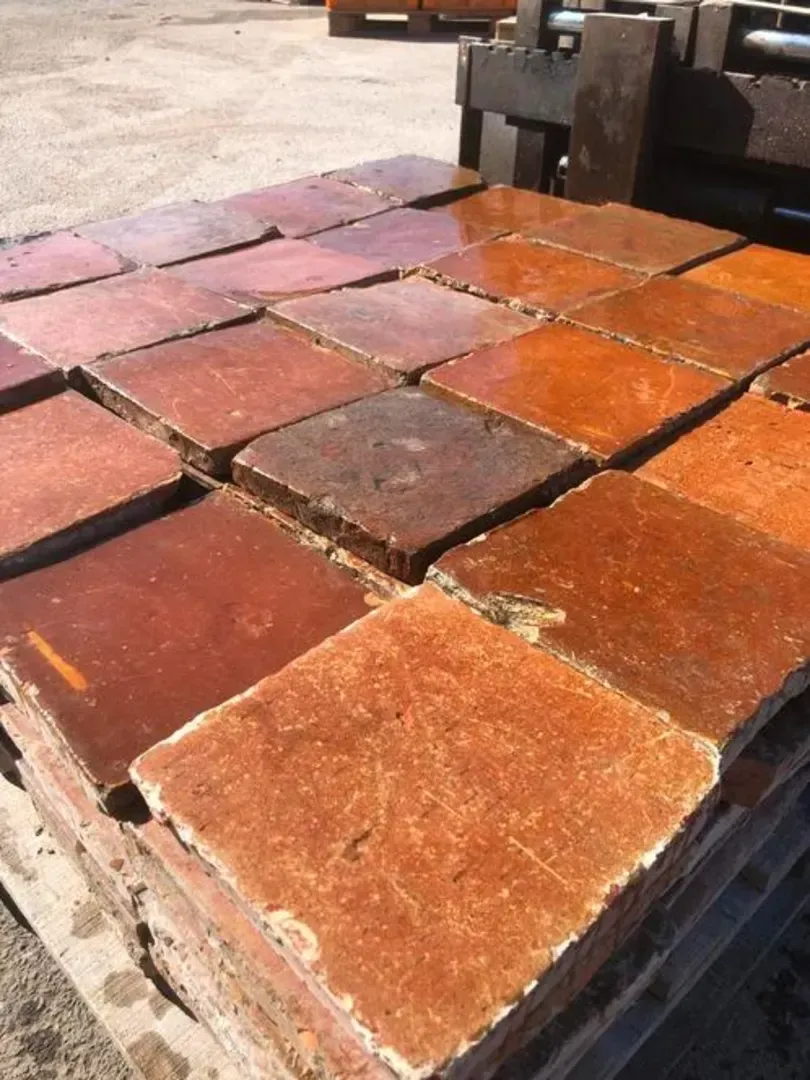
The old glazed examples in green, yellow and brown are particularly well known today. Years of use may have worn away areas of glaze or left a network of fine cracks, known as crazing. This is part of authentic old material and contributes to its lived-in appearance.
Historical terminology also includes unglazed and reduction-fired estrikken. Saying that an estrik is always glazed is therefore too strict.
Is an estrik always glazed?
No. Today, the word estrik often immediately brings a glazed tile to mind, but historically the distinction was not absolute. The term was used more broadly for various square fired-clay floor tiles.
A glazed estrik is easier to describe: in practice, it is a glazed terracotta floor tile. That is why dealers and historical material specialists regularly use both names for the same or very similar tiles.
Are estrikken typically Dutch?
Old estrikken are closely linked to Dutch building and interior history. The characteristic glazed floors in green, yellow and brown are especially typical of old Dutch farmhouses and homes.
Comparable ceramic tiles exist outside the Netherlands, of course. However, old estrikken in this traditional Dutch form are considerably less common in neighbouring countries. Authentic batches recovered from old Dutch buildings are therefore a distinctive historical building material.
Plavuizen or estrikken: which floor suits your interior?
In practice, the choice is mainly about appearance, not the name. A warm terracotta floor creates a very different effect from a grey reduction-fired floor or a colourful glazed estrikken floor.
Red or warm terracotta tiles are popular for a calm, country-style floor. Grey reduction-fired tiles suit a cooler, more restrained look. Glazed estrikken stand out more through their colour, sheen and naturally worn surfaces.
Reclaimed tiles are not limited to historical interiors. The contrast between a well-worn old floor and a clean-lined modern interior can be particularly striking.
Are plavuizen and estrikken suitable for underfloor heating?
Yes. Both reclaimed plavuizen and estrikken work very well with underfloor heating. Fired-clay tiles absorb heat and then release it gradually into the room.
Performance also depends on the complete floor construction, substrate, adhesive or mortar bed and heating system. Correct installation and a gradual start-up procedure are therefore important.
Read our detailed explanation of reclaimed floor tiles and underfloor heating.
How do you maintain old plavuizen and estrikken?
The right maintenance depends on the surface. Unglazed terracotta can be more porous than glazed estrikken and therefore needs different treatment.
Do not use aggressive cleaning products without first establishing the type of tile and finish. If in doubt, always test a product in an inconspicuous area.
For more information, see our articles on maintaining reclaimed floor tiles and impregnating old tiles.
Relaying old plavuizen and estrikken
After being removed from a building, authentic old floor tiles are cleaned of mortar and sorted before reuse. Because their dimensions and thickness can vary slightly, laying them requires more attention than working with consistently sized modern tiles.
Those small differences help give an old floor its natural character. Sort the tiles beforehand and mix different shades during laying for a balanced overall result.
For practical guidance, read our explanation of laying antique floor tiles.
Buying old plavuizen and estrikken
Van Dillen Antieke Bouwmaterialen offers a large, constantly changing selection of reclaimed floor tiles. These include terracotta, grey reduction-fired and French tiles, as well as distinctive old glazed estrikken.
Each batch comes from a historical building, so colour, size, thickness, wear and finish differ from floor to floor. Always look at several tiles from a batch, not just one loose tile.
Browse our current reclaimed floor tiles and reclaimed estrikken, or visit us in Bolsward to compare batches side by side. You can also browse our projects for inspiration.