
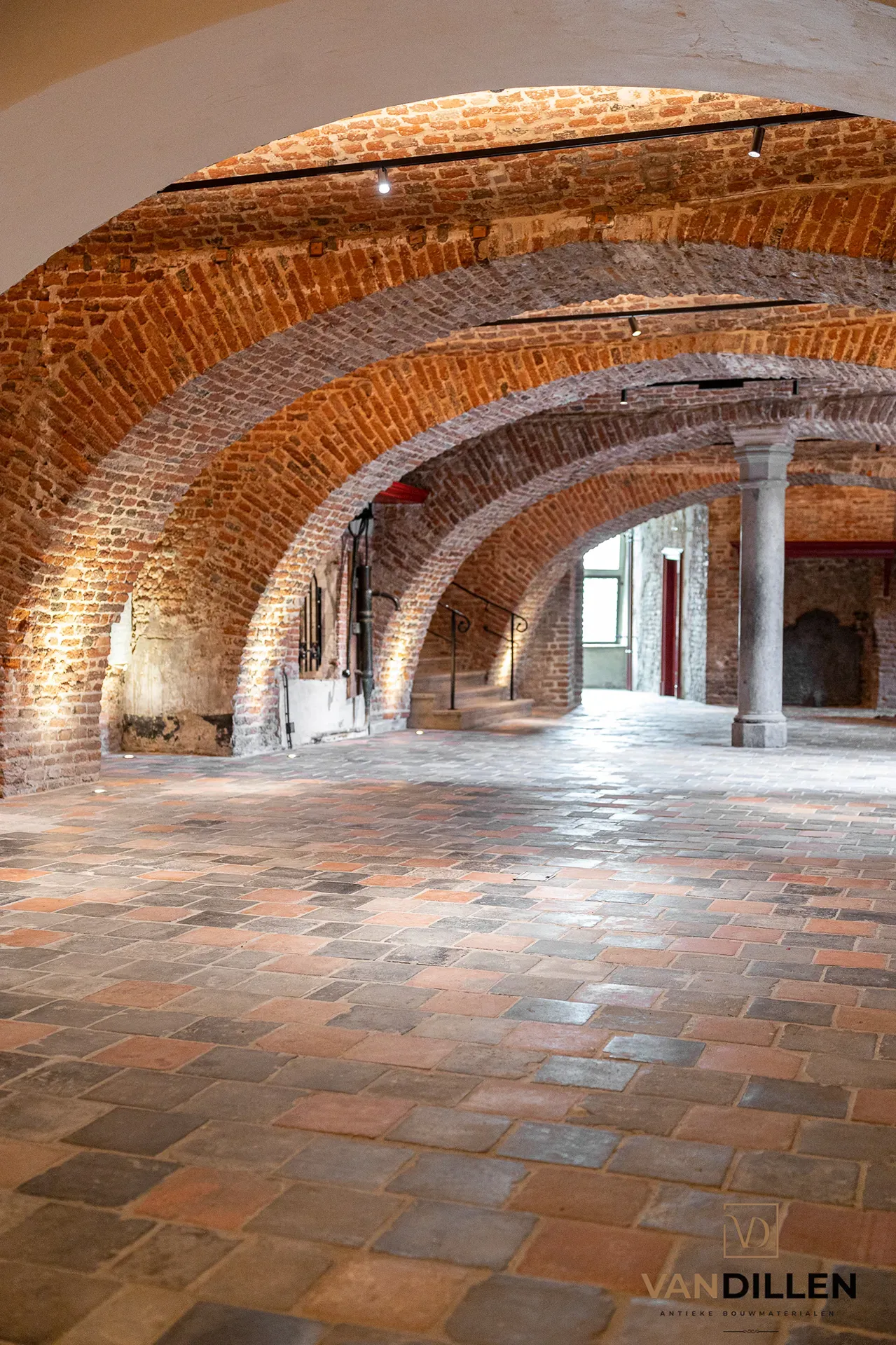
Antique tiles or DIY-store tiles: what is the difference?
How do antique floor tiles compare with modern DIY-store tiles? Compare appearance, quality, dimensional consistency, maintenance, price and laying requirements.
Are antique tiles better than DIY-store tiles?
That depends entirely on what you want. Modern tiles from a DIY store or tile shop can be practical, dimensionally consistent and easy to lay. Authentic reclaimed floor tiles are chosen for their original material, natural wear, colour variations and historical appearance.
Not every old tile is therefore technically better than every new one. The main differences lie in origins, manufacturing method, dimensional consistency, surface and, above all, the character of the finished floor.
The biggest difference: genuinely old or an aged effect
Many new floor tiles are now produced with a rustic or aged appearance. Colour variations, worn edges and unevenness can be deliberately imitated during manufacture.
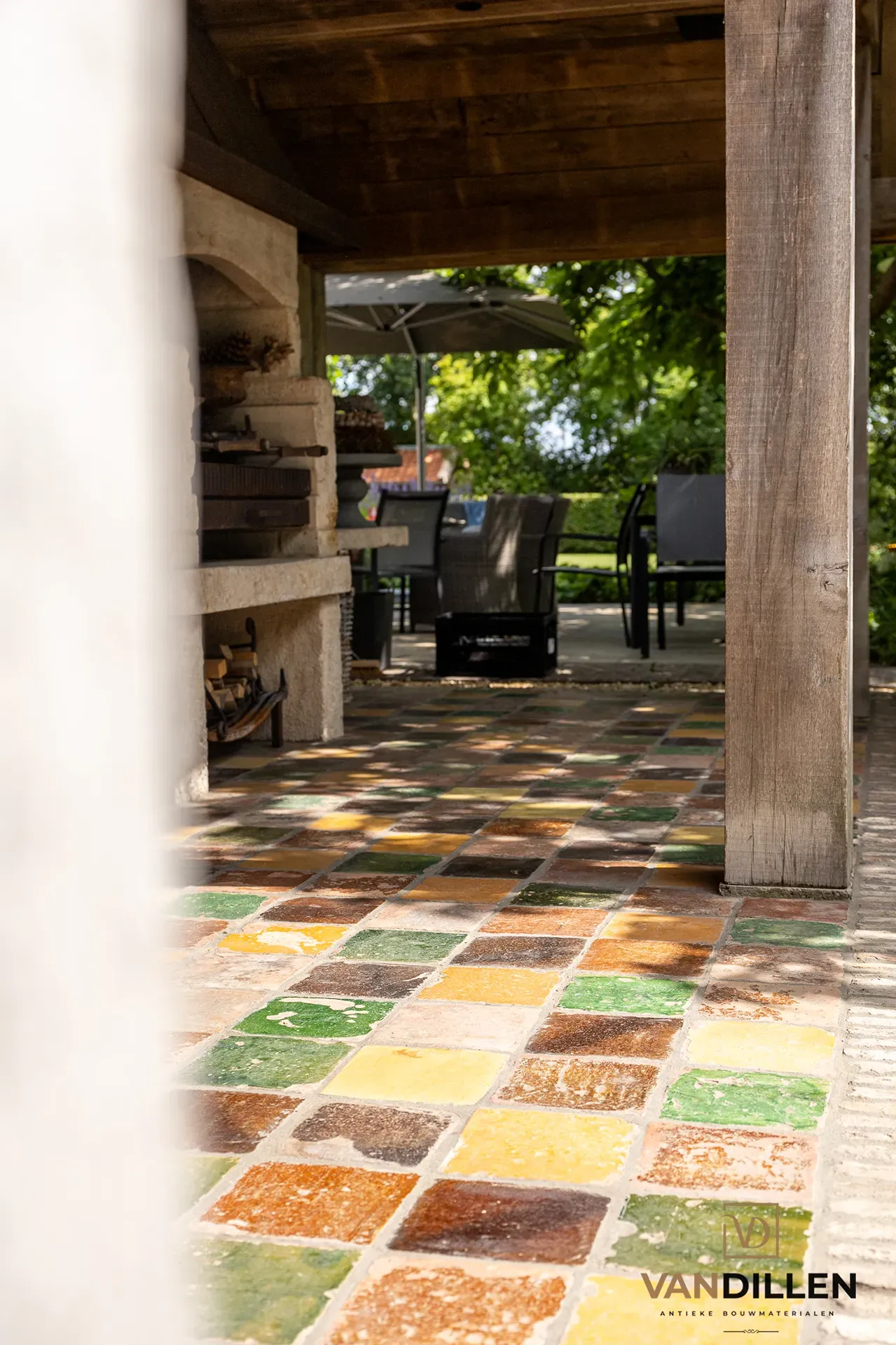
In antique tiles, these features were not added to imitate age. Wear, patina, small differences in size and colour variations developed through the original production process and years of use.
This difference becomes especially apparent across a complete floor. Browse our completed projects with reclaimed floor tiles to see how historical batches look across a whole surface.
Dimensional consistency: modern tiles offer greater uniformity
Modern factory-made tiles are generally much more consistent in size. This makes it possible to use very narrow joints and a clean, regular pattern.
Antique tiles may vary slightly in size, thickness and flatness within one batch. An experienced tiler accommodates those differences during laying. The result is less clinical and more lively.
If you want a completely regular, uniform floor, modern tiles will therefore often be the first choice. If you appreciate natural variation, this quality makes old tiles appealing.
Colour and surface
The desired colour of modern tiles is determined during production. The appearance of old tiles is also shaped by clay, firing, age and use, so every tile can be slightly different.
Examples include warm terracotta floor tiles, dark grey reduction-fired tiles, weathered old French floor tiles and historical glazed Dutch terracotta tiles.
These natural differences make it difficult to reproduce an authentic old floor exactly with a new product.
Thickness and laying
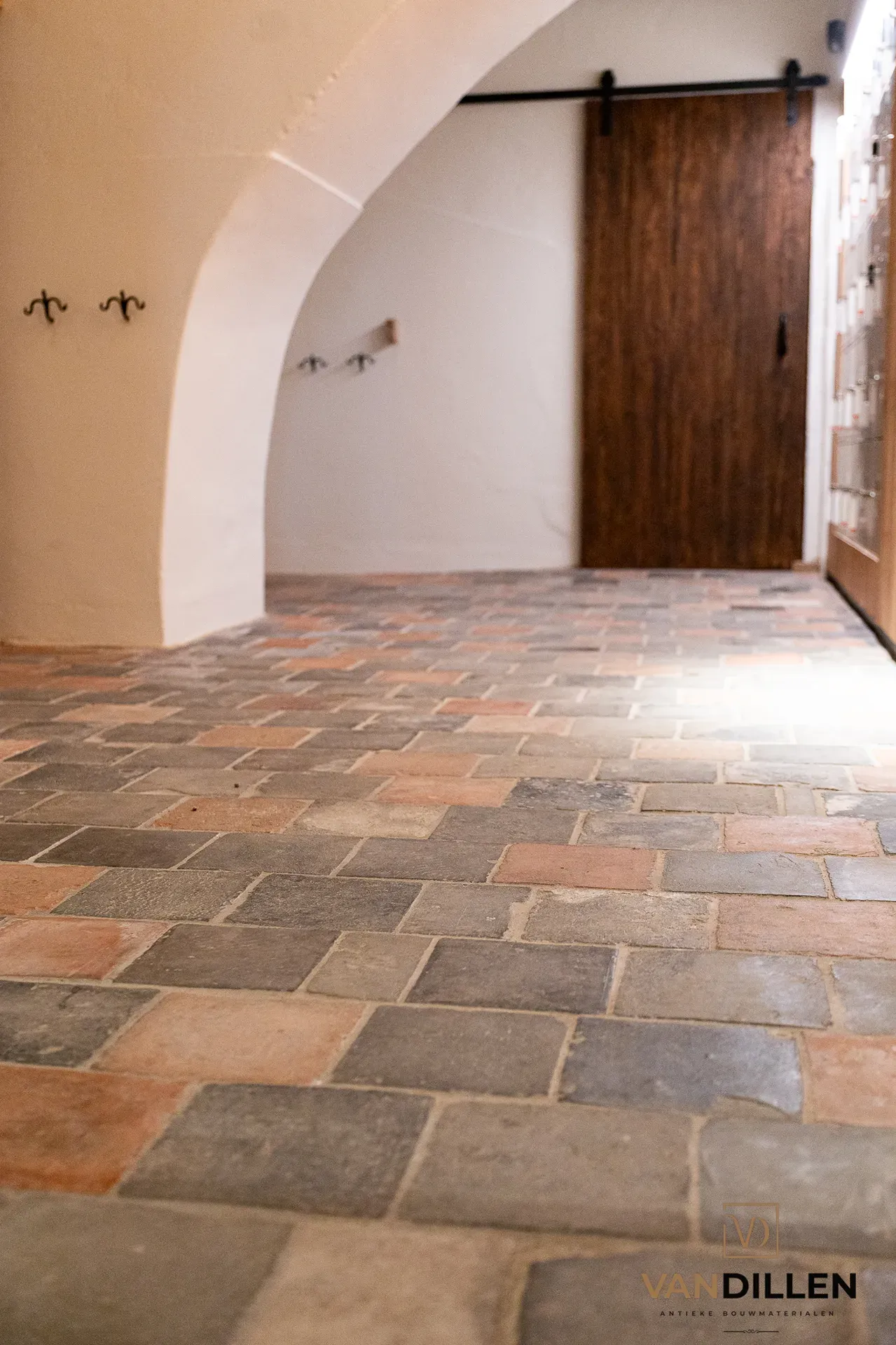
New tiles usually have a fairly consistent thickness. Reclaimed floor tiles can vary in thickness within a batch, requiring more attention during laying.
The tiler needs to accommodate these differences in the bedding layer so that the upper surfaces align properly. Joint width is also adjusted to suit the consistency of the batch.
For more about what this involves, read our step-by-step guide to laying antique floor tiles.
Are reclaimed floor tiles strong?
Many historical floor tiles have already withstood decades or centuries of use. This shows that suitable batches can be highly durable in service. At the same time, every batch must be assessed for its own condition and intended use.
Age alone is not a guarantee of quality. Damage, wear, exposure to frost and previous use can affect suitability for a new project. Careful material selection is therefore important.
Maintenance: is a modern tile easier?
A modern tile with low porosity can need little day-to-day maintenance. Old unglazed floor tiles can be more porous and therefore require treatment suited to their surface.
On the other hand, signs of use are often less noticeable on a weathered old floor than on a very uniform new one. Its character continues to develop through use.
Read more in our guide to maintaining reclaimed floor tiles.
What is the difference between plavuizen and estrikken?
Antique flooring goes by several historical Dutch names. Old plavuizen is the broad Dutch term for fired-clay floor tiles, while old estrikken are closely associated with Dutch tile-making traditions and today often with square, sometimes glazed floor tiles.
Historically, the terms partly overlap. A glazed estrik is, in practice, also a glazed terracotta floor tile. Read the fuller explanation in our article about the difference between plavuizen and estrikken.
Price: are antique tiles more expensive?
Not automatically. Both new and old tiles are available across different price ranges. For new tiles, factors include brand, material, size and finish. For old tiles, scarcity, age, size, quality, quantity and the appearance of the batch are particularly important.
When buying antique tiles, you are also buying a finite historical batch. Exactly the same floor cannot simply be produced again later. Buy enough for the entire room at the outset, including a suitable allowance for cutting, breakage and selection.
When are DIY-store tiles the better choice?
New tiles can be a logical choice when a low purchase price, exact dimensions, quick availability or a very regular and uniform finish are the main requirements.
A currently available new product can also be practical if you want to order precisely the same tile later, although modern collections and production batches can change over time too.
When are antique floor tiles the better choice?
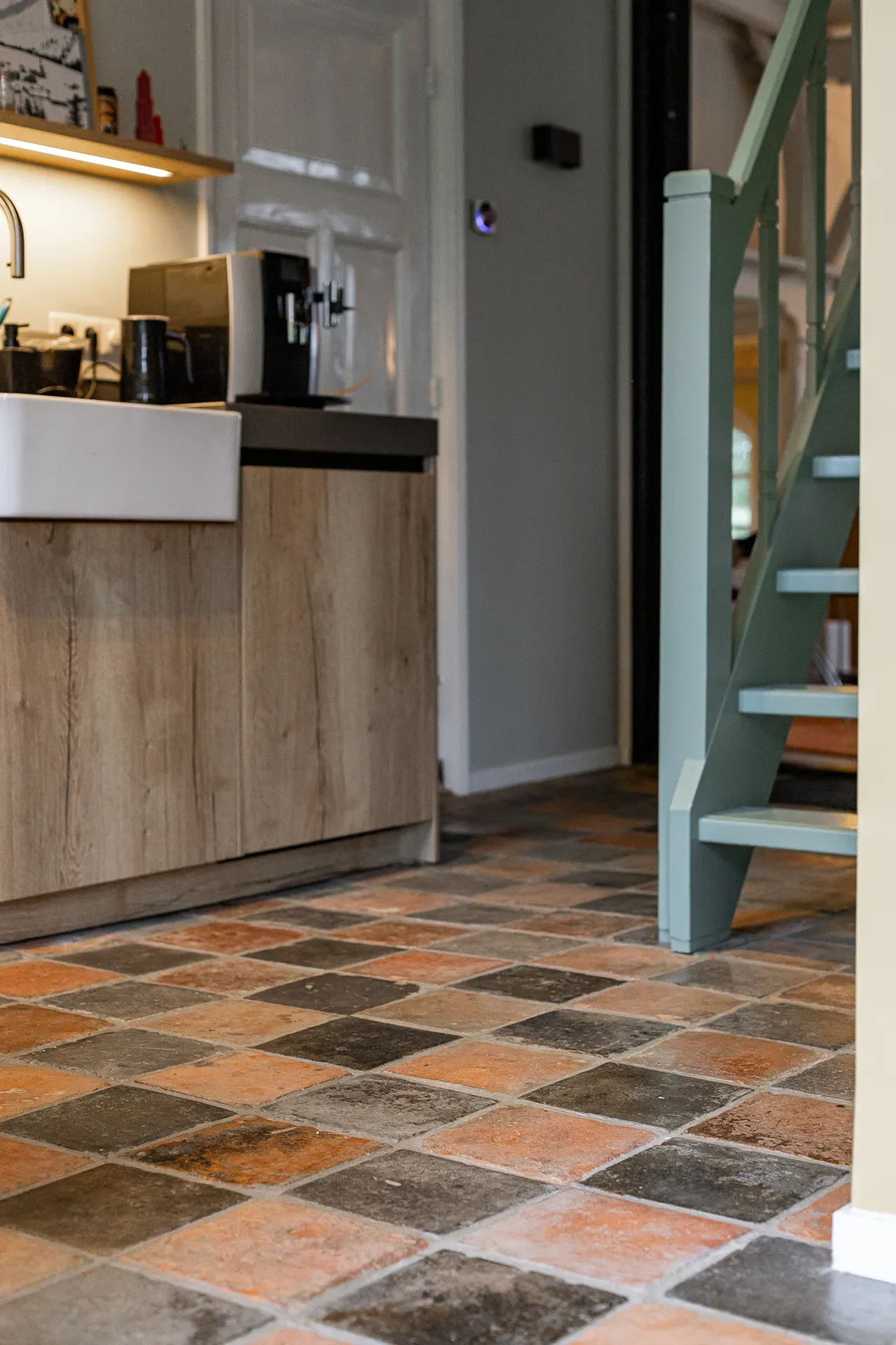
Old floor tiles are especially interesting when appearance, history and authenticity matter most. They naturally suit farmhouses, listed buildings and restoration, but can also create a striking contrast in a modern home or new-build project.
Combining a historical floor with a clean-lined new interior is popular because the old material adds warmth and texture without the entire home needing a traditional design.
Our projects page shows different applications to help you judge which type of floor suits your interior.
Common misconceptions about old and new tiles
Old tiles are always more fragile
That is too broad a claim. Many historical tiles have withstood prolonged use. The condition and suitability of the particular batch matter more than age alone.
New tiles are always cheaper
This also varies considerably by product. Exclusive new tiles may cost more than certain reclaimed batches, while rare historical tiles may command a higher price.
Antique tiles only suit old houses
A historical floor can create a particularly strong contrast in a new build or modern interior. The material does not have to be the same age as the building.
An aged-effect tile looks the same
A good reproduction can be attractive, but factory-created variation is different from natural wear and patina that developed over a long period. Ultimately, which appearance you prefer is a personal choice.
DIY-store or antique: which floor suits you?
Base your choice primarily on the finish you want. If maximum uniformity and dimensional consistency are your priorities, a modern tile can be ideal. If you want a floor where no two tiles are completely alike and its history remains visible, authentic tiles are hard to match.
Van Dillen Antieke Bouwmaterialen offers a large, changing range of reclaimed floor tiles, from terracotta and reduction-fired tiles to French floors and old Dutch estrikken. Browse the current collection or visit us in Bolsward to compare different batches side by side.