
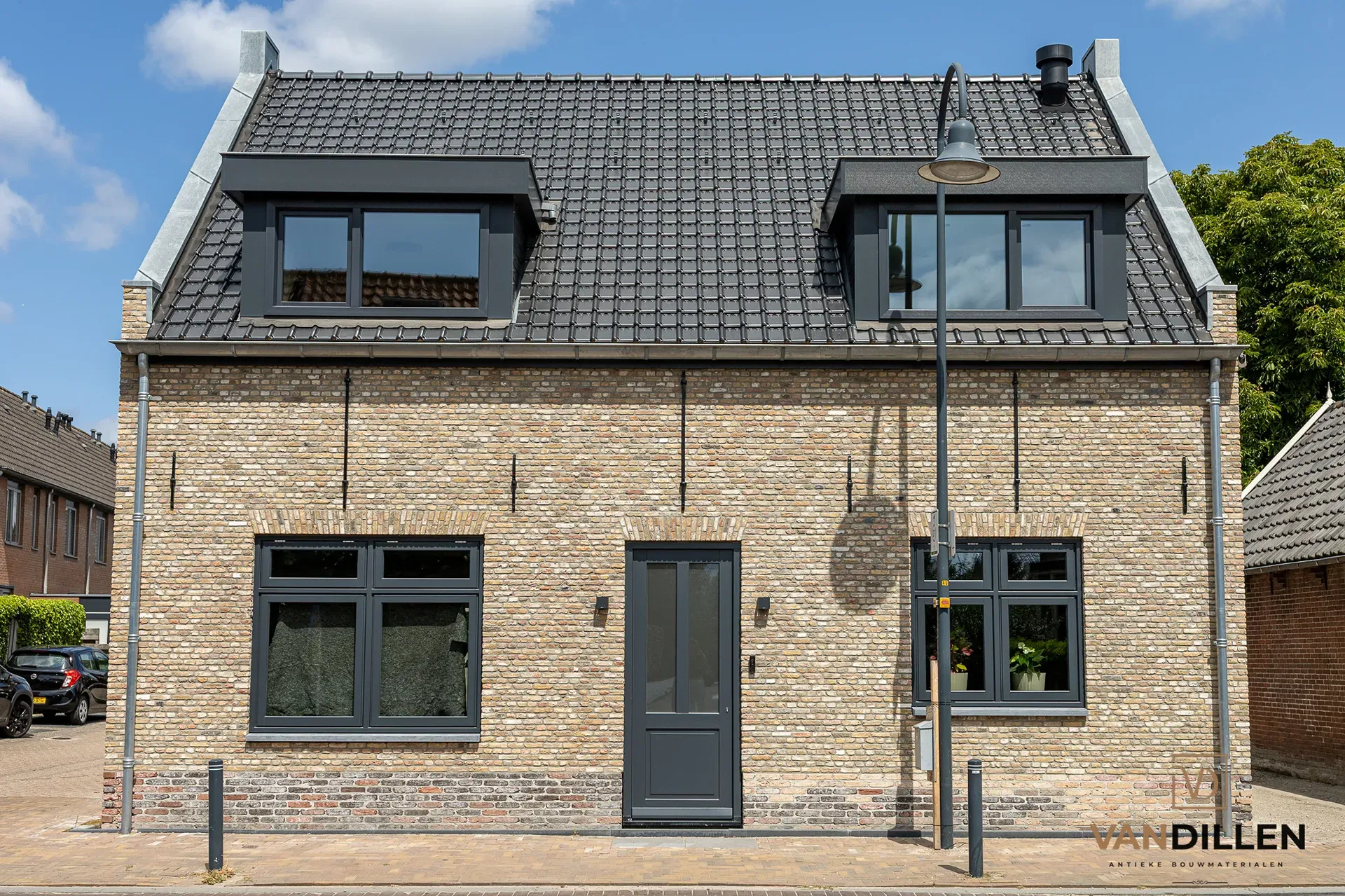
New builds with reclaimed building materials: authentic character
Reclaimed building materials bring instant character to a new home. Discover how old masonry bricks, roof tiles, floor tiles and other historical materials can be used in new builds.
How can you give a new build authentic character?
A newly built home does not have to look new or lack character. Combining historical building materials with modern construction techniques can create a home with the character of a much older building, while its structure, insulation and services can fully meet current requirements.
The choice of materials plays a particularly important role in the final appearance. Think of reclaimed masonry bricks for the facade, historical roof tiles, reclaimed pavers around the house, and authentic floor tiles and doors inside.
The advantage is that these materials do not need an artificially aged appearance. Colour differences, patina, signs of use and small irregularities have genuinely developed over decades or sometimes centuries.
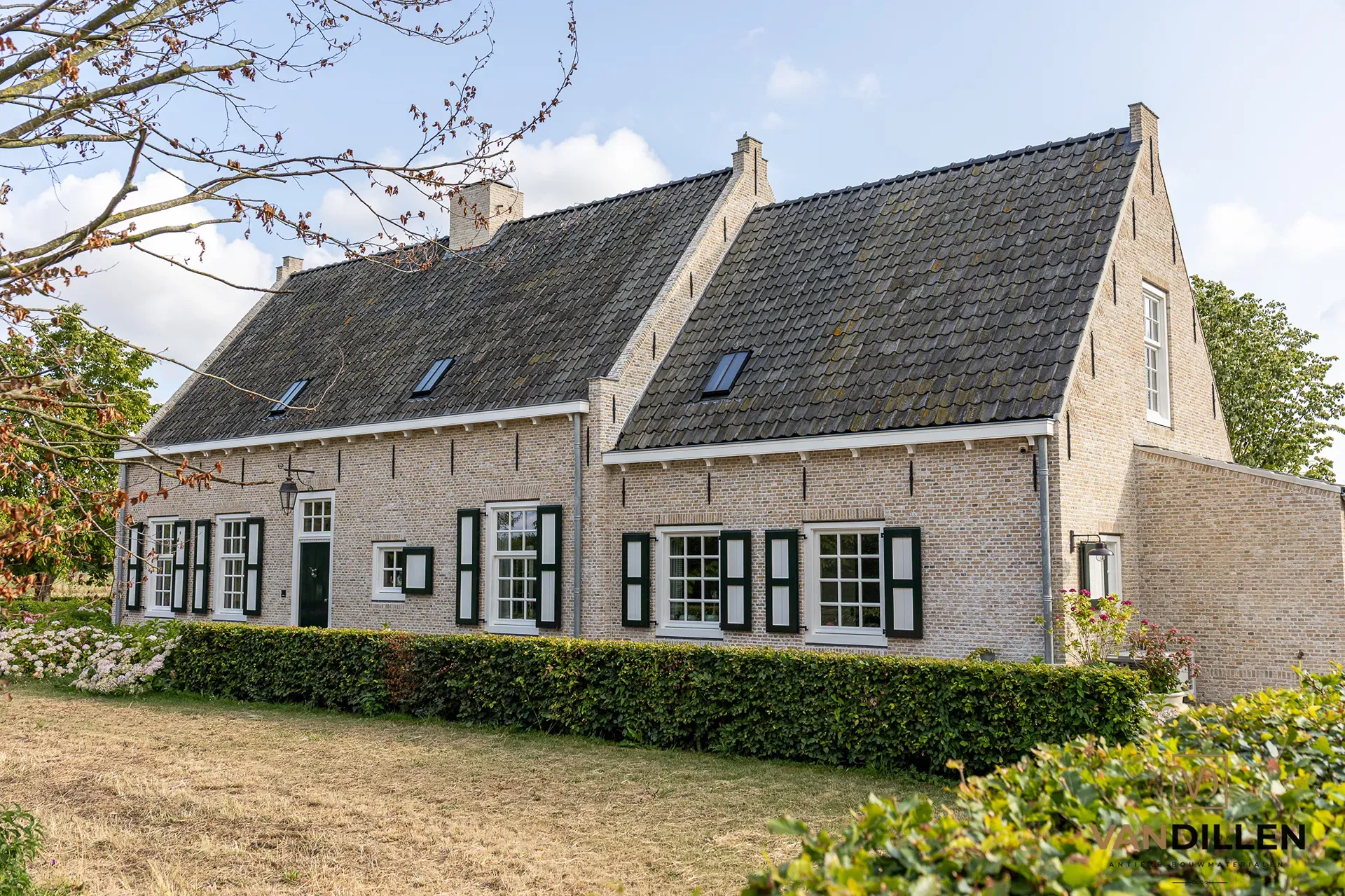
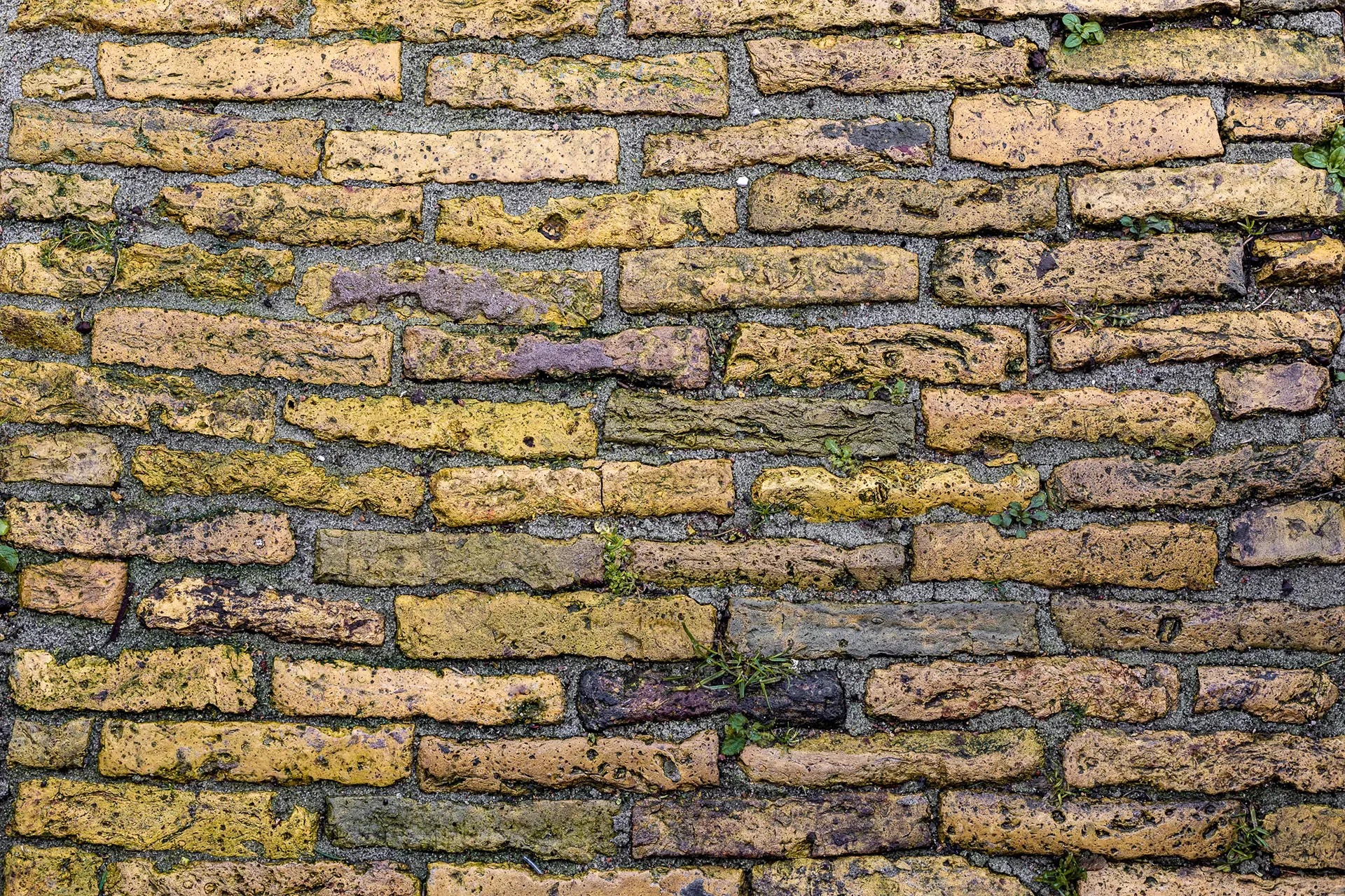
Using reclaimed masonry bricks in a new build
The facade has a major influence on a home’s appearance. Reclaimed masonry bricks are therefore one of the most effective ways to give a new home authentic character.
There are many historical types and sizes, including handmade bricks, moulded bricks, IJssel bricks, Frisian yellow bricks and Groningen bricks.
Every batch has its own colour palette, size and texture. A handmade brick in varied red shades, for example, creates a very different appearance from a small Frisian yellow brick or IJssel brick.
The chosen brick bond, mortar colour and way the bricks are laid also have a considerable effect on the result. Coordinating these choices can make new brickwork look as though it has been part of its surroundings for decades.
For a new-build project, it is important to reserve enough bricks from the same historical batch in advance. Reclaimed batches are finite and cannot simply be manufactured again if extra material turns out to be needed during construction.
Reclaimed roof tiles on a new home
Alongside the facade, the roof defines much of a home’s character.
Years of exposure to the weather give reclaimed roof tiles natural colour differences and a weathered appearance. A new roof can therefore immediately gain more character than one made entirely with new, uniform tiles.
Historical roof tiles come in different shapes, colours and sizes. When reusing them, the condition of the batch and its suitability for the particular roof must of course be assessed.
Reclaimed paving around a new build
A home’s appearance does not stop at its facade. Modern concrete pavers around a house with a fully historical appearance can create a strong contrast.
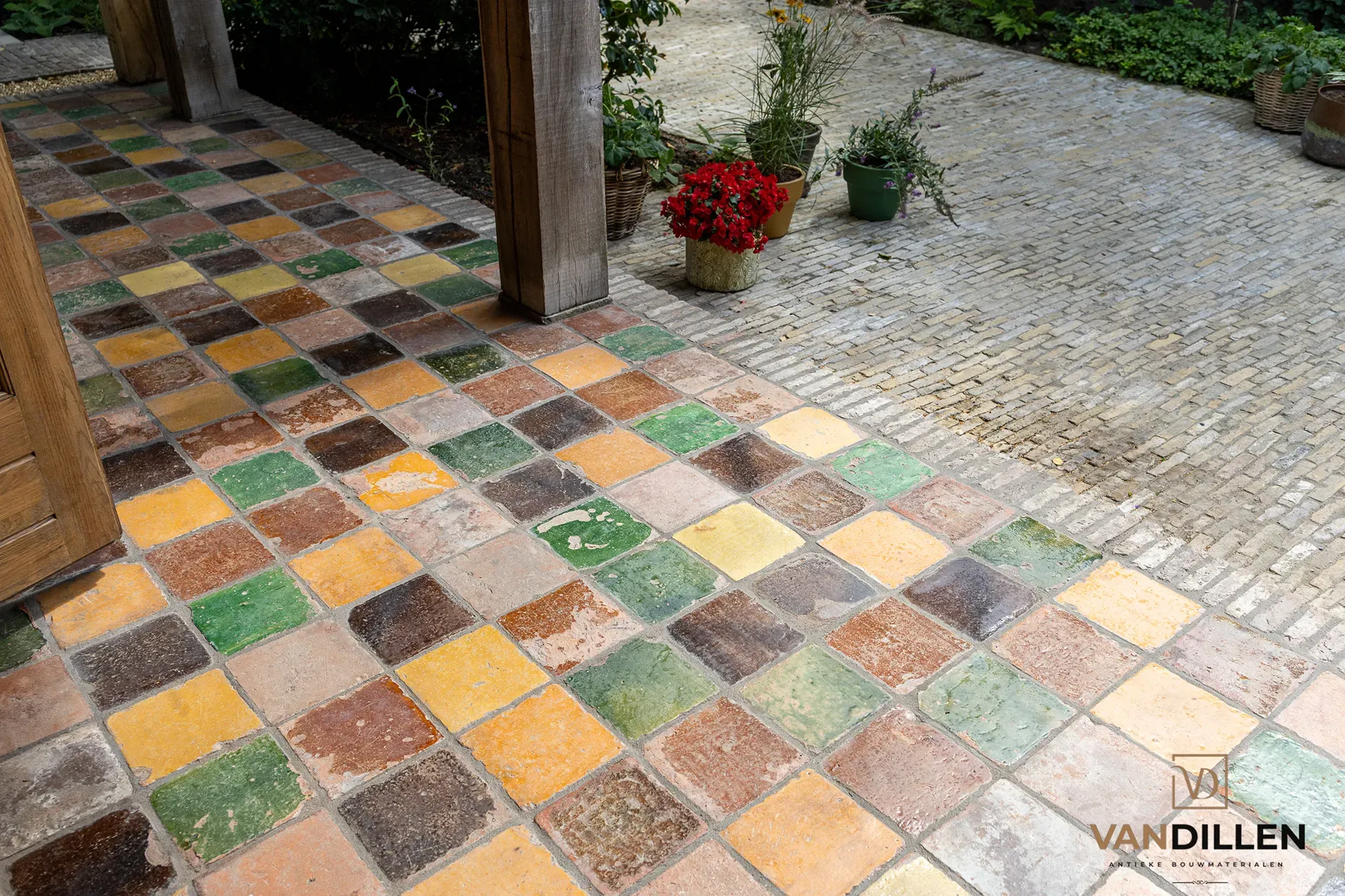
Reclaimed clay pavers and other historical paving materials can be used for driveways, patios, garden paths and courtyards, for example. Their natural wear and colour variation often complement a facade made from old masonry bricks.
This allows the home and outdoor space to be designed as a coherent whole.
Reclaimed floor tiles in a new home
Old materials can also make a considerable difference indoors.
Reclaimed floor tiles such as terracotta tiles, grey reduction-fired tiles, estrikken (traditional Dutch terracotta floor tiles) and French floor tiles immediately give a new home a warm, lived-in appearance.
Natural differences in colour, surface and size keep such a floor from having the uniform look of newly manufactured tiles.
Old floor tiles and estrikken can also work very well with underfloor heating. An authentic appearance therefore need not come at the expense of modern comfort.
Old doors and other historical details
Large surfaces are not the only things that define a home’s character. Details can be what makes a new home feel convincing as a whole.
Old doors, period internal dividing doors, wall tiles and tile tableaux can be used as authentic elements in an interior.
A historical facade, an old floor and a few carefully chosen period interior features often produce a stronger result than trying to imitate an old appearance everywhere.
Why use reclaimed building materials in a new build?
Appearance is an important reason. Authentic materials have features created by age and use that are difficult to reproduce exactly with new materials.
Reuse also allows existing building materials to be used again instead of being discarded as waste after a building is demolished.
This does not mean that every old building material is automatically suitable for every new application. Batches must be assessed, selected and, where necessary, cleaned or stripped of old mortar before reuse.
With reclaimed masonry, for example, usable bricks are selected from demolition material and cleaned of old mortar residue. They can then be sorted again and prepared for use in a new facade.
What should you consider when building with reclaimed materials?
Deciding during the design stage that you want to use reclaimed building materials gives you the greatest flexibility to incorporate them into the project.
Consider:
- the quantity available within one batch;
- dimensions and any variations in size;
- technical suitability for the intended application;
- the desired colour and sorting;
- the combination with modern building materials;
- the brick bond and mortar joints when using reclaimed facing bricks;
- the thickness and laying requirements of old floor tiles;
- enough extra material to allow for cutting, breakage and selection losses.
For larger new-build projects, it is sensible to establish the quantities required early on. A historical batch is, by definition, limited in availability.
Buying reclaimed building materials for a new build
Van Dillen Antieke Bouwmaterialen has a large, continually changing range of historical building materials for new construction, renovation and restoration.
From old masonry bricks and roof tiles to floor tiles, paving, wall tiles and doors, materials are selected with reuse in mind.
Are you planning a new home with authentic character? Browse our current range or our completed projects for examples of reclaimed building materials being used again.