
Period dividing doors: a complete guide to buying and installation
Period dividing doors bring instant character to an interior. Learn about types, stained glass, dimensions, prices, installation and what to check before buying.
What are period dividing doors?
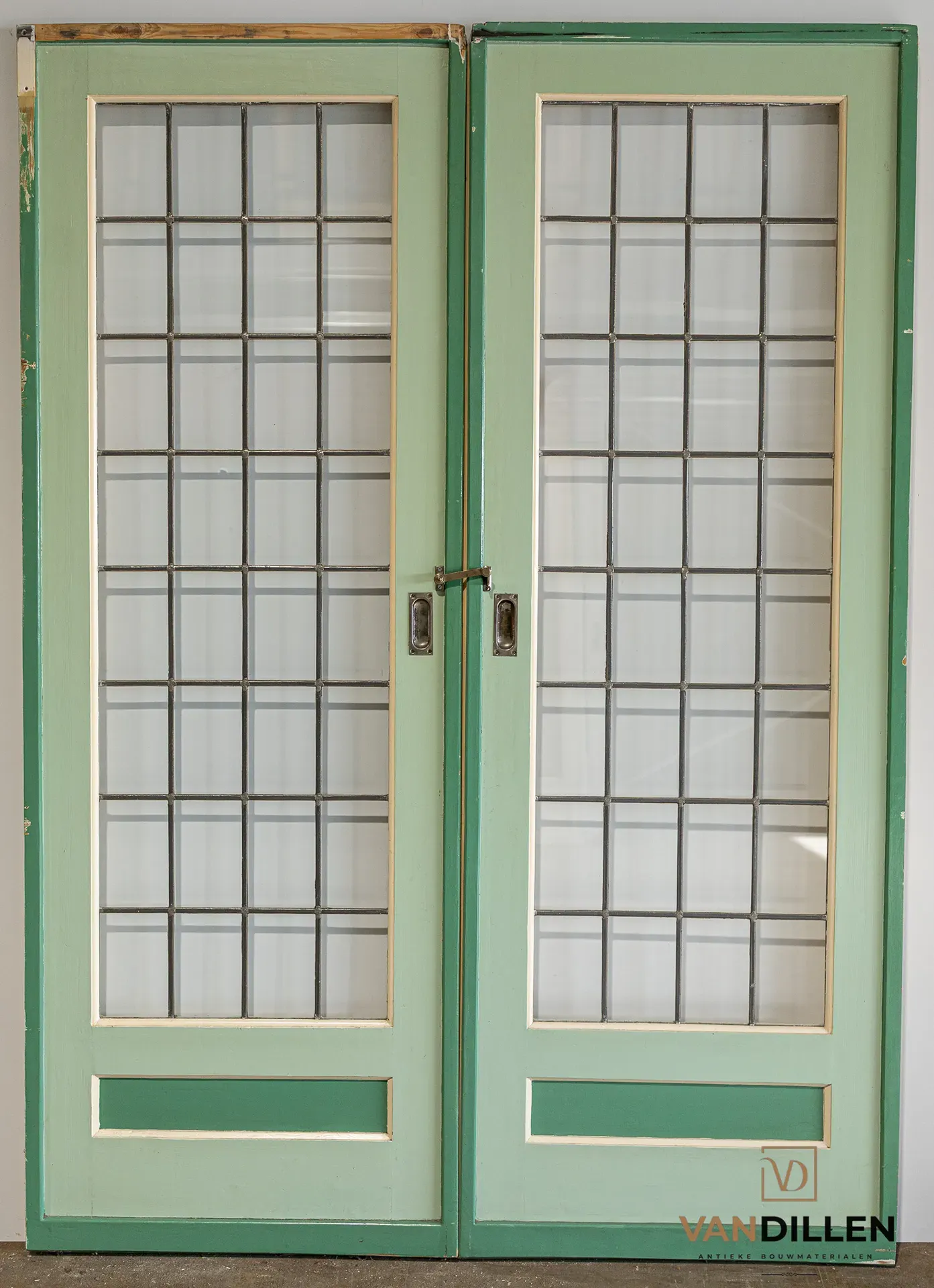
Period dividing doors are distinctive internal doors that connect two adjoining rooms and allow them to be separated. In many historical Dutch homes, they sit between the front and rear reception rooms. The doors often slide into the wall or into timber surrounds with fitted cupboards. In the Netherlands, these are traditionally called kamer en suite doors.
A complete room-dividing set therefore often comprises more than just two doors. Depending on the original interior, surrounds, cupboards, overlights and other timber components may also form part of the set.
To learn more about their origins and meaning, read our explanation of what these traditional dividing doors are.
Why choose antique dividing doors?
Authentic period dividing doors add something that is difficult to reproduce exactly in new doors: genuinely historical material, original detailing and natural signs of use.
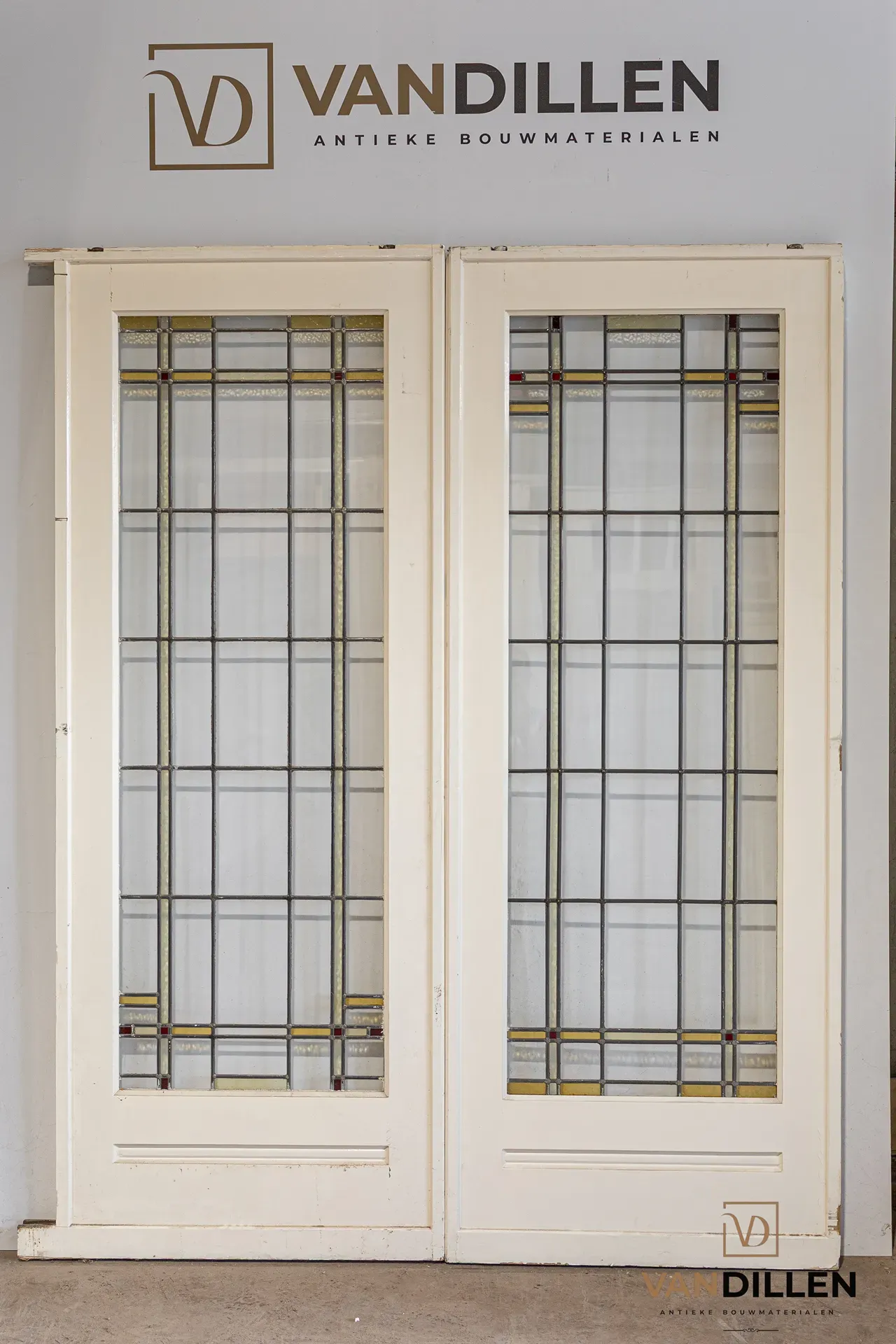
Old sets may feature moulded timber details, panel layouts, old glass, traces of fittings and sometimes stained or bevelled glass. It is the combination of these elements that creates their appearance.
This makes period dividing doors appealing for restoration and homes from the 1920s and 1930s, but also for newer interiors where a historical feature is deliberately introduced.
What types of period dividing doors are available?
Dividing doors with stained glass
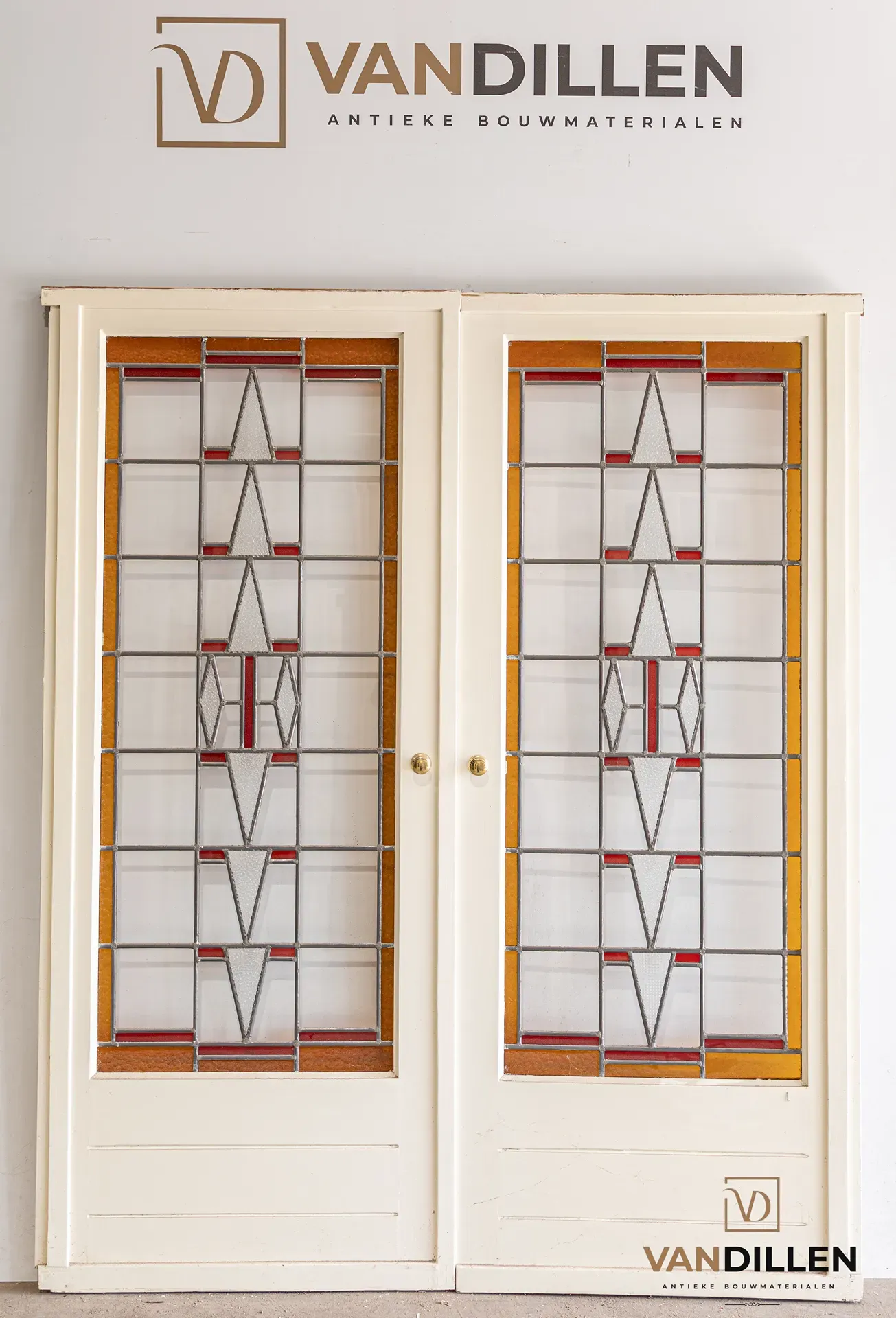
Many historical dividing doors contain stained glass. Colours, patterns and layouts vary considerably by period and set. Some designs are relatively restrained, while others have elaborate decorative glazing.
Original stained glass can be an important reason to choose a particular set: it lets light through while adding a distinctly historical detail to the interior.
Dividing doors with bevelled glass
Alongside stained glass, doors with bevelled glass are also found. The edges of bevelled glass are ground at an angle, which refracts the light differently. This gives a subtle decorative effect without the colours of stained glass.
Panelled doors and solid designs
Not every dividing door contains a large amount of glass. There are designs with timber panels, or a combination of panels and glass. The panel layout and mouldings can reveal a great deal about the period style in which the doors were made.
Complete room-dividing sets
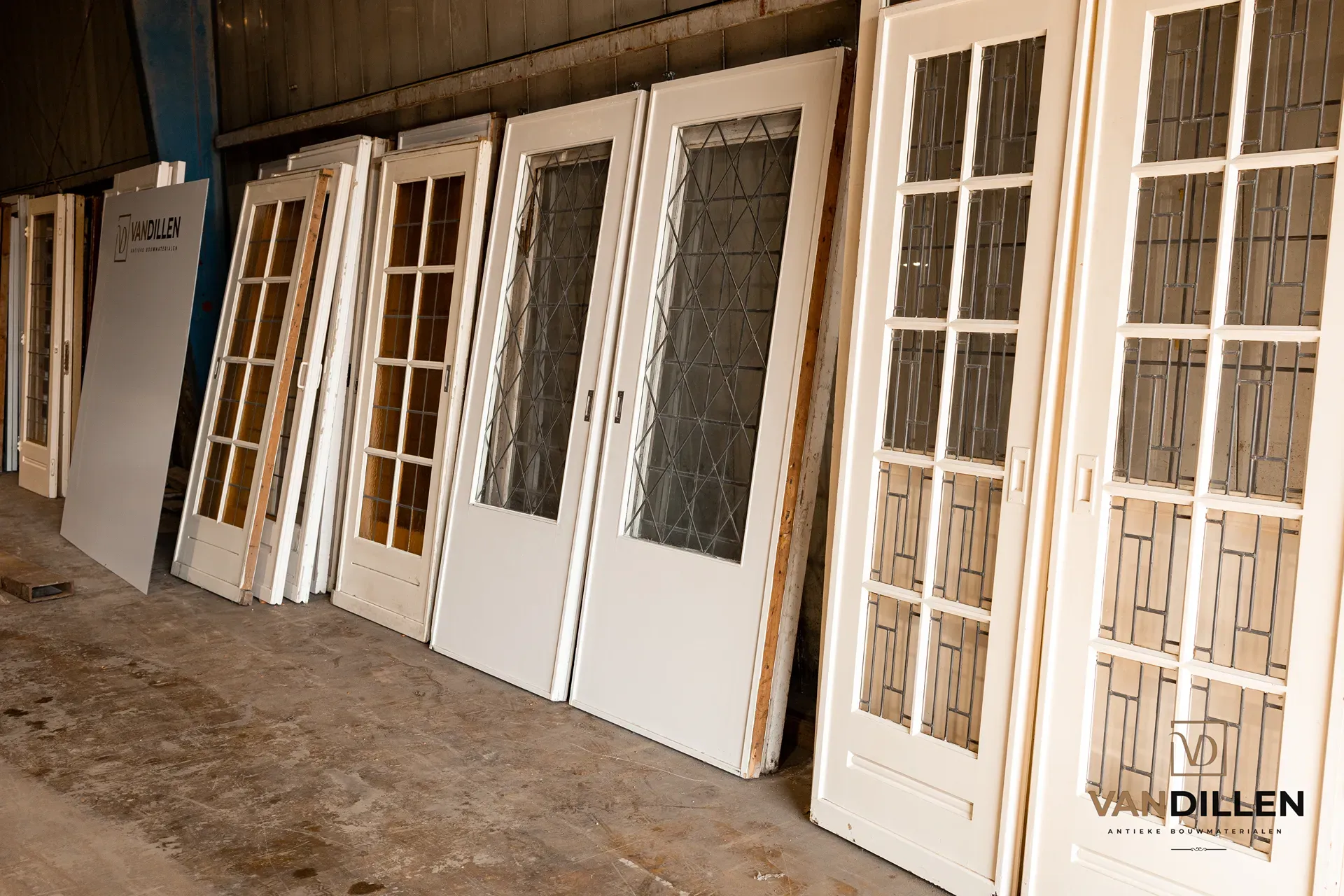
Some batches consist only of the sliding doors, while other sets retain matching surrounds, cupboards or other components. Always check exactly what is included in a set offered for sale.
Dividing doors from the 1920s and 1930s
Many period dividing doors being reused today come from early twentieth-century homes. Designs from the 1920s and 1930s are especially popular.
There are substantial stylistic differences within this period. Earlier designs may have richer mouldings, raised panels and decorative glass, while later 1930s doors are often simpler and more restrained.
Do not judge a set solely by its stated date. Look closely at the actual panel layout, mouldings, glass type, timber finish and dimensions.
What should you check when buying period dividing doors?
1. Overall dimensions
Measure more than the width and height of a single door. Establish the full available opening and check how much space is needed for the sliding doors, surrounds and any cupboards. Old doors were made for a particular home, so they often do not have modern standard dimensions.
2. The dimensions of both doors
Check each door separately. Historical materials can have small differences in size. Record the width, height and thickness, and note the position of existing recesses and fittings.
3. Timber and construction condition
Signs of use are part of old doors, but it is important to distinguish character from structural damage. Check the timber, joints, bottom and top edges, and any previous repairs.
4. Glass and stained glass
Check whether the glass is complete and whether stained-glass panels have damage or loose parts. Small imperfections can be normal in old glass, but more substantial damage may require repair.
5. Completeness of the set
Ask which components are included. Are there just the doors, or also mouldings, cupboards, tracks, fittings or other original parts? This can make a significant difference to the eventual installation.
6. Hinged or sliding operation
A traditional room-dividing set usually operates with sliding doors. When reinstalling it, the original system may be reused or a suitable new track system fitted. The available space and construction determine which solution is most practical.
Can period dividing doors be altered?
Yes, some adjustment is often possible, but how much depends on the door’s construction and the difference in dimensions. Trimming or making local adjustments is generally easier than making a historical door substantially larger.
With valuable doors containing stained glass, distinctive panels or original mouldings, changes should be planned carefully. An unsuitable alteration can damage the very historical details that make the doors distinctive.
It is therefore often sensible to choose a suitable set first, then discuss with a carpenter or joiner how the opening and timber surrounds can be adapted to it.
How are period dividing doors installed?
Installation depends on the set and the situation in the home. Traditional sliding doors need enough space to slide fully out of the opening. Tracks, guides, surrounds and any cupboards must also be accurately aligned with one another.
Measure carefully before buying and decide in advance how the doors will be fitted. Our separate article explains how to install period dividing doors in more detail.
Period dividing doors or new made-to-measure doors?
Both options have advantages. New bespoke doors can be made precisely for the available opening and offer considerable freedom in dimensions and finishes. Old doors, on the other hand, offer authentic material, historical details and an appearance genuinely created by age.
The best choice therefore depends on the project. For a fixed opening that cannot be altered, bespoke doors can be practical. Where character and historical appearance are the priority, an original old set can add much more.
For a more detailed comparison, read our article about reclaimed dividing doors or new made-to-measure doors.
What do period dividing doors cost?
Prices vary considerably from one set to another. Dimensions, age, design, timber work, stained glass, bevelled glass, completeness and condition all affect the value.
A simple pair of doors without distinctive details is therefore not directly comparable to a complete room-dividing set with original cupboards, surrounds and extensive stained glass.
When comparing prices, look beyond the two doors: consider what is actually included and which alterations or restoration work will still be needed.
Period dividing doors in a modern interior
Antique dividing doors are not restricted to fully historical interiors. The contrast between old timber, original glass and modern materials can be especially effective.
In a newer home, for example, the doors can be combined with understated walls, modern lighting and a clean-lined floor. The historical feature remains clearly visible without the whole room needing a classic interior scheme.
If you are choosing between a modern sliding system and historical doors, see our comparison of modern sliding doors and antique dividing doors.
Buying old and antique dividing doors
Van Dillen Antieke Bouwmaterialen offers a large, changing range of period dividing doors, including sets with stained glass, bevelled glass and different historical panel layouts. Because each set comes from an existing building, the available dimensions, designs and appearances vary continually.
Always check the dimensions and photographs of the particular set, and measure your available space carefully beforehand. If you have a specific size or style in mind, you can also contact us or visit us in Bolsward to view the available doors.