
Reclaimed masonry bricks from the 1920s, 1930s, 1940s and 1950s
Reclaimed masonry and facing bricks from the 1920s, 1930s, 1940s and 1950s for renovation, extensions and new builds. Explore our changing batches of reclaimed facing bricks.
Are you looking for old masonry or facing bricks from the 1920s, 1930s, 1940s or 1950s for an existing home, extension or new-build project? Van Dillen Antieke Bouwmaterialen has a continually changing stock of reclaimed facing bricks in a wide range of sizes, surfaces and colour variations. Our range includes reclaimed moulded bricks, reclaimed handmade bricks and more regular machine-made bricks. The building period is a useful starting point, but size, colour, surface and manufacturing method ultimately matter more for a good match than the year alone. Browse the current collection below or send photographs and dimensions if you want to match an existing facade as closely as possible.
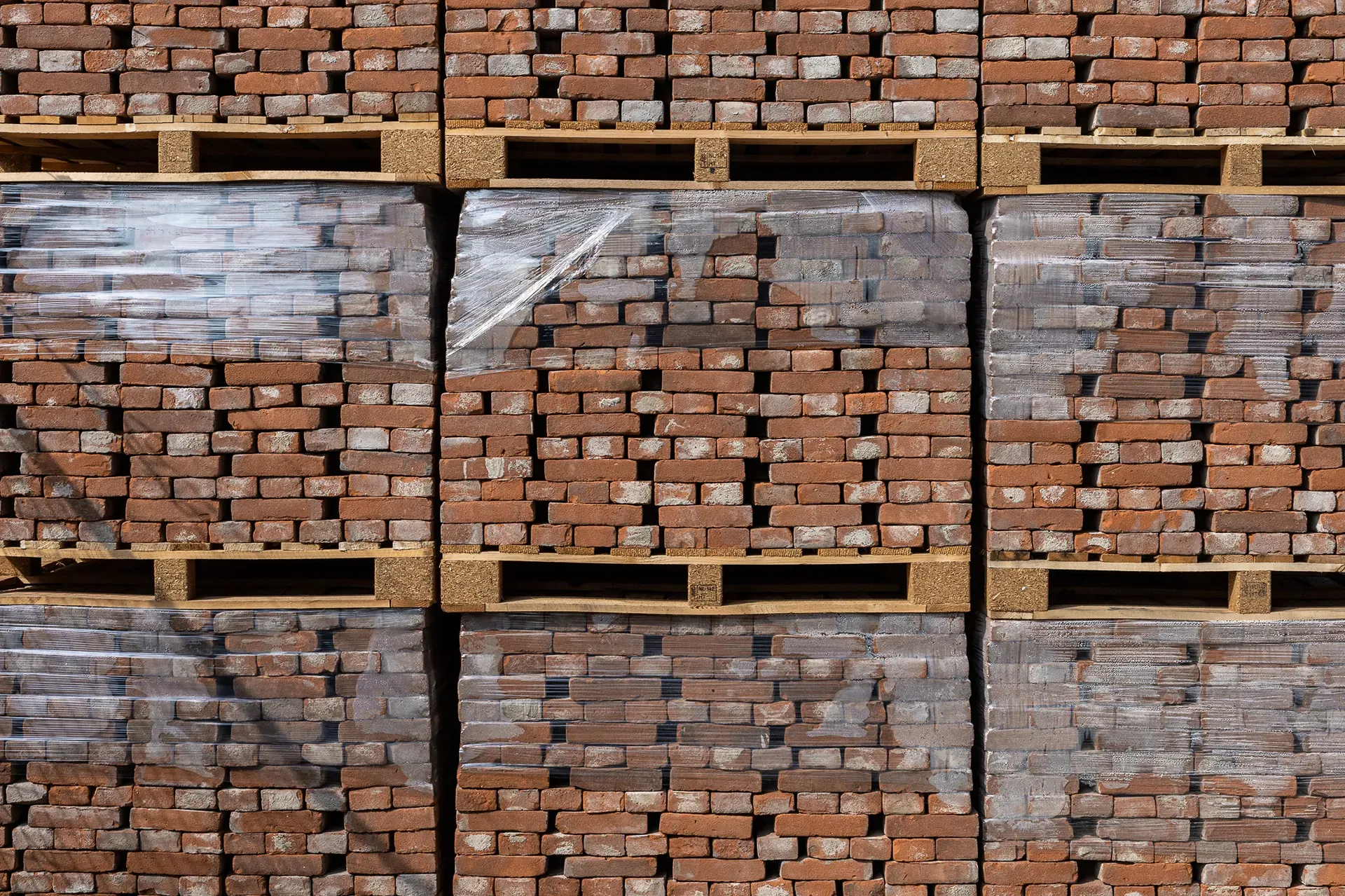
Our range
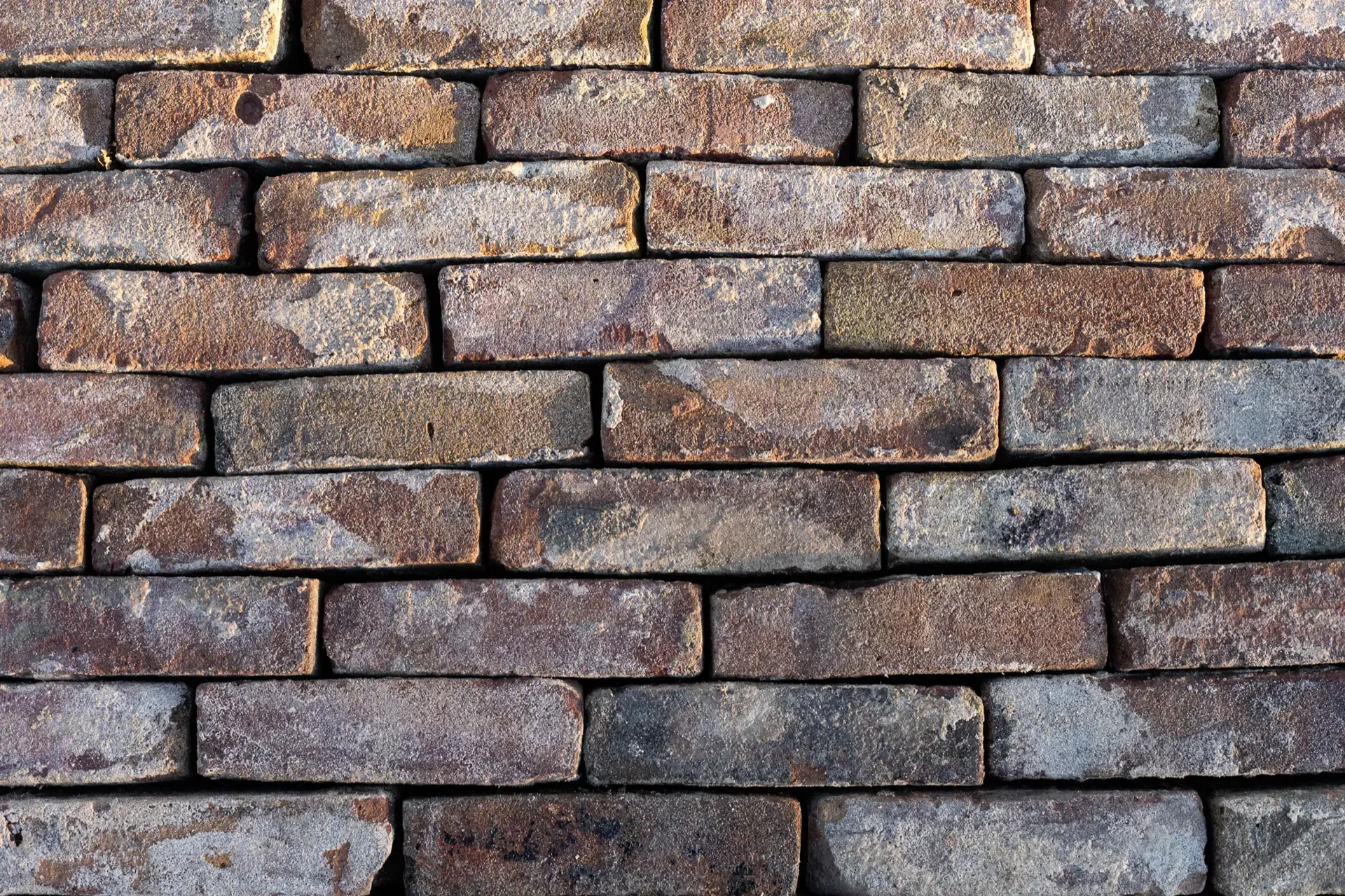
Moulded bricks
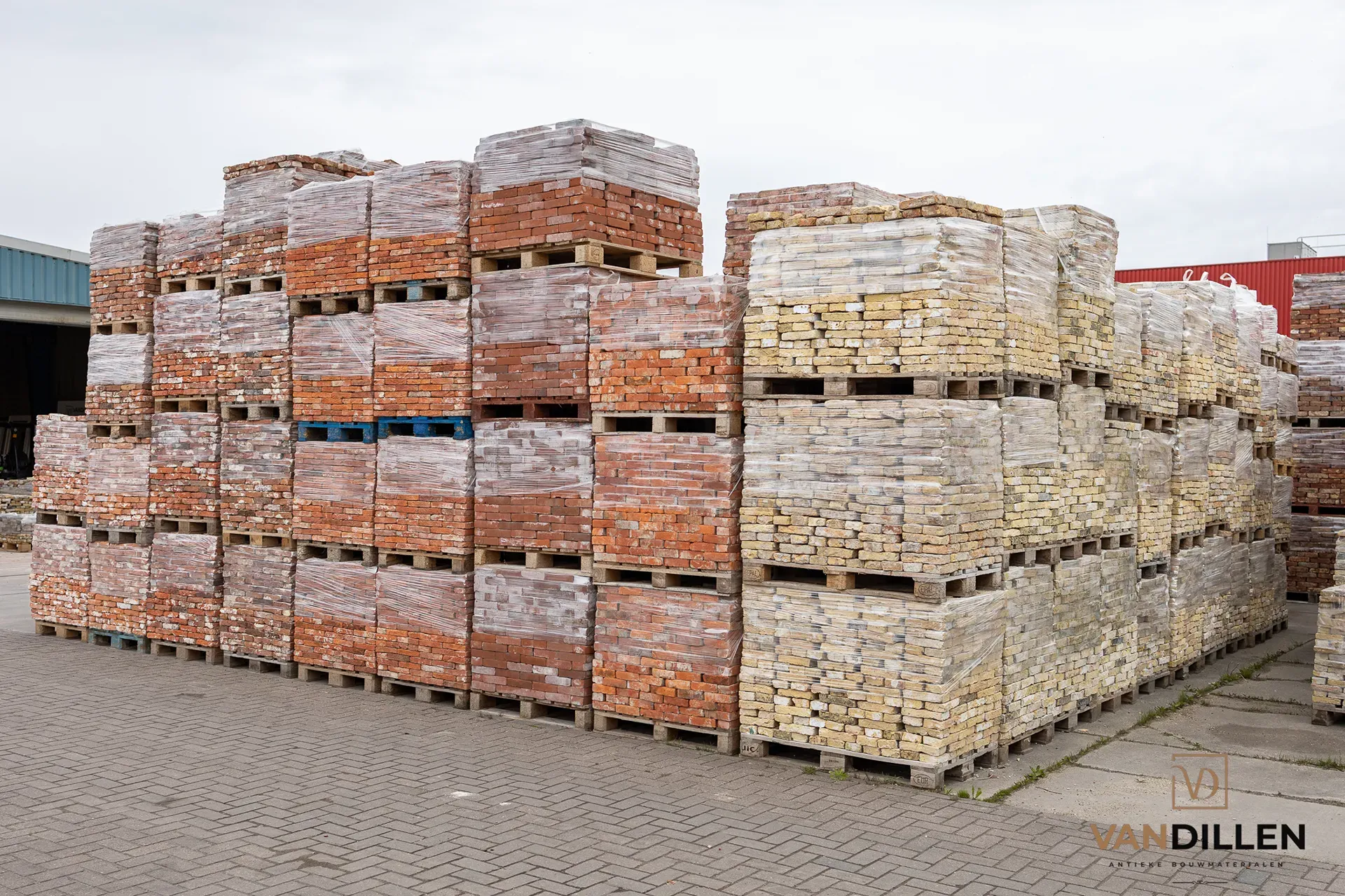
Buy old bricks
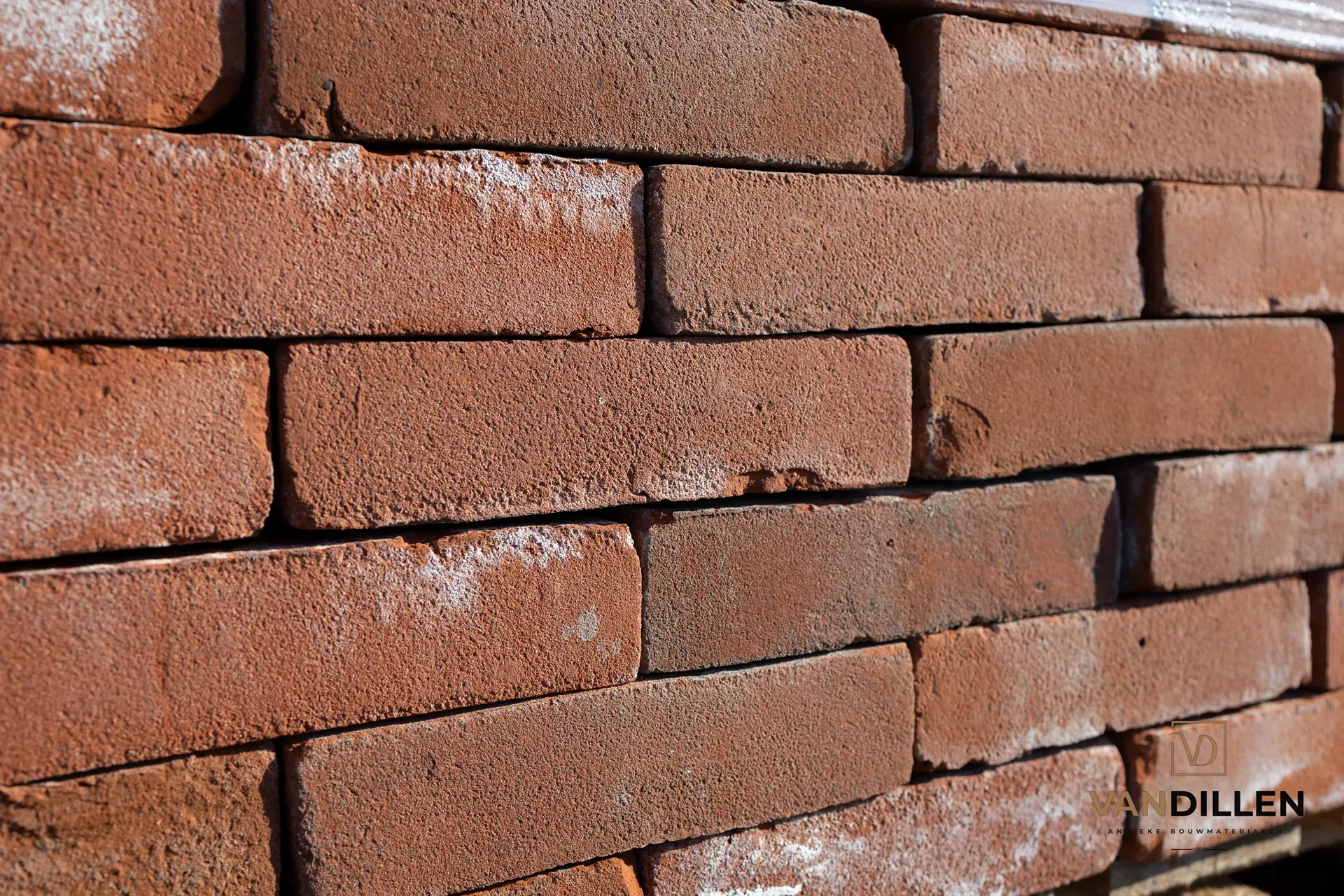
Reclaimed masonry bricks from the 1920s, 1930s, 1940s and 1950s
Old bricks dating from approximately 1920 through the 1950s are not one single brick type. During these decades, different sizes, raw materials and manufacturing methods were used alongside one another, and regional differences were substantial. Rather than searching only by a period label, it is therefore better to assess the overall facade appearance a batch will create: size, colour distribution, surface, dimensional consistency and how the bricks were formed.
This page focuses on genuine reclaimed masonry bricks that can be used again. These are different from new bricks with an aged appearance. A reclaimed batch owes its colour, surface and signs of use to the original firing process and its previous application. For those seeking that authentic character in renovation or new construction, old batches offer more natural variation than entirely new factory-made bricks.
Which bricks suit a home from the 1920s, 1930s, 1940s or 1950s?
There is no universal 1920s, 1930s, 1940s or 1950s brick. Even within a single street, different sizes and colour variations can occur. For repairs or an extension, it is therefore important to measure several bricks in the existing facade rather than relying solely on the year the house was built.
For an initial overview, see our guide Which brick suits my home?. If you want to identify the type of brick you have, How to recognise an old brick helps you compare size, surface, patina and manufacturing method.
The 1920s and 1930s: plenty of variation and character
Homes from the 1920s and 1930s contain both handmade and moulded bricks in a range of red, brown, orange and purple shades. Some facades look relatively restrained and consistent in size, while others show much greater variation in shape and colour. The existing brickwork is therefore always the best starting point when choosing a matching batch.
The 1940s and 1950s: from varied to more regular brickwork
Variation remained considerable in the 1940s and 1950s. Some homes have brickwork with more regular dimensions and surfaces, but varied and less uniform batches are also found. Because manufacturing methods and regional availability differed, a close match in colour and size is more reliable than a broad classification by construction year.
Handmade, moulded and machine-made bricks
Reclaimed handmade bricks
Handmade bricks generally have a livelier surface and more natural differences in shape. They can suit facades where a handcrafted, varied appearance is desired, both in older homes and in new builds with a distinctly historical character.
Reclaimed moulded bricks
Moulded bricks are generally a little more consistent in size and regular in shape. They come in many colour combinations and are worth considering when matching an old facade that has variation without being extremely irregular.
Old machine-made bricks
Some buildings from the 1940s and 1950s also feature more regular machine-made bricks. These batches can be especially important where a handmade or moulded brick would differ too much in irregularity from the existing masonry. Here too, size, colour and surface remain decisive for a good match.
Renovation, repairs and extensions
For restoration, facade repairs or an extension, matching the existing brickwork visually is often more important than the precise name or age of the brick. A good match comes from the combination of length, height, thickness, colour, surface, pointing and brick bond. When asking for advice, please send photographs of the whole facade, close-ups and measurements from several bricks.
A replacement batch does not need to come from exactly the same year or factory to be a good match. Where size, colour variation and surface are sufficiently similar, a carefully chosen reclaimed batch can blend far more naturally into the existing facade during repairs or an extension.
Using bricks from the 1920s to 1950s in new builds
Reclaimed masonry bricks from these periods are also deliberately used in new construction. They immediately give a new facade more variation and depth than a completely uniform factory-made brick. The choice need not be tied to one specific building period: the desired colours, size and surface matter more than whether a batch dates precisely from 1930 or 1950.
Read more about combining contemporary construction with reused materials in new builds with antique building materials. Browse our projects as well to compare different reclaimed brick batches after laying.
Choosing a suitable batch: look beyond the building year
When choosing old bricks for an existing home, compare several characteristics. Measure the length, height and thickness of multiple bricks, compare the overall colour and assess how irregular the surface is. Joint width and brick bond also affect how noticeable a difference will eventually be.
Every reclaimed batch has a finite supply. Check in advance that there are enough bricks for the entire job, and allow a practical reserve for selection, breakage, cutting and future repairs. Depending on the application and batch, it may be sensible to allow approximately 5 to 10 percent extra material.
Cleaned, sorted and ready for reuse
Reclaimed masonry bricks need to be prepared for laying. Where necessary, mortar residue is removed and batches are sorted. The extent of cleaning and sorting differs by batch; our product pages show the current condition as clearly as possible.
Because old bricks have natural variations in size and colour, they need to be distributed carefully across the facade during laying. It is precisely this variation that creates the character for which bricks from the 1920s, 1930s, 1940s and 1950s are chosen.
Buying reclaimed masonry bricks from the 1920s, 1930s, 1940s and 1950s
Would you like to buy reclaimed masonry or facing bricks from these periods? Browse the current collection on this page and compare size, colour, price and available quantity. If the batch needs to match an existing facade, send photographs and dimensions. For a new build, tell us the size, colour palette and appearance you have in mind.
For general price levels, see our price guide. Delivery is available throughout the Netherlands, as well as to Belgium and other European destinations.
Frequently asked questions about bricks from the 1920s to 1950s
Can bricks from these decades always be identified by their construction year?
No. A precise construction year often cannot be reliably established from a single brick. Size, surface and manufacturing method provide clues, but for a good match the appearance of the existing facade matters more than an exact date.
Do bricks from these periods all have the same dimensions?
No. Many different sizes and manufacturing methods were used during these decades. When matching existing brickwork, always measure several bricks and compare length, height and thickness.
Are they always handmade or moulded bricks?
No. Handmade, moulded and more regular machine-made bricks can all occur. Which batch suits best depends on the existing facade or the desired appearance of the new one.
Can I use bricks from the 1920s to 1950s in a new build?
Yes. Reclaimed masonry bricks can work very well in new construction when the batch is technically suitable and its dimensions and quantity suit the design.
How do I find a batch that matches my existing facade?
Compare size, colour distribution, surface and manufacturing method above all. Send photographs of the whole facade, close-ups and measurements if you would like us to help you find a suitable match.