
Buying reclaimed facing bricks: what should you look for?
Buying reclaimed facing bricks? Find out what to check in the type, size, colour, quality, sorting, quantity and price of old bricks.
Buying reclaimed facing bricks: what should you look for?
Reclaimed facing bricks are chosen for restoration, renovation and new builds where a facade needs more character. Because every historical batch is different, buying old bricks requires attention to more than just colour and price.
Browse our current range of reclaimed masonry bricks or use this guide to decide which properties matter for your project first.
1. Start by choosing the type of reclaimed facing brick
Reclaimed facing bricks vary considerably. Handmade bricks generally have a livelier, more irregular appearance, while moulded bricks often look a little neater and more consistent in size.
There are also regional types such as Frisian yellow bricks, IJssel bricks and Groningen bricks. See types of reclaimed bricks for more background.
2. Check the size and course height
Dimensions are crucial, particularly in restoration. Measure the length, width and height of several existing bricks, and measure several courses including the mortar joints.
Historical formats such as IJsselformaat, drielingformaat, Rijnformaat, Vechtformaat and kloostermoppen (large medieval bricks) are explained in our guide to brick dimensions.
3. Compare the colour across several bricks
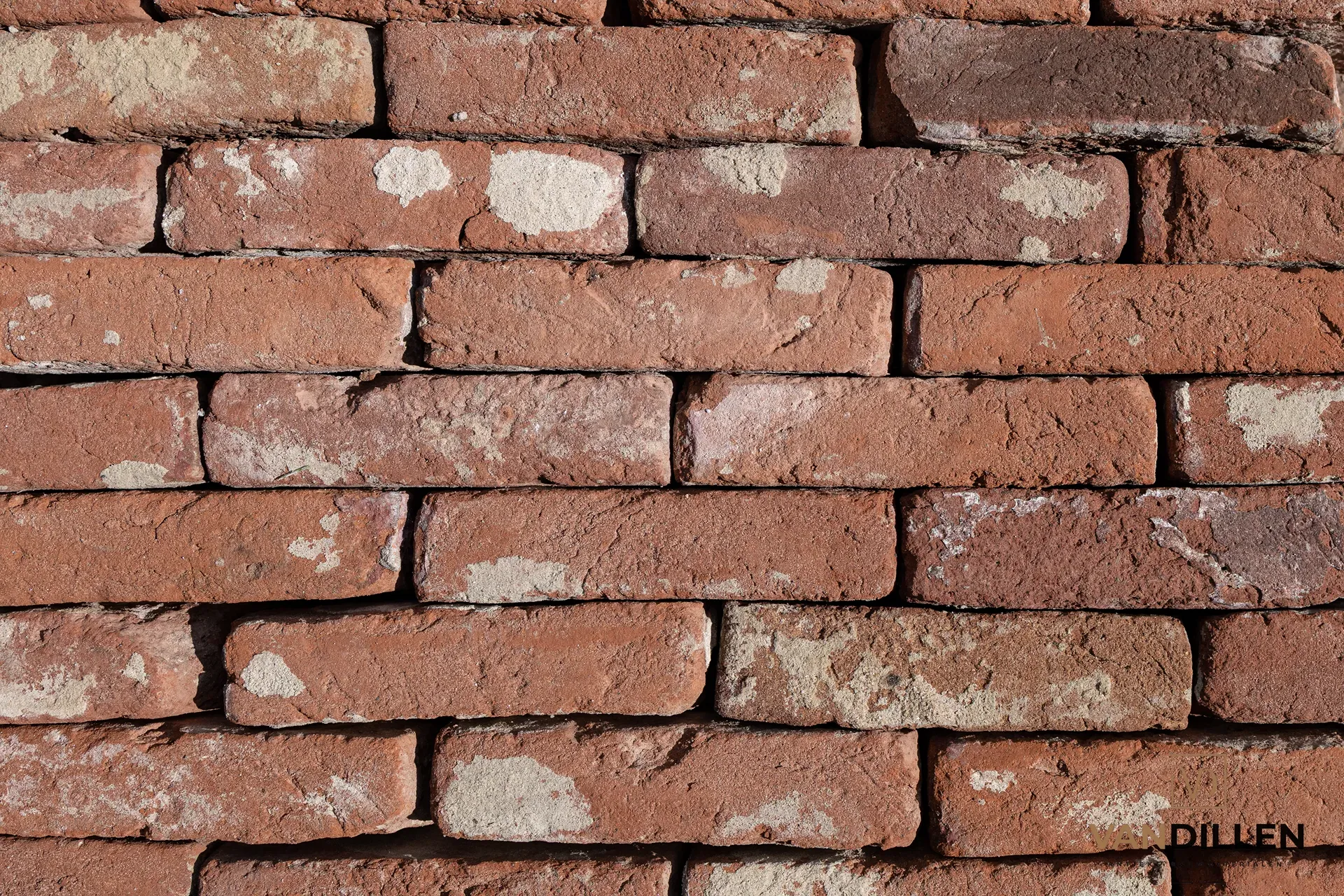
A reclaimed batch rarely consists of one uniform colour. Look at a larger area, not just a single brick or close-up. The balance of red, orange, yellow, brown or dark shades determines the final appearance of the facade.
4. Check quality and sorting
Look for breakage, damage, frost damage, mortar residue and the number of usable exposed faces. A well-sorted batch can save considerable time during laying.
Bricks from demolition often need cleaning. Read more about removing mortar from reclaimed bricks and why this can be labour-intensive.
5. Consider the brick bond
The chosen brick bond helps determine how many stretchers (the long faces) and headers (the short ends) are visible. For traditional bonds, having enough sound header faces can therefore be important.
6. Calculate enough material and a reserve
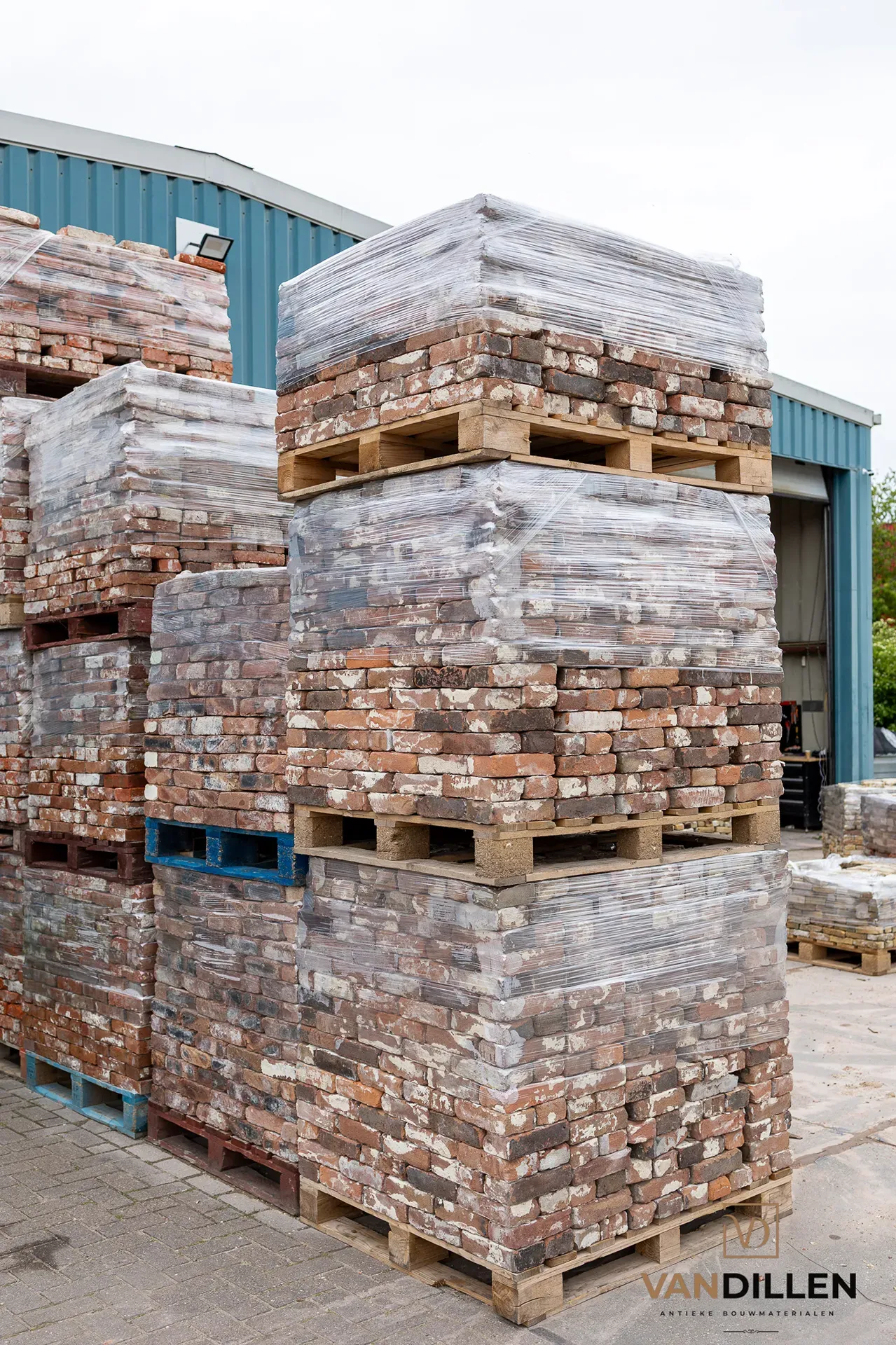
Calculate the net facade area, the number of bricks per m² and a suitable reserve for selection, cutting and breakage. With reclaimed batches, an exact match for a later top-up is not guaranteed.
What do reclaimed facing bricks cost?
Price depends on factors including type, size, quality, quantity, rarity and processing. Compare not only the price per brick, but also the number of bricks per m² and any transport and preparation costs.
See our detailed explanation of reclaimed brick prices.
Reclaimed facing bricks for restoration
In restoration, a replacement brick should match the existing work as closely as possible. Alongside colour, the size, surface, manufacturing method and appearance of the mortar joints matter.
Reclaimed facing bricks for new builds
A new build offers more freedom. A distinctive batch can become the starting point for the design. Read about building with reclaimed masonry bricks and browse our projects for completed facades.
Buying reclaimed facing bricks from Van Dillen
Our collection includes large batches for entire facades and smaller batches for restoration and repairs. Browse all reclaimed masonry bricks or go straight to handmade bricks, moulded bricks, Frisian yellow bricks, IJssel bricks and Groningen bricks.
Do you want to match existing brickwork? Contact us with clear photographs, dimensions and the quantity required.
Frequently asked questions
How do I know how many reclaimed facing bricks I need?
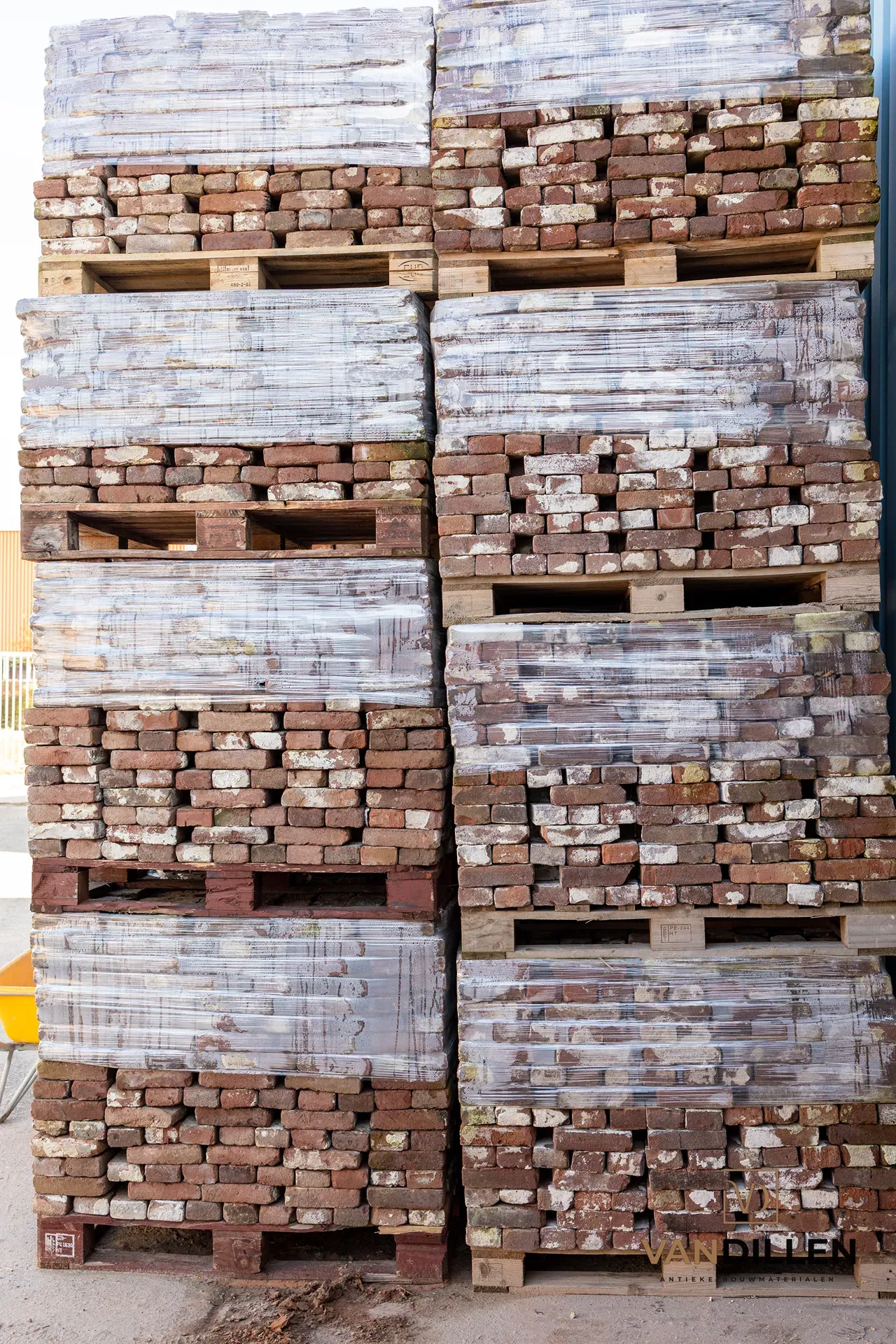
This depends on brick size, joint width and the net facade area. Allow a reserve for selection and laying as well.
Are reclaimed facing bricks suitable for new builds?
Yes. Provided the batch is technically suitable and laid correctly, reclaimed facing bricks can work very well in new construction.
Can an old brick be reproduced exactly?
A new imitation can come close in colour and shape, but natural patina and historical variation are features of genuinely old material.