
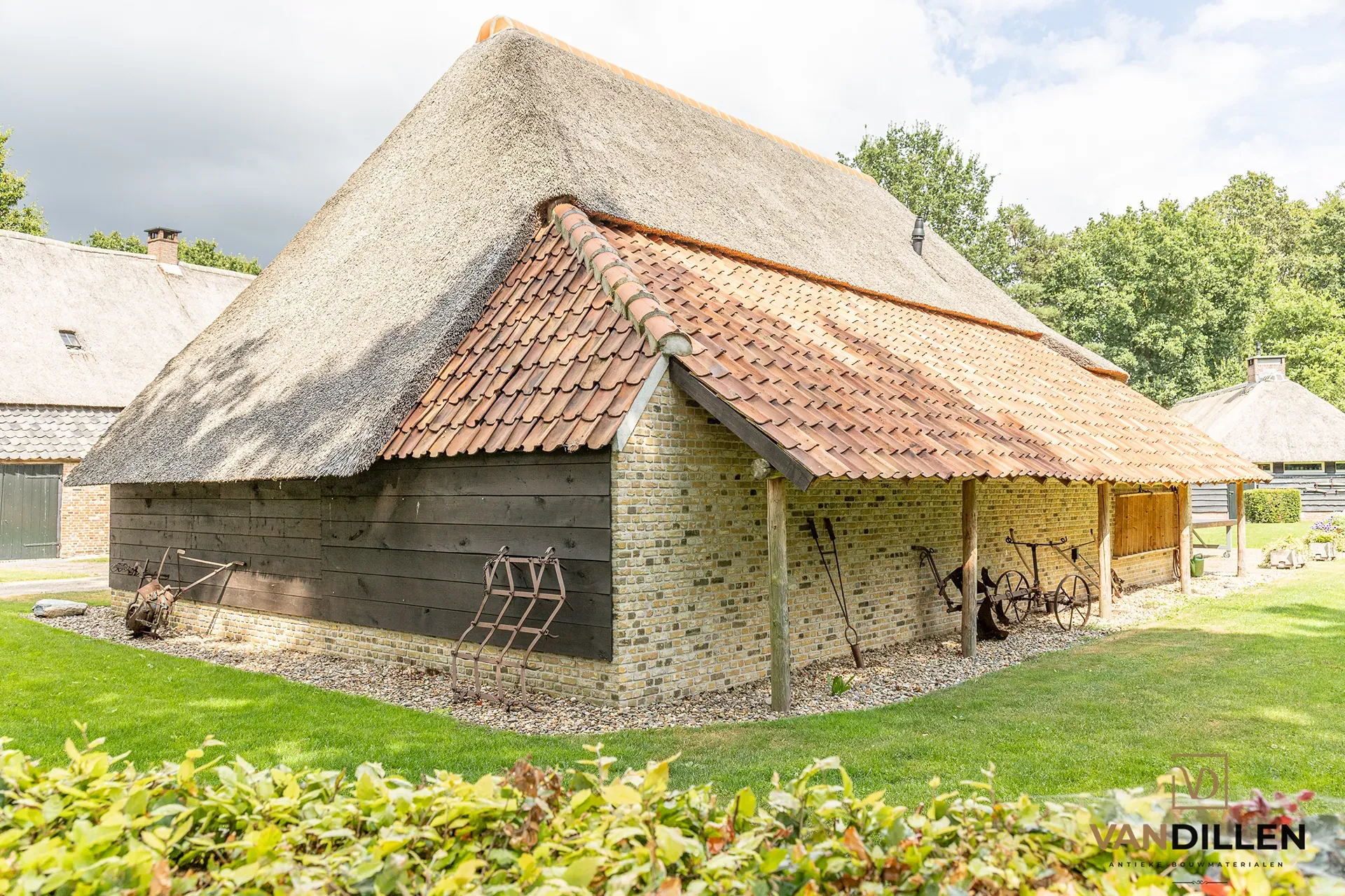
Renovating a facade with reclaimed bricks
Renovating an old facade? Learn how to find a matching reclaimed brick by comparing size, colour, texture, manufacturing method and existing pointing.
Renovating a facade with reclaimed bricks
When renovating an old facade, it is often important that new repairs do not remain visible as a contrasting patch. Reclaimed bricks can help damaged or missing sections blend as naturally as possible with the existing masonry.
The best match is not based on colour alone. Size, texture, manufacturing method, pointing and weathering together determine whether a repair will blend unobtrusively into the facade over time.
When are replacement bricks needed?
Replacement may be necessary for severely damaged, broken or missing bricks, during alterations that change openings, or when an extension needs to match existing brickwork.
Not every discolouration or superficial defect means a brick needs replacing. Preserving sound historical material is usually preferable during renovation.
Step 1: identify the brick type in the facade
Compare the existing masonry with the main groups of reclaimed masonry bricks. Look at handmade or moulded bricks, and regional types such as IJssel bricks, Frisian yellow bricks or Groningen bricks.
Our guide to types of old bricks can help with initial identification.
Step 2: measure several bricks and courses
Never measure just one brick. Old facades contain variations in size, and joints affect the visible dimensions. Measure several bricks and a number of courses including the horizontal mortar joints.
Use our guide to brick dimensions for recognised historical formats and approximate measurements.
Step 3: compare colour and surface
Take photographs in daylight, both close up and from several metres away. A suitable batch does not need to be identical brick by brick: its overall colour distribution needs to match the existing facade.
Step 4: look at the pointing
Even a matching brick can stand out if the mortar colour, joint width or joint profile differs considerably. The new mortar must also be technically compatible with the existing masonry.
Step 5: make a sample panel first
For larger renovations, a sample panel is advisable. It lets you see how the bricks, pointing and sorting work together before a large area of facade is completed.
Matching an extension to an old facade
An extension does not always need to blend in invisibly, but the same or a very similar reclaimed brick can make the transition much less conspicuous. Sometimes a deliberate, subtle difference works better than a forced imitation.
Read about laying reclaimed bricks for practical guidance and types of brick bonds for possible patterns.
What if exactly the same brick is unavailable?
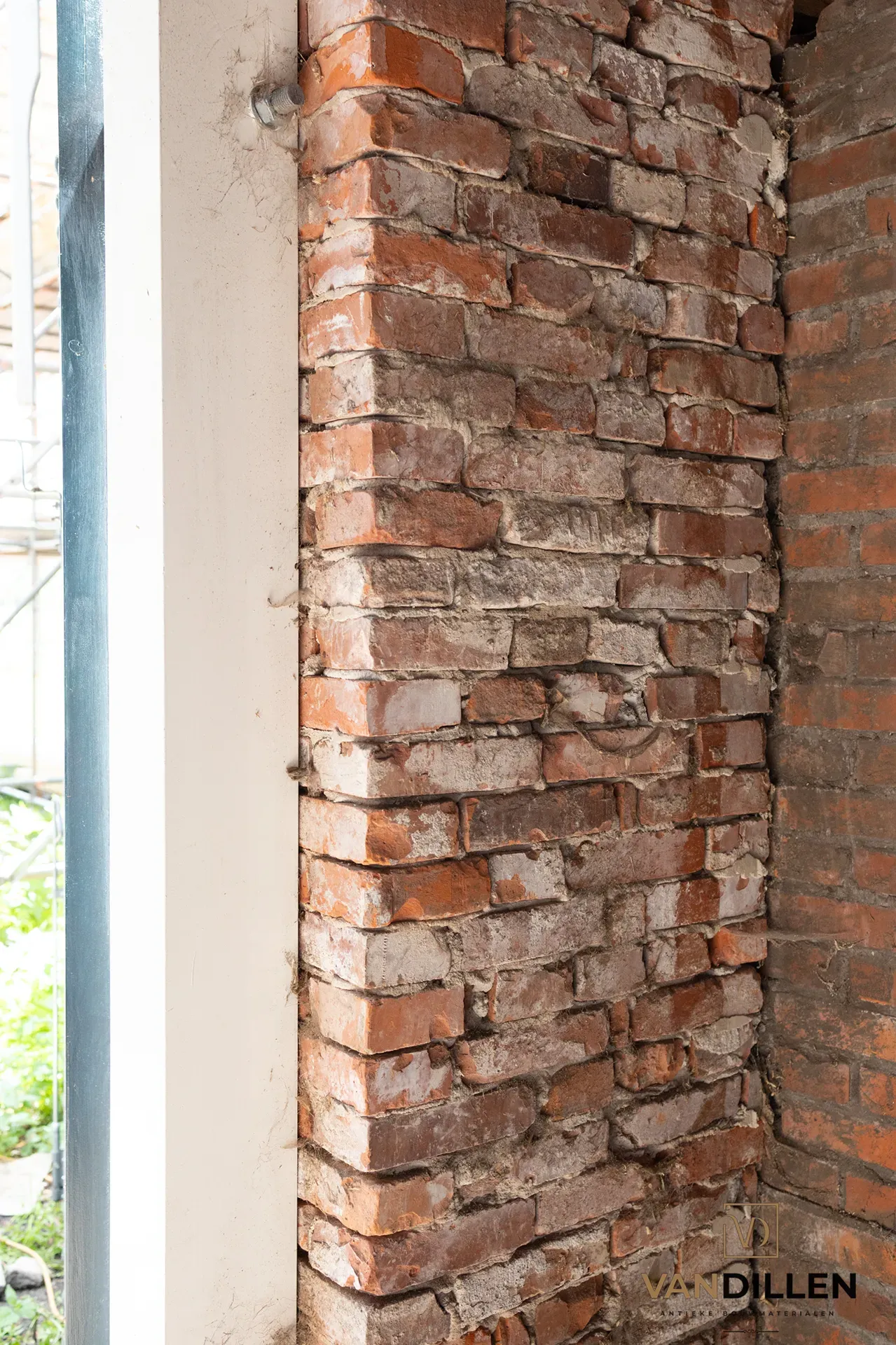
Historical batches are finite. Look for a batch that matches the most important properties: size and course height first, then colour, surface and manufacturing method. An experienced bricklayer can mix shades from several pallets to avoid distinct blocks of colour.
Do old bricks need their mortar removed first?
Bricks from demolition may still carry mortar residue. Before reuse, enough of this needs to be removed without causing unnecessary damage to the brick. See our guide to removing mortar from reclaimed bricks for the process.
Finding reclaimed bricks for facade renovation
Browse our current reclaimed masonry bricks and projects to see different batches after laying. To find a match, contact us with photographs, measurements and the quantity required.
Frequently asked questions
Must replacement bricks have exactly the same colour?
Not individually. It is more important that the overall colour variation and distribution match the existing masonry.
Which matters more: colour or size?
For a technically compatible match, size is often the first firm requirement. Colour, surface and manufacturing method are then matched as closely as possible.
Can I use reclaimed bricks for a new extension?
Yes. This is a common way to make an extension fit better with an existing home.